
When a GE refrigerator stops cooling, start with airflow, not the compressor. We have repaired more than 400 GE refrigerators that were not cooling. In the 77 calls with detailed notes in our current job system, a failed evaporator or fresh-food fan is the most common cause (18 calls), followed by control and inverter boards (10) and defrost problems (8). The compressor or sealed system came up in only 6. If the freezer is still cold and the fridge is warm, the fan or the defrost system is the first suspect.
This guide is written from our own job records. 77 of our GE not-cooling calls, from 2024 to October 2026, are in our current job system with detailed notes, across Longmont, Boulder, Denver, Arvada, Broomfield, Golden, Erie, Westminster, Thornton, Brighton and the rest of the metro. The photos are from those calls.
What 77 detailed GE calls show
| What the technician noted | Calls | Typical part |
|---|---|---|
| Evaporator or fresh-food fan | 18 | WR60X26866, WR60X10307, WR60X35205, WR60X31522 |
| Defrost: heater, thermostat, timer or an iced-over evaporator | 8 | WR51X10055 defrost heater |
| Main control board | 6 | WR55X11070, WR55X10996C, WR55X40445, WR55X10715 |
| Inverter board that drives the compressor | 5 | WR49X10283 |
| Compressor, overheating compressor or sealed-system leak | 6 | WR87X10224, WR87X41607 |
| Condenser fan motor | 2 | WR60X10358, WR60X23363 |
| Temperature sensor | 2 | WR55X10025 |
| Fixed by a restart, no parts needed | 2 | None |
Notes are short and one call can fall in more than one row, so these are minimums. The contrast with LG is striking. On LG refrigerators that stop cooling, the compressor is named in more than a third of our calls. On GE it is under one in ten, and fans, boards and defrost problems account for most of the work.
The most common GE fix: a fan that stopped
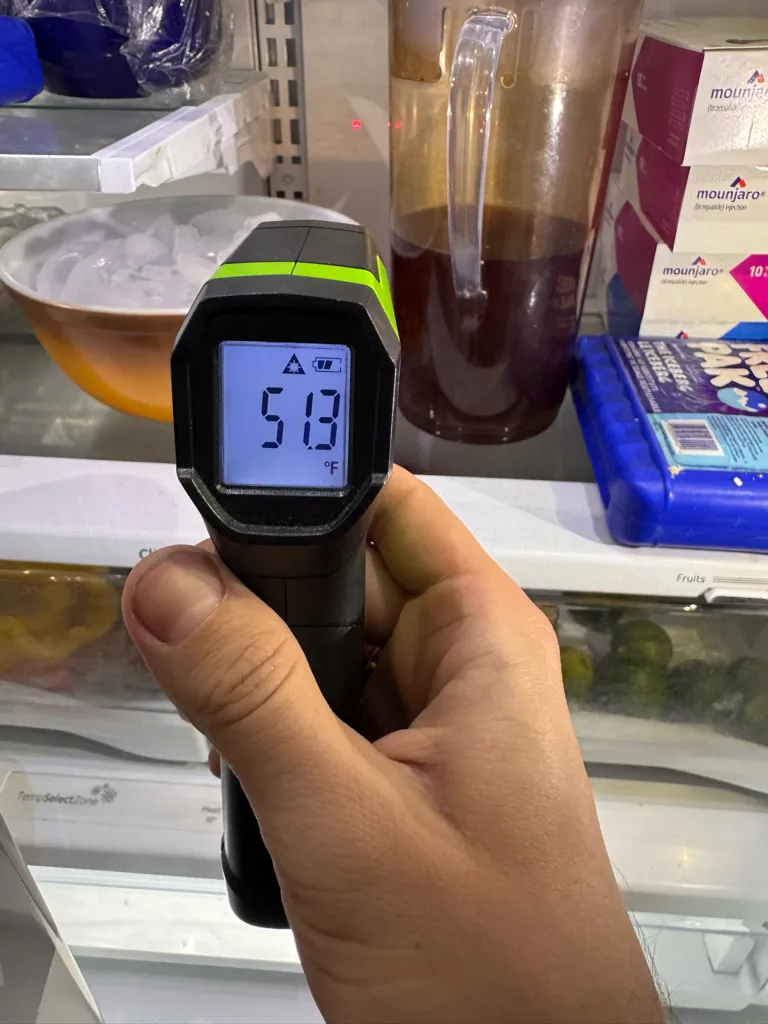
A GE refrigerator makes its cold air at the evaporator coil, usually behind the freezer panel. A small fan pushes that air through the freezer and into the fresh-food section. Many GE French-door and bottom-freezer models also have a separate fresh-food evaporator with its own fan. When a fan stops, the compressor keeps running and the coil stays cold, but the cold air does not reach your food.
The typical signs:
- The freezer is cold or nearly normal while the fridge slowly warms up.
- The top of the fridge is warmer than the bottom, or the other way around.
- You cannot hear or feel air at the vents inside the fridge.
- A fan that chirps, buzzes or ticks before it stops for good.
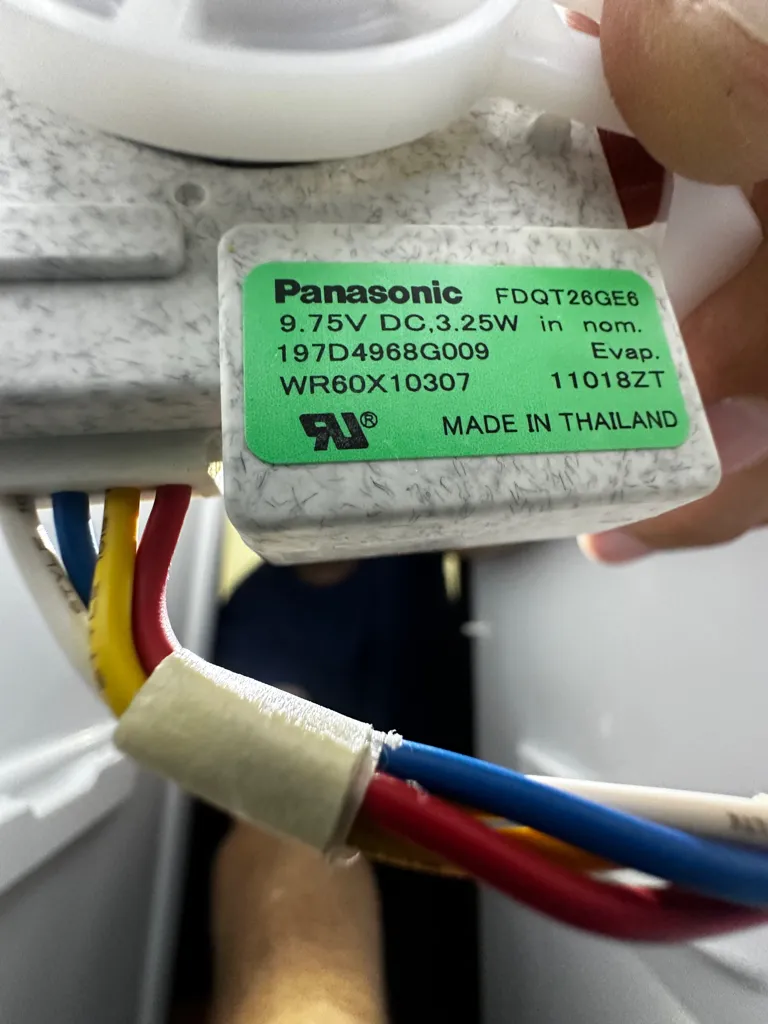
The fan we replace most often on GE is WR60X26866: it shows up on seven of our tickets, from Boulder and Lafayette to Denver, Longmont and Berthoud. Fan motors are a moderate repair and the rest of the refrigerator is usually fine.
Ice on the evaporator: the defrost system
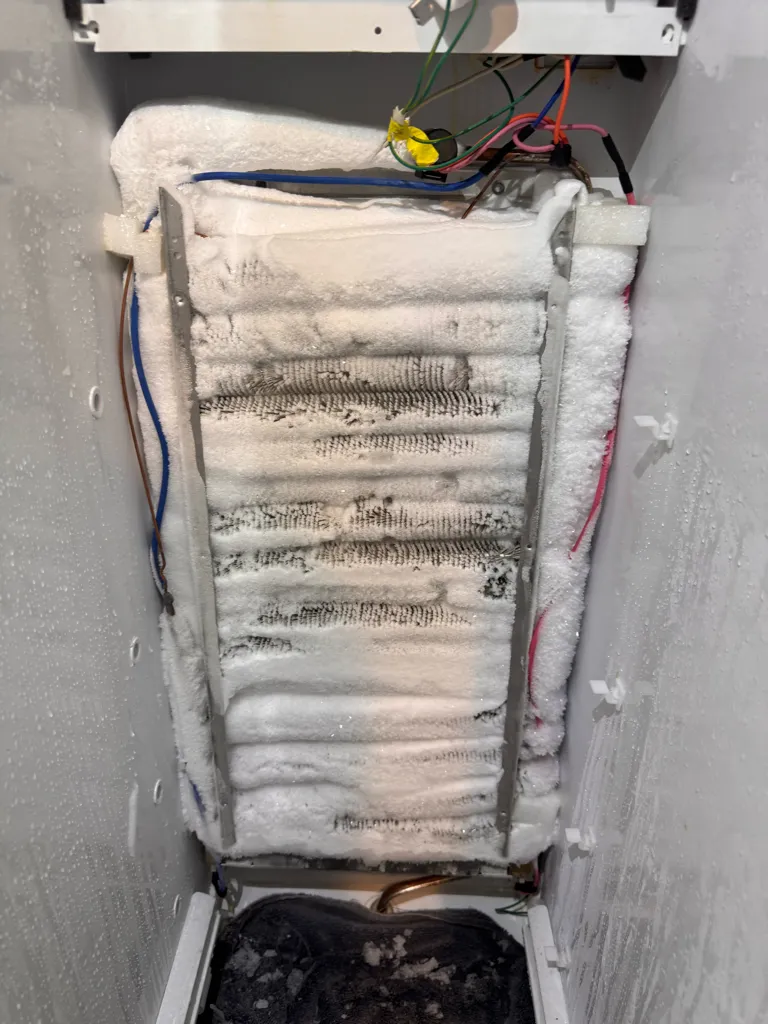
Several times a day the refrigerator switches on a defrost heater to melt the frost on the evaporator. If the heater, the defrost thermostat or the control that runs it fails, frost keeps building up until the coil is a block of ice and air can no longer pass through it.
The Denver call above is a textbook case. The owner said the top of the side-by-side was not cooling, the base was cool, and the freezer and the ice maker still worked. With the panel off, the evaporator was solid ice. We replaced the defrost heater (WR51X10055), the part we use most often on GE defrost repairs.
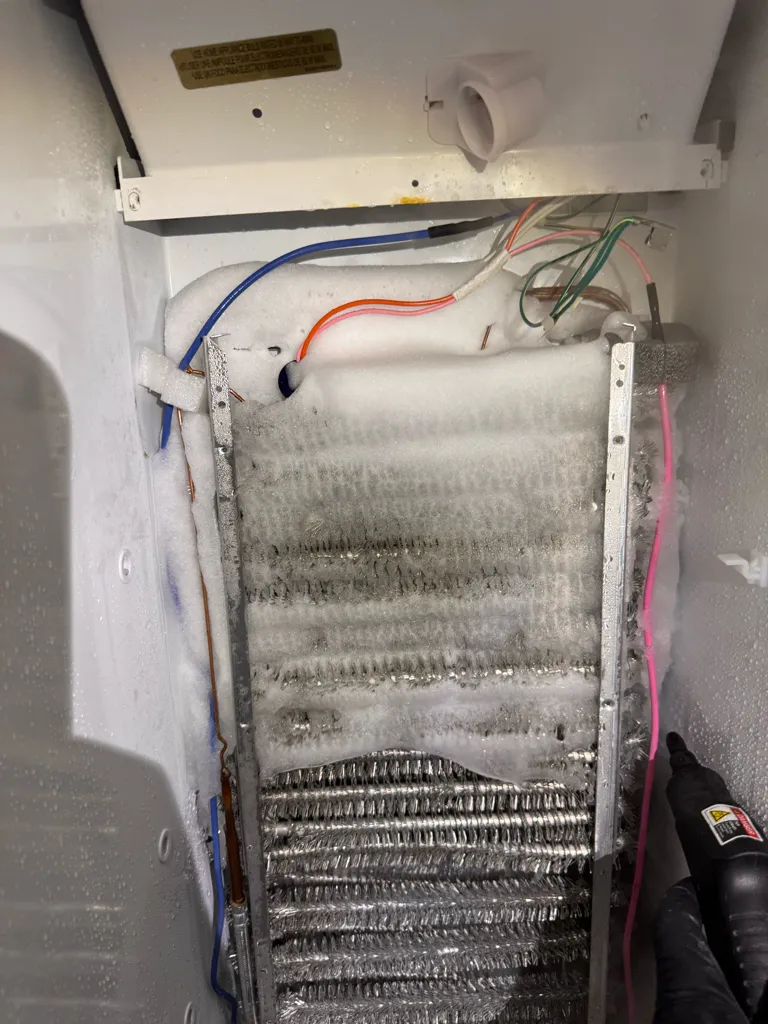
A defrost failure can look like it fixed itself: if the fridge is unplugged for a day, the ice melts and it cools again for a few days or weeks. If that happens, the defrost system still needs a repair.
Boards and the inverter
Many newer GE refrigerators use a variable-speed compressor run by an inverter board. When the compressor stops, the inverter is a more common cause on GE than the compressor itself. That is why we test before we quote.
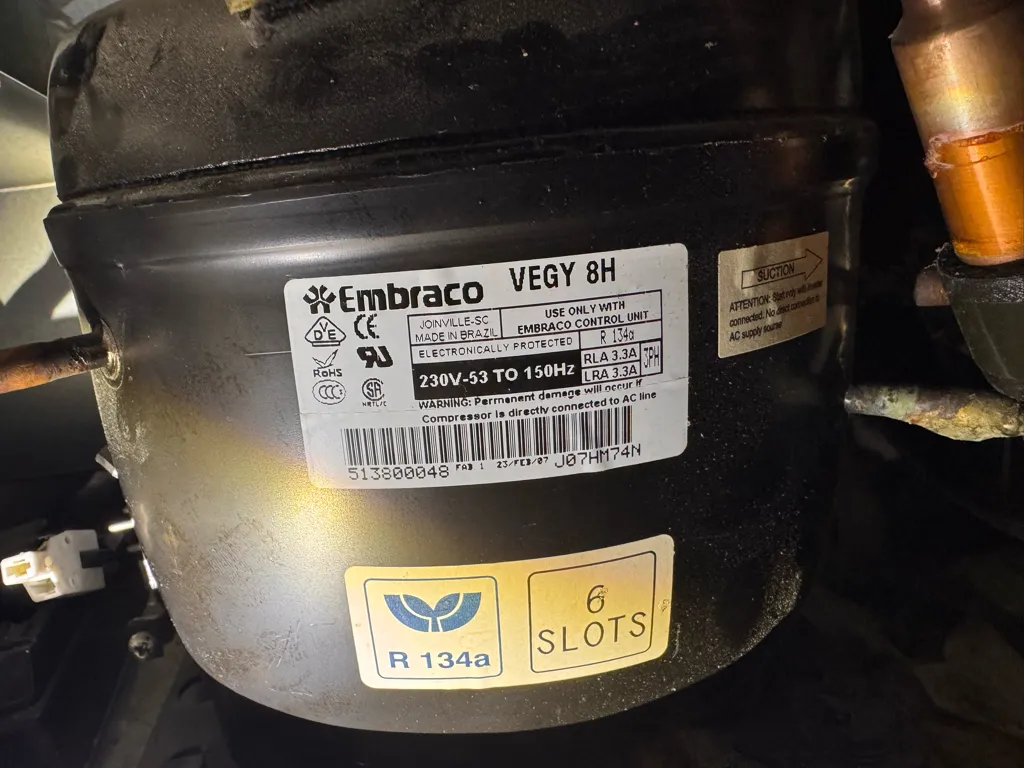
On the Arvada call above, the fridge read 61.4°F. The inverter was getting power but the compressor was not running. The technician measured the compressor windings at about 6.5 ohms between each pair of terminals, which means the windings were intact. The inverter board (WR49X10283) was replaced instead of the compressor, a much smaller repair.
The main control board runs the fans, the defrost and the compressor signal. On our GE tickets it was replaced six times. On a Longmont call the control board, the inverter board and the condenser fan were all replaced together.
When it really is the compressor
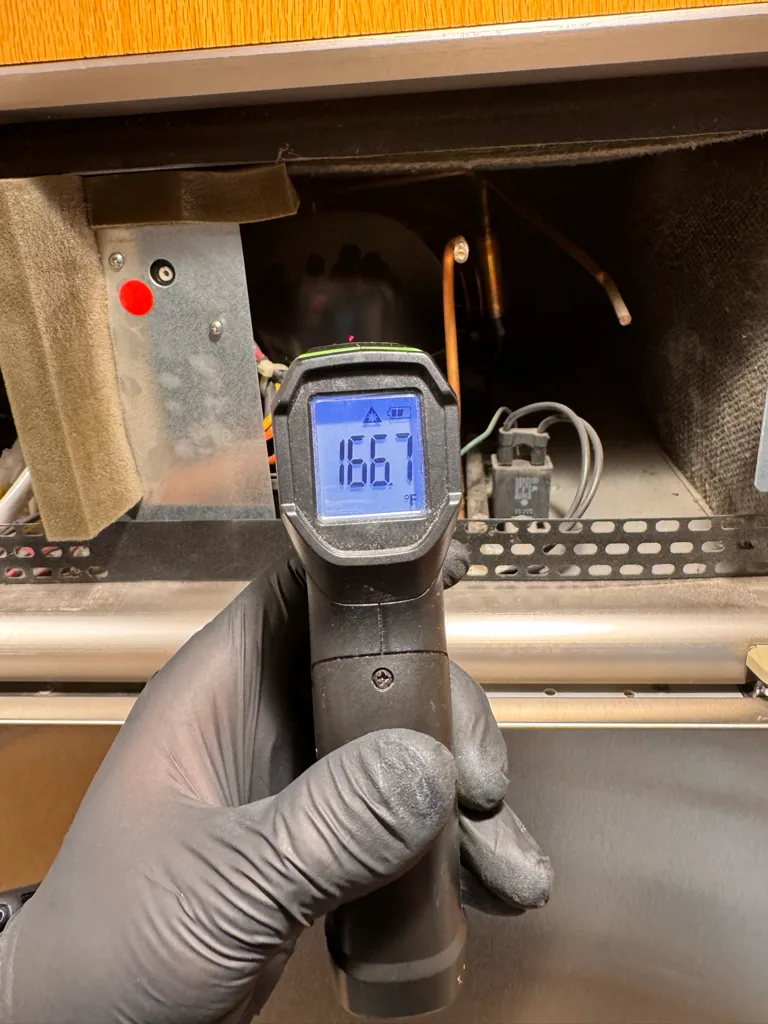
On a GE Monogram in Brighton the freezer read about 29°F and the fridge 38°F. The condenser fan and the other fans were running, but the compressor was off and read about 167°F. Once it cooled to about 150°F it started again. A compressor that keeps cutting out on heat points to poor airflow over the condenser or a compressor that is wearing out, and on built-in units it needs a careful diagnosis.
Other compressor and sealed-system calls in our records: two compressors replaced (WR87X10224 and WR87X41607), one sealed-system repair, and a Monogram in Superior where a new quick-chill fan and a condenser cleaning did not restore cooling and a refrigerant leak was suspected. Sealed-system work needs an EPA 608 certified technician.
Video: GE refrigerator not cooling
Video by Parts Dr
What we see on Denver calls
- On our 77 detailed GE calls, the evaporator or fresh-food fan was the most common fix: 18 calls (WR60X26866, WR60X10307 and others).
- Defrost problems: 8 calls (WR51X10055 defrost heater). Main control board: 6. Inverter board: 5.
- On GE, start with airflow: a stopped fan is far more common than a failed compressor.
Don’t want to do it yourself? Call 720-230-1229.
Safe checks before you call
- Put an appliance thermometer in a glass of water on the middle shelf and read it after a few hours. Above 40°F means food is at risk.
- Compare the freezer and the fridge. A cold freezer with a warm fridge points to a fan or the defrost system.
- Open the freezer and listen for the fan with the door switch pressed. No air and no sound is a clue.
- Look for frost on the back wall of the freezer or a snowy panel. That points to defrost.
- Vacuum the condenser coil and check that the condenser fan at the bottom back is turning.
- Restart the refrigerator once: unplug it or switch off the breaker for a minute. On two of our calls that was all it took. If the problem returns, call.
- Write down the model number from the label inside the fridge, such as GSH25JFTA, PFSS6PKXBSS or PSHS9PGZBCSS.
What it costs
On our price list a fan motor, the control board or the inverter board starts from $259 for labor, a defrost heater or a temperature sensor from $179, and compressor or sealed-system work from $479, with parts quoted separately. The home diagnostic visit is from $59 and is credited toward the repair. See our prices.
When to call a technician
- The fridge reads above 40°F after you have cleaned the condenser and cleared the vents.
- The freezer is cold but the fridge is warm, or ice keeps coming back on the freezer wall.
- The compressor clicks on and off, or the fans run but the compressor stays silent.
- The refrigerator cooled again after being unplugged and then warmed up again.
We repair GE, GE Profile, Café and Monogram refrigerators across 52 Denver-area cities. See GE refrigerator repair, Monogram refrigerator repair, GE refrigerator error codes and our general guide to refrigerators not cooling.
How to prevent this
Many of these breakdowns start with maintenance that was skipped. These guides show what to check, how often, and what happens if you don't:
Frequently asked questions
Why is my GE refrigerator not cooling but the freezer is cold?
On GE this usually means cold air is not reaching the fresh-food section: a failed evaporator or fresh-food fan, or ice on the evaporator from a defrost fault. In our records these are far more common on GE than a compressor failure.
How do I know if my GE refrigerator fan is bad?
With the freezer door switch pressed you should hear the fan and feel air at the vents. Silence, a ticking sound, or a fridge that warms while the freezer stays cold all point to the fan. A technician confirms it by checking power at the fan.
Why did my GE refrigerator start cooling again after I unplugged it?
Unplugging lets the ice on the evaporator melt and resets the boards. If the cause was a defrost fault, the ice and the warm fridge come back in days or weeks. If it never returns, it may have been a one-time control glitch.
Is it the compressor or the inverter board?
On newer GE models with a variable-speed compressor, a failed inverter board is a common cause of a compressor that will not start. A technician checks the inverter output and measures the compressor windings before deciding.
Is it worth repairing a GE refrigerator that is not cooling?
Usually yes. Fans, defrost parts and boards are moderate repairs. A compressor or sealed-system repair costs more and is worth comparing with a new refrigerator on older units.