Restaurant Equipment Repair
Restaurant equipment repair in Denver: reach-ins, prep tables, fryers, ovens and dish machines. Same-day or next-day, $129 diagnostic credited, 90-day warranty.
Restaurant equipment repair in Denver: reach-in refrigeration, prep tables, bar coolers, cooking lines and commercial dishwashers. The Appliance Team sends commercial technicians to restaurants, bars, cafes, school and church kitchens across the Denver metro and 30 surrounding cities. A commercial diagnostic is $129, and that fee is credited toward the repair if you go ahead. You get a written quote before any work starts, same-day or next-day commercial service, and a 90-day warranty on parts and labor. Our technicians are EPA 608 certified for refrigerant and sealed-system work.
Restaurant equipment we service
Walk-ins and ice machines have their own pages, linked at the bottom.
| Category | Equipment | What we fix |
|---|---|---|
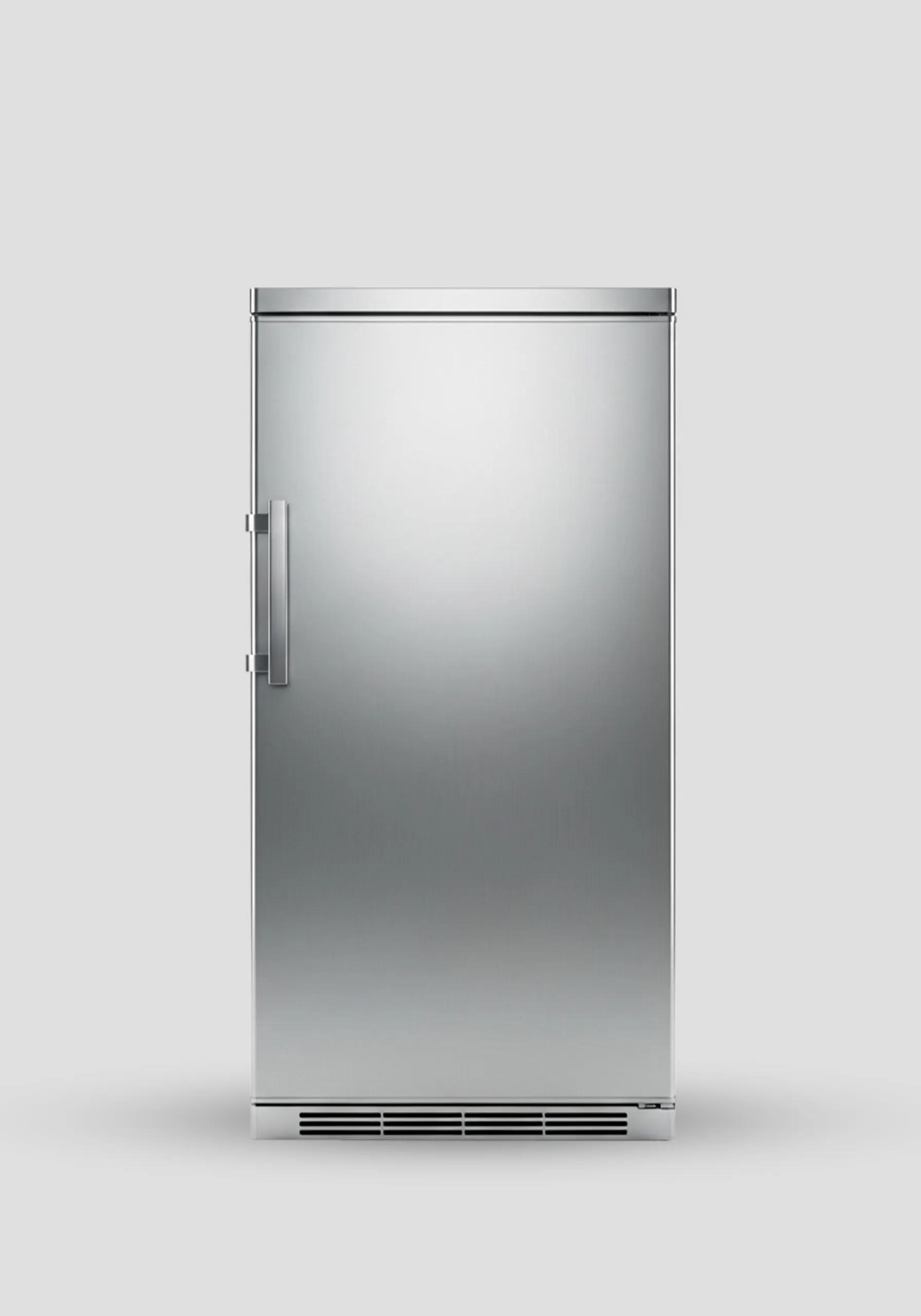
| Reach-in refrigeration | Reach-in refrigerators and freezers, dual-temp cabinets, roll-ins | Warm cabinets, icing coils, fans, controllers, probes, gaskets, hinges, compressors, refrigerant leaks |
| Prep and undercounter | Sandwich and salad prep tables, pizza prep tables, undercounter and worktop units, chef bases | Warm rails, frozen pans, condensate leaks, drawer gaskets and slides, condenser fans |
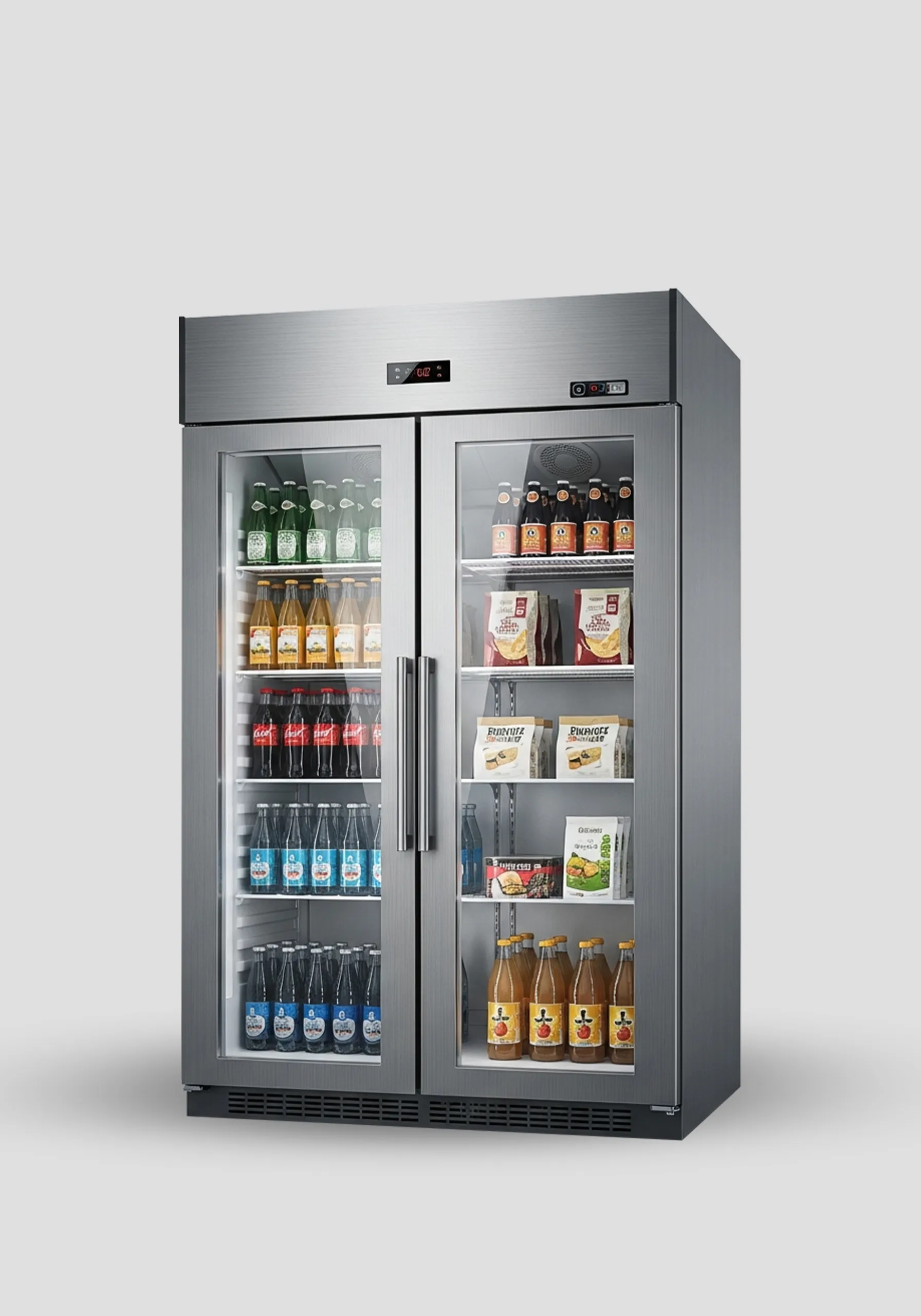
| Bar refrigeration | Back-bar coolers, bottle coolers, keg coolers, glass-door merchandisers | Door gaskets, glass-door heaters, lighting, fan motors, temperature controls |
| Blast chillers | Reach-in and roll-in blast chillers and shock freezers | Probe faults, slow pull-down, fan and controller faults |
| Cooking | Commercial ranges, convection ovens, fryers, griddles, charbroilers, steamers, combi ovens, holding cabinets | Ignition and pilot problems, thermostats, high limits, probes, gas valves, elements, blower motors, door switches, controllers |
| Warewashing | Door-type, undercounter and conveyor dishwashers, high-temp and low-temp (chemical) machines | Low rinse temperature, fill and drain faults, wash pumps, heaters, booster heaters, rinse arms |
Refrigeration brands: True, Turbo Air, Beverage-Air, Traulsen, Atosa, Delfield and Hoshizaki, plus other major commercial lines. Cooking brands: we service major commercial cooking brands such as Vulcan, Garland, Imperial, Southbend, Frymaster, Pitco, Blodgett and Rational. If your unit is not listed, call and give us the model number; we service all major brands.
Restaurant equipment problems we fix
| Symptom | Usual cause | Fix |
|---|---|---|
| Reach-in running warm, compressor runs constantly | Dirty condenser coil, failed condenser fan, low refrigerant | Clean coil, replace fan motor, leak search and recharge |
| Prep table rail warm, cabinet fine | Lid left open, rail fan or airflow blocked, overfilled pans | Restore airflow, replace fan, adjust or replace control |
| Freezer coil iced solid | Defrost heater, defrost termination sensor or controller fault | Replace heater or sensor, check defrost settings |
| Water on the floor under a cooler | Plugged condensate drain or failed drain heater | Clear the drain line, replace drain heater or pan |
| Door alarm or frost at the door | Torn gasket, sagging door, worn hinge or cam | Replace gasket, adjust or replace hinge |
| Display shows a probe code | Failed or unplugged sensor | Test probe resistance, replace probe or harness |
| Fryer will not heat or locks out | Ignition module, gas valve, high limit, temperature probe | Diagnose ignition circuit, replace failed component |
| Fryer recovers slowly | Weak burner or element, failing probe, clogged burner | Clean burners, test elements, replace probe |
| Range burner or oven pilot will not stay lit | Thermocouple, pilot orifice, safety valve | Clean pilot, replace thermocouple or safety valve |
| Convection oven heats but fan does not run | Blower motor, door switch, motor capacitor | Replace motor or switch |
| Steamer or combi oven not producing steam | Scale on the generator, water level probe, solenoid | Descale, clean probes, replace solenoid |
| Dishwasher rinse temperature low | Booster heater element or thermostat, low incoming water temperature | Replace element or thermostat, verify supply temperature |
Dirty condensers are the first thing we check
Most warm reach-in calls start at the condenser. True’s control guide says a dirty condenser coil restricts airflow and keeps the system from running efficiently, and Traulsen calls coil cleaning the most important thing you can do for long equipment life. Kitchen grease and flour bind to the fins and act like a blanket. The compressor runs longer, runs hotter and eventually fails. Several manufacturers tie warranty coverage to regular coil cleaning: Beverage-Air states its warranty is void if coils are not cleaned at regular intervals, and True excludes coil cleaning from warranty coverage.
Prep tables: two temperatures in one box
A prep table has to hold both the cabinet and the pan rail at safe temperatures. When the rail is warm but the cabinet is cold, the cause is usually airflow: a failed rail fan, pans blocking the air path, or a lid left up between rushes. When both are warm, look at the condenser, evaporator and charge. We probe the pans themselves, because the display reads cabinet air.
Fryer lockouts and high limits
Commercial fryers have two layers of temperature protection: the controller probe and a separate high-limit thermostat. When a controller reports a high-limit or probe failure, stop using the fryer. Frymaster’s FQ4000 manual tells operators to shut down immediately on HOT-HI-1 and to disconnect power on HELP HI-2. Those are not reset-and-keep-cooking faults. We test the probe, the high limit, the ignition module and the gas valve and replace only what failed.
Commercial refrigeration and fryer error codes
Code meanings vary by brand, model and controller generation, and some cabinets in the same product line use different controllers. Use the tables below as a guide, write down the exact code and the model and serial number before you call, and take a photo of the display if you can. Many cabinets list the controller maker (Dixell, Danfoss, Carel) on the control itself.
True electronic controls (TRM merchandisers)
| Code / message | Meaning | What usually fixes it |
|---|---|---|
| P1 | Thermostat probe failure | Check probe connection, test resistance, replace probe |
| P2 | Evaporator probe failure | Replace evaporator probe; defrost may run on time only |
| P3 | Auxiliary probe failure | Test and replace auxiliary probe |
| HA | Maximum temperature alarm | Check door closing, condenser, fans and charge |
| LA | Minimum temperature alarm | Check set point, control and probe placement |
| dA | Door switch alarm | Close the door; check switch and door alignment |
| EE | Data or memory failure | Power reset; replace controller if it returns |
| dEF | Defrost in progress | Normal; wait for defrost to finish |
| oFF / PoF / Pon | Stand-by / control locked / control unlocked | Status messages, not faults |
True controls without a display (Danfoss LED flash codes)
Some True cabinets have no temperature display. The control LED blinks once per second when power is on and no alarm is active. An alarm flashes in two blocks; count both.
| Code / message | Meaning | What usually fixes it |
|---|---|---|
| 1 / 1 | Low or high temperature alarm | Check airflow, door seal, condenser and charge |
| 1 / 2 | Line voltage alarm | Check supply voltage at the outlet and circuit |
| 1 / 3 | Condenser alarm | Clean condenser, check condenser fan |
| 2 / 1 | Sensor error | Test sensor resistance, replace sensor |
| 2 / 2 | Potentiometer error | Replace control |
| 3 / 1 | Leakage alarm | Diagnose with the True control guide; often control or wiring |
Traulsen R, A, G, compact and TE/TU/TS series
| Code / message | Meaning | What usually fixes it |
|---|---|---|
| ELE LOS | Power to the unit was interrupted | Clear with alarm cancel; check product temperatures |
| DOR OPN | Door left open | Close the door; check gasket and hinge |
| CHI | Cabinet air too high | Check condenser, fans, defrost and charge |
| CLO | Cabinet air too low | Check set point and control |
| CLN FIL | Condenser coil needs cleaning | Clean the condenser and filter |
| SN1 | Cabinet sensor failed | Replace cabinet sensor |
| SN2 | Coil sensor failed | Replace coil sensor |
| SN3 | Liquid line sensor failed | Replace liquid line sensor |
| DEF ERR | Defrost cycle did not finish | Test defrost heater, termination and control |
| RUN ERR | Compressor has run more than 24 hours | Check for low charge, iced coil, failed fans |
Beverage-Air (Danfoss control)
| Code / message | Meaning | What usually fixes it |
|---|---|---|
| Hi | Cabinet too warm | Confirm doors and drawers close; then condenser and fans |
| dOr | Door open | Close the door; if it stays on, check door switch |
| LEA | Compressor run time too long | Check door seal, condenser, charge |
| E01 / E02 / E03 / E04 | Sensor unplugged or failed | Reconnect or replace sensor |
| dEF | Defrosting | Normal operation |
Atosa and other Dixell XR06CX controls
| Code / message | Meaning | What usually fixes it |
|---|---|---|
| P1 | Room probe failure | Replace room probe; compressor runs on a timed cycle meanwhile |
| P2 | Evaporator probe failure | Replace evaporator probe; defrost ends on time |
| HA | Maximum temperature alarm | Check condenser, fans, door and charge |
| LA | Minimum temperature alarm | Check set point and probe |
| dA | Door open | Close the door; check door switch |
| EA | External alarm | Check what is wired to the alarm input |
| CA | Serious external alarm, all outputs off | Find and clear the external alarm source |
Turbo Air reach-ins
On Turbo Air TSR/TSF reach-ins, the door alarm chirps three times after 30 seconds, five times after 60 seconds and continuously after 5 minutes. “Hi” and “Lo” show when cabinet temperature is outside the display range, and “dF” is a normal freezer defrost status. Recorded faults sit in a stored error mode that a technician opens from the keypad.
Frymaster FQ4000 controller (FilterQuick fryers)
| Code / message | Meaning | What usually fixes it |
|---|---|---|
| HOT-HI-1 | Frypot above 410°F | Shut down immediately and call for service |
| HELP HI-2 / HIGH LIMIT FAILURE DISCONNECT POWER | High limit has failed | Disconnect power and call for service |
| E13 TEMPERATURE PROBE FAILURE | Probe reading out of range | Replace probe or harness |
| E16 / E17 | High limit 1 exceeded / high limit 2 opened | Test probe and high limit |
| E18 | Vat above 460°F and high limit did not open | Disconnect power; replace failed controls |
| E19 HEATING FAILURE | Heating latch or heat contactor failed | Test contactor, transformer, interface board |
| E25 / E27 | Air pressure switch failed to close / failed closed (gas) | Check blower and pressure switch |
| E28 HEATING FAILURE | Fryer failed to ignite, ignition module locked out | Check gas supply, igniter and module |
| E44 / E45 RECOVERY FAULT | Recovery time exceeded once / two or more cycles | Clean burners, test elements and probe |
| E62 VAT NOT HEATING | Vat is not heating properly | Check energy source and breaker, then service |
| E39 CHANGE FILTER PAD | 25-hour timer or dirty filter logic | Replace the filter pad |
| E42 CLOGGED DRAIN | Vat did not empty during filtration (gas) | Clear the drain, then press the check button |
Pitco digital and computer controls
| Code / message | Meaning | What usually fixes it |
|---|---|---|
| Prob / PROBE OPEN | Temperature probe fault; heating suspended | Replace probe or wiring |
| Hi / HIGH TMP | Oil too hot or bad probe reading (I-12: 40°F over set point or 410°F) | Stop cooking; test probe and control |
| Ignition Failure / HEAT FAILURE | Ignition locked out or no heat response | Check pilot, ignition, high limit or fuses |
| Drn Turn Off / DRAINING TURN OFF | Drain valve detected open, heat disabled | Close the drain valve, turn off, refill, restart |
| C4 | Melt cycle running | Normal; wait or cancel |
| Heat light flashes 7 times (solid state) | Drain valve open, heat stopped | Close valve, refill oil, restart |
| Heat light flashes 3 times (solid state) | Probe open or shorted | Replace the probe if wiring is intact |
How a commercial repair visit works
| Step | What happens |
|---|---|
| 1. Booking | Call 720-230-1229 or book online. Tell us the equipment, brand, model and any code on the display. We schedule same-day or next-day. |
| 2. Diagnosis | The technician checks temperatures, controls, airflow, gas or electrical supply and the refrigeration circuit. The $129 commercial diagnostic is credited toward the repair if you proceed. |
| 3. Written quote | You get a written quote before any work starts. We tell you plainly if a repair is not worth it. |
| 4. Parts | We use genuine OEM parts whenever available. If a part must be ordered, we say so and give you a timeline. |
| 5. Repair and test | We complete the repair and confirm operation: holding temperature, cycle, flame or rinse temperature. |
| 6. Warranty | Every repair carries our 90-day warranty on parts and labor. |
Before you call: safe checks
- Write down the code on the display, plus the model and serial number. Traulsen puts them on the amp plate; Beverage-Air puts the dataplate inside the left wall.
- Check that doors and drawers close fully and nothing blocks them. A single sheet pan can hold a door open.
- Check the breaker. If it tripped, reset it once. If it trips again, leave it off and call.
- Vacuum or brush the condenser grille with the unit unplugged, and keep boxes away from the front and back vents.
- On a Pitco or Frymaster drain message, confirm the drain valve is fully closed before anything else.
- Move product to a working unit if a cooler reads above 41°F. Do not touch gas valves, wiring or refrigerant lines.
Denver notes: food code, altitude and water
Food code. Colorado adopted the FDA 2022 Food Code effective March 16, 2024. The Food Code requires cold holding of time/temperature control for safety (TCS) food at 41°F or below and hot holding at 135°F or above. A cooler that drifts to 44°F or a holding cabinet that sags below 135°F is an inspection problem as well as a food safety problem, so we treat those calls as urgent.
Dish machine temperatures. Food Code section 4-501.112 sets the hot-water sanitizing rinse at no more than 194°F at the manifold, and at least 180°F for most machines (165°F for a stationary rack, single-temperature machine). A booster heater that cannot keep up is a common call.
Gas cooking at altitude. Denver sits at about 5,280 ft. Gas appliances must be set up for elevation. For example, the Dean Triathlon gas fryer manual (a Frymaster product line) says that above 2,000 ft the rating should be reduced four percent for each additional 1,000 ft, and that the correct orifices are installed at the factory when the altitude is known at order. Used equipment brought in from a low-elevation city may have sea-level orifices. That can cause yellow flames, soot and slow recovery. We follow each manufacturer’s high-altitude instructions.
Steamers. Water boils at about 202°F at 5,000 ft (NMSU Extension), not 212°F. Steam equipment still works, but cook times and expectations differ from sea-level charts.
Water. Denver Water describes its water as soft to moderately hard, slightly harder in winter. Scale still builds in steamers, combi ovens and dish machine boosters over time, so descaling belongs on the maintenance list.
Restaurant equipment maintenance schedule
| Task | How often | Why |
|---|---|---|
| Inspect reach-in condenser coils | Monthly (Beverage-Air, True) | Grease and dust raise head pressure and run time |
| Clean condenser coils | At least every 3 months (Turbo Air); about every 4 months (Atosa); more often near fryers | Protects the compressor; some warranties require it |
| Blow out self-cleaning condensers | 1–2 times a year (Turbo Air) | Brushes do not remove grease |
| Check door gaskets and hinges | Monthly | Torn gaskets cause frost, alarms and long run times |
| Log cabinet and rail temperatures | Every shift | Catches drift before an inspection does |
| Clean fryer burners and check flame | Per manufacturer, at least quarterly | Slow recovery and soot start at the burner |
| Descale steamers and combi ovens | Per manufacturer and water hardness | Scale blocks probes and generators |
| Verify dish machine rinse temperature | Daily | Food Code minimums at the manifold |
For a scheduled program across all your equipment, see commercial preventive maintenance.
Repair or replace?
Most failures are parts: a fan motor, a probe, a gasket, a thermocouple, an ignition module. Those repairs almost always beat replacement. The harder calls are a failed compressor on an older reach-in, a cracked fryer pot or a failed combi steam generator. We weigh age, parts cost, parts support and what downtime costs you. Check your manufacturer’s warranty first: Turbo Air and Traulsen list 3 years parts and labor with 2 more years on the compressor, Atosa lists 2 years parts and labor plus 3 more on the compressor, and Beverage-Air lists 7 years on most units shipped after July 1, 2024. Terms vary by model. We repair in or out of the manufacturer’s warranty, and the choice of who does the work is yours. If a repair is not worth the money, we will tell you.
Businesses we work with
Commercial refrigeration and kitchen equipment is not only in restaurants. Across the Denver metro we repair equipment for:
- Gas stations and convenience stores: glass-door coolers, reach-in merchandisers, beverage and ice merchandisers, and the walk-in coolers behind the cooler doors.
- Grocery stores and markets: reach-ins, display cases, walk-in coolers and freezers.
- School, corporate and hospital cafeterias: reach-ins, prep tables, walk-ins, ice machines and dish machines.
- Hospitals, senior living and clinics: kitchen refrigeration, ice machines and nourishment-room refrigerators.
- Hotels, bars, breweries and coffee shops: bar and back-bar coolers, keg coolers, undercounter units and ice machines.
- Offices, gyms and churches: breakroom and kitchen refrigerators, ice machines and commercial laundry.
- Warehouses, food production and commissaries: walk-in coolers and freezers and reach-ins.
- Property managers and HOAs: laundry rooms, clubhouse kitchens and appliances in units, with quotes sent to both the manager and the tenant when needed.
Restaurant equipment repair near you
We cover restaurants and commercial kitchens across the metro, including Denver, Cherry Creek, Boulder, Aurora, Lakewood, Englewood, Golden, Littleton, Westminster, Centennial, Lone Tree.
Related commercial services: commercial refrigerator repair, walk-in cooler repair, walk-in freezer repair, commercial ice machine repair, preventive maintenance and commercial laundry repair.
Common Restaurant Equipment Repair Issues We Fix
Why Choose The Appliance Team?
Denver's trusted appliance repair company — professional service you can count on.
Same-Day Service
Same-day appliance repair in Denver — call early and we can often be there today. No waiting around for weeks.
90-Day Warranty
90-day warranty on parts and labor for every repair we perform.
Certified Technicians
Our Denver appliance repair technicians are trained on all major brands and use genuine manufacturer parts.
Transparent Pricing
Service fee waived with repair. No hidden charges, no surprises.













Frequently Asked Questions
The Appliance Team charges a $129 commercial diagnostic, and that fee is credited toward the repair if you proceed. You get a written quote before any work starts, so the price is set before we pick up a tool. Every repair carries a 90-day warranty on parts and labor.
On Dixell-style controls used by Atosa and on True TRM merchandisers, P1 is a probe failure: the thermostat or room probe is open, shorted or unplugged. The control may keep cycling the compressor on a timer, so the cabinet can drift warm or cold. The fix is usually a probe or harness, which a technician confirms with a resistance test.
Under the FDA Food Code, which Colorado adopted in its 2022 edition effective March 16, 2024, TCS food must be held at 41°F or below and hot food at 135°F or above. Traulsen lists 34–38°F as standard operating range for most G-Series refrigerators. If a cooler reads above 41°F, move product and call for service.
We offer same-day or next-day commercial service across the Denver metro. Tell us the brand, model and any display code when you book so the technician can bring likely parts. If a part must be ordered, we say so and give you a timeline.
Yes. We repair in or out of the manufacturer's warranty, and the choice of who does the work is yours. Many commercial refrigeration warranties run 2–7 years depending on brand and model, so check your terms. Our own repairs carry a 90-day parts and labor warranty.
Equipment down? Get a tech today or tomorrow
Call 720-230-1229 or book online. $129 commercial diagnostic credited toward the repair, written quote first, same-day or next-day service, EPA 608 certified technicians and a 90-day warranty on parts and labor.