Convenience Store & Gas Station Refrigeration Repair
Denver c-store and gas station refrigeration repair: cooler doors, beer caves, walk-ins, merchandisers, ice freezers. Same-day or next-day, 90-day warranty.
Convenience store and gas station refrigeration repair in Denver: glass-door coolers, beer caves, walk-ins, beverage merchandisers and bagged-ice freezers. The Appliance Team repairs the refrigeration that keeps a c-store selling, from the cooler doors along the back wall to the condensing units on the roof. Our commercial diagnostic is $129, credited toward the repair if you go ahead, and you get a written quote before any work starts. We offer same-day or next-day commercial service, our technicians are EPA 608 certified for refrigerant work, and every repair carries a 90-day warranty on parts and labor.
What we service in convenience stores and gas stations
We work on every kind of c-store refrigeration and on all major brands.
| Equipment | Common brands | What we fix |
|---|---|---|
| Walk-in coolers and beer caves with glass reach-in doors (“cooler doors”) | Anthony, Hussmann and other door makers; Heatcraft, KE2 and similar controls | Door heaters, anti-sweat controls, gaskets, closers, LEDs, defrost, rooftop units |
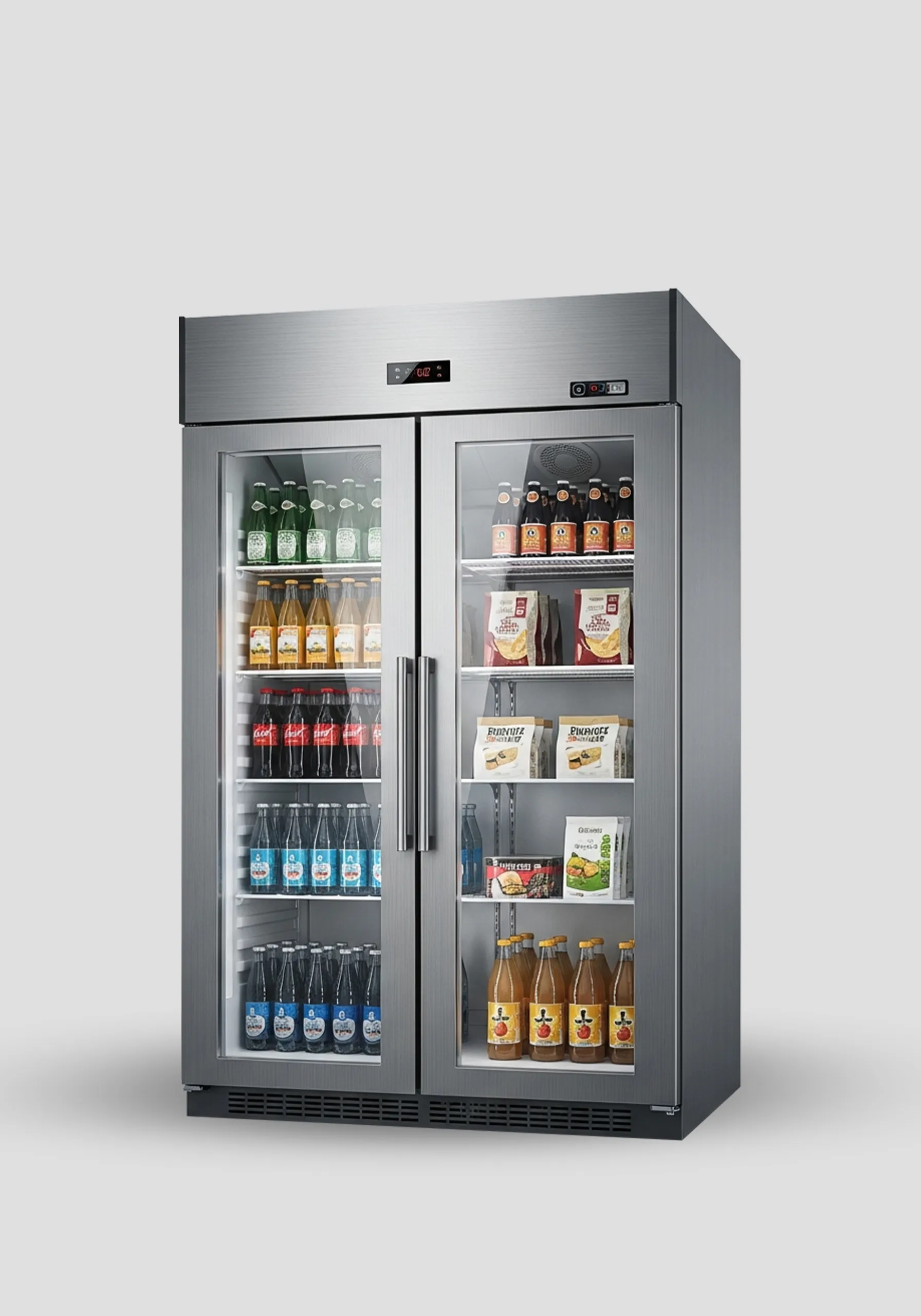
| Glass-door merchandisers and beverage coolers | True GDM, Beverage-Air, Turbo Air, Atosa, Habco, Imbera | Controllers, probes, fans, gaskets, hinges, lighting, leaks |
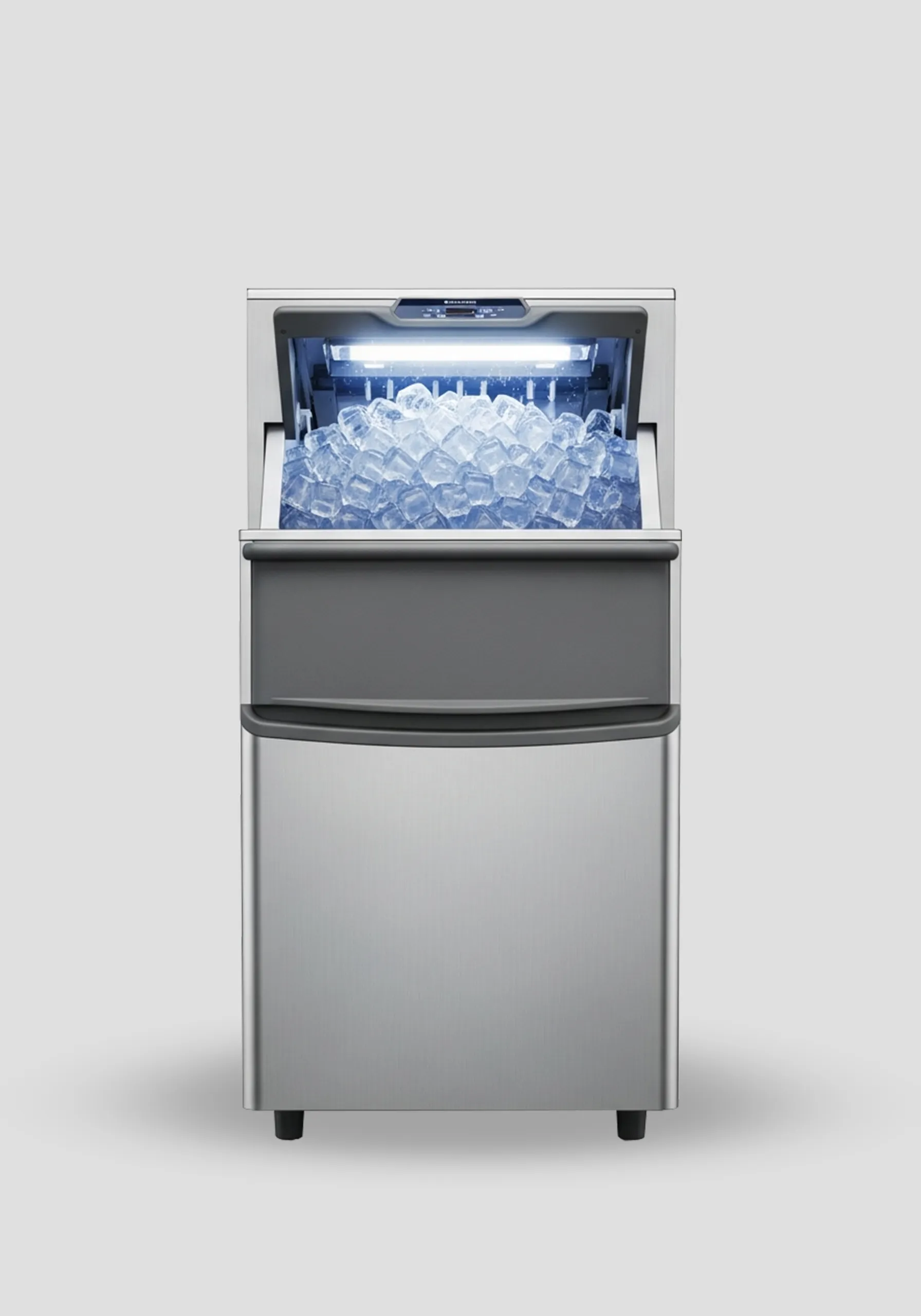
| Bagged-ice merchandisers | Leer, Polar Temp, Arctic Industries | Defrost heaters and timers, probes, gaskets, door springs |
| Open-air grab-and-go merchandisers | All major brands | Warm product, air curtain, fans, coil icing |
| Walk-in freezers | All major box and system brands | Defrost and drain heaters, frozen coils, compressors |
| Ice machines and fountain dispensers | General service | Ice production and cleaning issues (see commercial ice machine repair) |
Check who owns the cooler first. Many soda, energy and beer coolers belong to the distributor, not the store. Coca-Cola, for example, tells business customers to contact their local bottler for service on Coca-Cola coolers, and each cooler carries a service sticker. If the cooler is yours, we fix it. We can also look at roller grills and food warmers while on site.
Problems we fix
| Symptom | Usual cause | Fix |
|---|---|---|
| Cooler doors fogging or dripping | Failed door or frame heater, bad anti-sweat controller or sensor, worn gasket, store humidity above door design limit | Test heater circuits and controller, replace heater wire, sensor or gasket |
| Water or ice on the floor at the cooler doors | Door not sealing, frame heater out, door propped by stock | Adjust closer and hinge, replace gasket, repair frame heater |
| Doors will not close by themselves | Weak torque-rod or spring closer, sagging hinge, box out of level | Re-tension or replace closer, adjust hinge, check door hold-open |
| Beer cave or walk-in warm in the afternoon | Dirty rooftop condenser, failed condenser fan, low refrigerant | Clean coil, replace fan motor, leak search and repair |
| Walk-in iced up, airflow weak | Defrost heater, termination sensor or timer failure; door left open | Clear ice, repair defrost circuit, fix door closer |
| Glass-door merchandiser warm, compressor running | Plugged condenser coil, failed condenser fan, blocked air grille | Clean coil, replace fan, restore airflow |
| Merchandiser not running, display shows a code | Probe failure, voltage alarm, controller fault | Read code, test probe and supply voltage, replace probe or controller |
| Bagged ice clumping or soft | Cabinet running warm, defrost too long, door left open | Check setpoint, defrost heater and termination, door springs |
| Ice merchandiser frosted solid | Cold wall unit overdue for manual defrost, or auto-defrost heater out | Defrost, repair heater or control |
| LED lights out on one or more doors | Failed LED driver, loose connector, door wiring | Replace driver or LED strip, repair harness |
| Walk-in short cycling or tripping in cold weather | Head pressure control problem on the rooftop unit | Check fan cycling controls, holdback valve and charge |
Cooler door fogging: heaters, controllers and humidity
Glass reach-in doors have heaters in the glass, rails and frame that keep the outside surface above the dew point. Federal rules for walk-ins made on or after January 1, 2009 (10 CFR 431.306) require cooler doors to use double-pane glass with heat-reflective treatment and gas fill, or triple-pane glass. They also cap anti-sweat heater power at 3.0 watts per square foot of door opening for coolers and 7.1 for freezers unless the heaters have controls that cut energy based on outside humidity or condensation on the glass. Hussmann’s DASH controller, for example, typically runs door heaters 40–70% of the time, and runs them at 100% if the sensor is unplugged. When one door fogs, we start at that door’s heater circuit. When every door fogs at once, we check the controller, the sensor and the store’s humidity. Hussmann notes that doors can sweat above about 70% relative humidity even with heaters full on.
Rooftop condensers and Denver summer afternoons
Most c-store walk-ins and beer caves use a remote condensing unit on the roof. On a hot day a coil packed with cottonwood fluff, dust or exhaust grease cannot reject heat, so head pressure climbs and the box drifts warm just when traffic peaks. We clean the coil, check every condenser fan and its motor, and verify charge and superheat before we call the job done.
Bagged-ice merchandisers: cold wall vs. auto-defrost
Ice merchandisers come in two designs. Cold wall units run the refrigeration tubing through the cabinet walls and cannot defrost themselves; Leer’s manual says to defrost them by emptying the cabinet and cutting power, and to use only a plastic scraper because metal tools can puncture the evaporator tube. Auto-defrost units have a heater on the coil; Leer’s electronic control runs a 24-minute defrost every 4 hours and ends early when the coil probe reaches 60°F. Leer’s factory setpoint is 16°F, and Polar Temp units cycle between 10°F and 20°F. Ice fusing into blocks usually means the cabinet is spending too long warm.
Controller codes and alarms on c-store equipment
Code meanings depend on which controller is installed, not just the cabinet brand, so read the model or part number on the controller itself. The same brand can use different controllers depending on the model year, so the code list depends on the controller, not the cooler brand. Write the code down before you call.
Danfoss ERC 111 / ERC 112 (common on glass-door bottle coolers, including GDM-style units)
On the ERC 112 the alarm code flashes alternately with the temperature, and pressing any button acknowledges it.
| Code | Meaning | What usually fixes it |
|---|---|---|
| Hi | High temperature alarm: air above the high limit for the delay time | Clean condenser, check fans, door seal, refrigerant |
| Lo | Low temperature alarm | Check setpoint and air sensor |
| Con | Condenser alarm: condenser temperature too high or too low | Clean condenser coil, replace condenser fan, clear airflow |
| uHi / uLi | Line voltage high / low | Check outlet and circuit, remove extension cords |
| LEA | Leakage alarm: compressor ran nonstop longer than the set limit | Leak search, coil cleaning, door seal check |
| E01 | S1 air (control) sensor open or shorted | Check connection, replace sensor |
| E02 | S2 defrost/evaporator sensor open or shorted | Check connection, replace sensor |
| unP / Prg | Controller unprogrammed or programming unfinished; relay locked | Controller must be programmed for the cabinet |
Dixell XR-series (used on Atosa and many other cases and ice merchandisers)
When the alarm light is on, press the up or down arrow to see the recorded alarm with the highest or lowest temperature reached and how long it lasted.
| Code | Meaning | What usually fixes it |
|---|---|---|
| P1 | Room (air) probe failure; compressor runs on a timed cycle | Check probe wiring, then replace probe |
| P2 | Evaporator probe failure; defrost ends on time only | Check probe wiring, then replace probe |
| HA | Maximum temperature alarm | Find why the box is warm: coil, fans, door, charge |
| LA | Minimum temperature alarm | Check setpoint, alarm setting and thermistor |
| dA | Door open alarm | Close door, check door switch and closer |
| EA | External alarm input active | Trace the device wired to the digital input |
| CA | Serious external alarm or pressure switch alarm; all outputs off | Find the pressure or safety fault; pressure switch version clears only after a power cycle |
Ice merchandiser controls (Leer and Polar Temp)
| Code | Meaning | What usually fixes it |
|---|---|---|
| P1 (Leer) | Air probe failure; compressor cycles at 5-minute intervals | Check probe connection, replace probe |
| P2 (Leer) | Evaporator probe failure; timed defrost only | Check probe connection, replace probe |
| HA / LA (Leer) | Above maximum for more than 15 minutes / below minimum | Check door, condenser, defrost and setpoint |
| E1 / E01 (Polar Temp) | Faulty air sensor | Replace sensor |
| E2 / E02 (Polar Temp) | Faulty defrost sensor | Replace sensor |
| E03 (Polar Temp) | Faulty condenser air sensor (ERC102C, ERC101A) | Replace sensor |
| E13 (Polar Temp) | Communication error between display and relay (ETC-1H) | Check cable, replace display or relay board |
| VH / VL (Polar Temp) | Voltage high / low | Check dedicated circuit and supply voltage |
Beverage-Air, Turbo Air and walk-in controls
Beverage-Air’s H-series manual lists only “dF”, meaning a defrost is running; freezer models defrost every 8 hours. Turbo Air’s TGM merchandisers do not use numeric codes, but they warn you about an open door: 3 beeps at 30 seconds, 5 beeps at 1 minute and a continuous alarm after 5 minutes. For Heatcraft, KE2 and other walk-in controller codes, see our walk-in cooler repair page.
How a commercial repair visit works
- Diagnosis: We come out same day or next day and trace the fault from the controller to the rooftop unit. The diagnostic is $129, credited toward the repair if you proceed.
- Written quote: You get the price in writing before any work starts. For chains, we can send it to the store manager and the owner or district manager.
- Parts: We use genuine OEM parts whenever available, and tell you when a part must be ordered.
- Warranty: Every repair is covered for 90 days on parts and labor. We repair in or out of the manufacturer’s warranty, and the choice of who does the work is yours.
Before you call: safe checks
- Look for a distributor’s service sticker on soda, energy and beer coolers. If the cooler is theirs, they handle the repair.
- Note the code on the display and the temperature, and photograph the controller label.
- Check that stock, boxes or display racks are not blocking the front grille, the return air or the evaporator fan in a walk-in.
- Make sure the cooler doors are not held open by product, and that the walk-in door is closing and latching.
- Check the breaker and confirm there is no extension cord; Leer calls for a dedicated 115V circuit.
- Move product to a working cooler and log temperatures. Do not climb onto the roof or open electrical panels.
Denver notes for c-store refrigeration
Food safety: Colorado adopted the FDA 2022 Food Code effective March 16, 2024. The Food Code calls for cold-held time/temperature control for safety (TCS) foods, such as sandwiches, dairy and cut fruit, to stay at 41°F or below, so a warm grab-and-go case is a food safety problem, not just a sales problem.
Summer heat: Per the National Weather Service, Denver’s normal daily highs in July run 88–91°F, and the city tied its all-time record of 105°F on July 20, 2005. Cleaning rooftop coils before summer pays off.
Winter cold: Remote condensing units still run when it is far below freezing. Head pressure has to stay high enough for the expansion valve to feed the coil, so rooftop units use fan cycling controls, a flooding (holdback) valve or a split condenser. When they fail, capacity swings and the box can drift warm on a cold night.
Outdoor ice merchandisers: Leer recommends cleaning the cabinet more often where road salt and deicers are used, which describes most gas station aprons in winter.
Preventive maintenance for multi-location c-store owners
If you run several stores, we can put every location on one maintenance schedule and send each report to the store manager and to you. See commercial preventive maintenance for details.
| Task | How often | Why |
|---|---|---|
| Clean glass-door merchandiser condenser coils and fans | Every 3 months (Turbo Air) to every 4–6 months (Beverage-Air) | Dirty coils are the top cause of warm cases and failed compressors |
| Clean ice merchandiser condenser coil and fan | Every 3 months (Leer); at least twice a year (Polar Temp) | Keeps ice hard and the compressor cool |
| Check ice merchandiser coil for ice buildup | Every 3 months (Leer) | Cold wall units need manual defrost |
| Clean rooftop condensing units | Spring, before summer heat, and as needed | Restores capacity for July afternoons |
| Inspect cooler door gaskets, closers and hinges | Every visit | Stops air leaks, fogging and floor water |
| Test door, frame and anti-sweat heaters and controller | Every visit, and before humid summer storms | Prevents fogged doors and wet floors |
| Check walk-in defrost, drain lines and evaporator fans | Every visit | Prevents iced coils and leaks |
| Check head pressure controls on rooftop units | Fall, before cold weather | Keeps systems stable in winter |
Repair or replace?
Most c-store calls are repairs, not replacements: a fan motor, a probe, a door heater, a gasket or a coil cleaning. Walk-in doors, closers and heaters can be replaced individually without touching the box. A failed compressor on an older plug-in merchandiser with rusted rails or doors that no longer seal is where replacement can make more sense. We give you the repair price in writing, and if a repair is not worth it, we say so. If the cooler belongs to a distributor, the decision is theirs.
Convenience store refrigeration repair near you
We serve c-stores and gas stations across the Denver metro, including Denver, Aurora, Lakewood, Thornton, Commerce City, Westminster, Brighton, Castle Rock, Longmont, Wheat Ridge and Englewood.
Related services: walk-in cooler repair, walk-in freezer repair, commercial refrigerator repair, commercial ice machine repair, restaurant equipment repair and True refrigerator repair.
Common Convenience Store & Gas Station Refrigeration Repair Issues We Fix
Why Choose The Appliance Team?
Denver's trusted appliance repair company — professional service you can count on.
Same-Day Service
Same-day appliance repair in Denver — call early and we can often be there today. No waiting around for weeks.
90-Day Warranty
90-day warranty on parts and labor for every repair we perform.
Certified Technicians
Our Denver appliance repair technicians are trained on all major brands and use genuine manufacturer parts.
Transparent Pricing
Service fee waived with repair. No hidden charges, no surprises.













Frequently Asked Questions
Our commercial diagnostic is $129, and it is credited toward the repair if you go ahead. After we find the cause, you get a written quote before any work starts. Every repair carries a 90-day warranty on parts and labor.
Fogging usually means a door or frame heater has failed, the anti-sweat controller or its humidity sensor is faulty, or a gasket is not sealing. If only one door fogs, the problem is usually that door's heater or gasket. If every door fogs at once, check the controller and the store's humidity; Hussmann notes doors can sweat above about 70% relative humidity even with heaters running full time.
Many branded beverage coolers belong to the bottler or distributor, not the store. Coca-Cola, for example, directs business customers to their local bottler and puts a service sticker on each cooler. If the cooler is yours, we repair it on the same visit as the rest of your equipment.
On Danfoss ERC 111 and 112 controllers, common on glass-door bottle coolers, Con is a condenser alarm, meaning the condenser is running too hot or too cold, and Hi is a high cabinet temperature alarm. The usual fix is cleaning the condenser coil, restoring airflow at the grille and checking the condenser fan. E01 and E02 mean a failed air or evaporator sensor.
Yes. We offer same-day or next-day commercial service across the Denver metro and can set up preventive maintenance on one schedule for every store, with reports sent to both the store manager and the owner. We repair in or out of the manufacturer's warranty, and the choice of who does the work is yours.
Get your coolers back online
Call 720-230-1229 or book online. Same-day or next-day commercial service, a $129 diagnostic credited toward the repair, a written quote first, EPA 608 certified technicians and a 90-day warranty on parts and labor.