
Empty and wash the ice bin every 1 to 3 months, and sanitize stand-alone ice makers as the manual says, usually every 6 months. Ice is food. Old ice absorbs odors, clumps together and can jam the dispenser, and damp spots can grow slime and mold.
Why ice makers get dirty
Ice makers are cold and wet. Some bacteria, yeast and mold still grow in that environment, especially where water drips and dries, like the chute, the bin edges and the water reservoir. Ice also absorbs odors from the freezer.
Health departments treat commercial ice as food, and the same logic applies at home: anything that touches the ice should be clean.
This guide is part of our ice maker maintenance checklist. On the same appliance, also check ice maker descaling and hard water and ice maker water supply, filter and valve. Related guides for other appliances: commercial ice machine cleaning and sanitizing and ice machine condenser, bin and drain care.
What happens if you never clean the bin
Problems start with taste and smell and end with a jammed or leaking dispenser.
Old ice sits Early
Inside: Ice that isn’t used for weeks shrinks, sticks together and picks up freezer odors.
You notice: Ice tastes or smells like the freezer.
Clumps form Growing
Inside: Partial melting and refreezing fuse cubes together.
You notice: Big chunks, dispenser delivers little or no ice.
Auger and chute jam Serious
Inside: Clumps bind the auger and crusher. The motor strains.
You notice: Grinding or clicking when you press the paddle.
Slime and mold Severe
Inside: Wet areas in the chute, reservoir and bin grow pink or black slime.
You notice: Dark spots, a musty smell, cloudy water.
Parts fail or leak Critical
Inside: Ice around the chute keeps the door flap from sealing, and frost spreads into the ice maker compartment.
You notice: Water dripping from the dispenser, ice packed into the compartment, auger motor failure.
What it can cost you
Bad-tasting iceJammed dispenserAuger motor failureMold and slimeLeaks from the dispenser

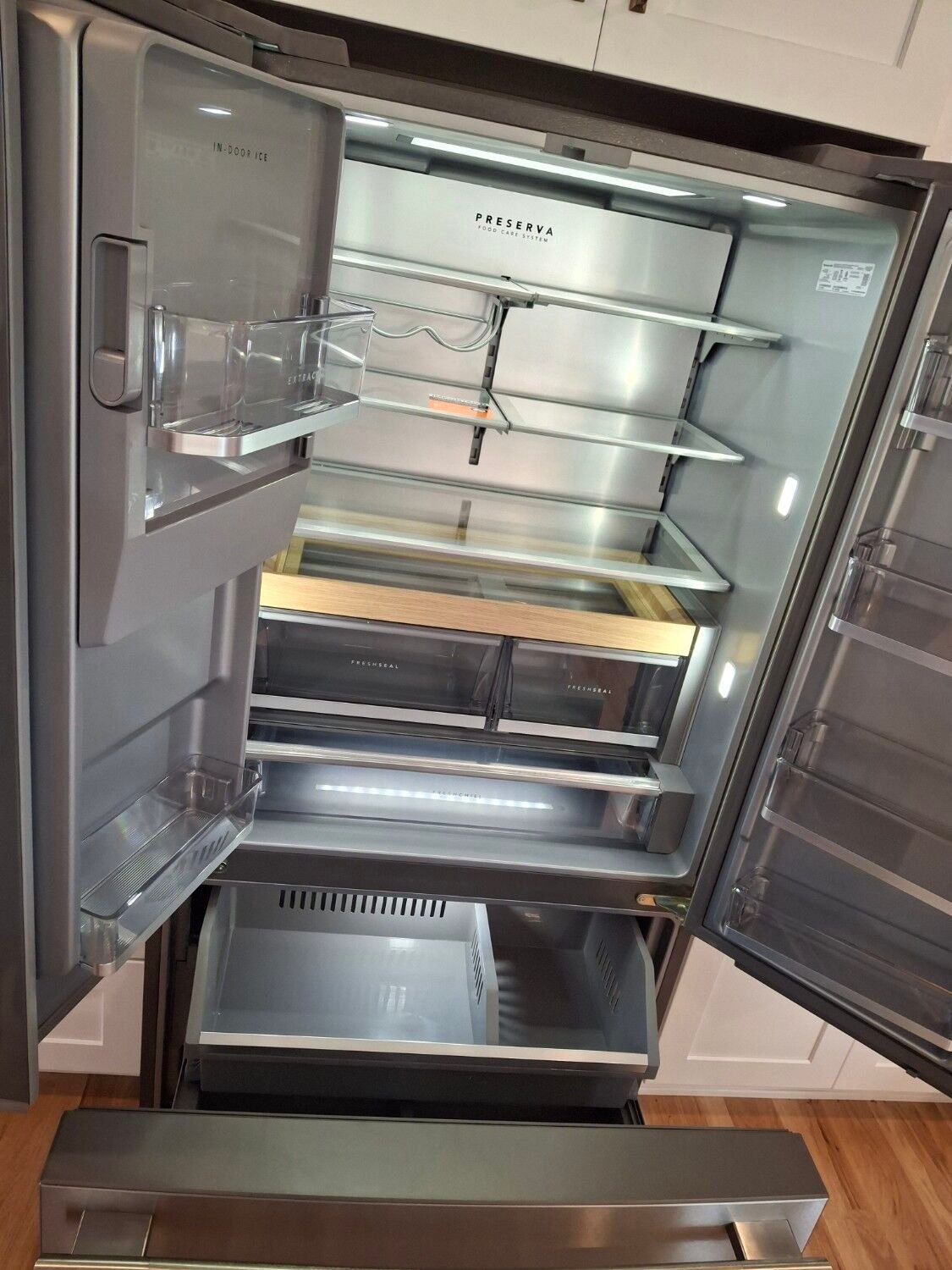
What a clean bin gets you
- Fresh-tasting, loose ice.
- A dispenser that works every time.
- No slime or mold in the chute.
Warning signs
- Ice smells or tastes off.
- Ice comes out in clumps or not at all.
- Dark or pink spots in the bin or chute.
- Ice packed around the ice maker or bin.
How to clean and sanitize the bin
- Turn the ice maker off and remove the bin. Throw away the ice.
- Let the bin warm up, then wash it with warm water and mild dish soap. Don’t use a dishwasher unless the manual says it’s safe.
- Sanitize if the manual allows: many recommend a mild solution of unscented household bleach and water, followed by a rinse.
- Wipe the chute and the area where the bin sits. Check the dispenser flap seal.
- Dry everything and reinstall.
- Throw out the first batch of ice.
- On undercounter and countertop units, run the sanitize cycle as directed.
Brand notes
| Brand | What to know |
|---|---|
| Samsung | In-door ice makers can pack ice around the bin if the ice compartment door or seal leaks. Keep the bin clean and check the seal. |
| LG | In-door ice bins benefit from regular emptying; clumps are a common cause of a jammed dispenser. |
| Whirlpool / KitchenAid | Bins in the freezer door or freezer section: empty them before vacations. |
| Undercounter ice makers (all brands) | Clean and sanitize per the manual, usually every 6 months, and wipe the bin weekly. |
When to call a technician
- The auger grinds or doesn’t turn after the bin is cleaned.
- Ice keeps packing into the compartment.
- Mold returns quickly.
FAQ
How often should I clean the ice bin?
Every 1 to 3 months, and before and after vacations.
Why is there ice packed around my in-door ice maker?
Usually a leaking ice compartment seal or door, or a bin that wasn’t used for a while.
Want a technician to do it? Call 720-230-1229. We serve Denver, Boulder County and 52 surrounding cities.