
Defrost a manual-defrost chest or upright freezer when the frost reaches about 1/4 inch, and at least once a year. In a frost-free freezer you shouldn’t see heavy frost at all; if you do, the door seal or the defrost system has a problem.
Why freezers build frost
Every time the lid or door opens, humid air comes in. Its moisture freezes onto the coldest surfaces. In manual-defrost freezers that’s the walls. In frost-free models it’s the evaporator coil, which a heater melts clear several times a day.
Frost is an insulator. The thicker it gets, the harder the freezer has to work to pull heat out of the food.
This guide is part of our freezer maintenance checklist. On the same appliance, also check freezer condenser cleaning and freezer door and lid seal care. Related guides for other appliances: refrigerator defrost drain cleaning, refrigerator door gasket care and commercial evaporator, drain lines and drain pans.
What happens if you skip this
A little frost is normal in a manual-defrost freezer. A thick layer is not, and in a frost-free freezer heavy frost is always a warning sign.
Frost builds past 1/4 inch Early
Inside: Ice insulates the cold walls or coil from the air and food.
You notice: White layer on the walls, lid hard to close.
Efficiency drops Growing
Inside: The compressor runs longer to move heat through the ice.
You notice: More running, higher bill, less usable space.
Seal is pushed open Serious
Inside: Ice around the lid or door keeps the gasket from sealing, which lets in more moist air.
You notice: Frost grows faster, especially near the lid.
Frost-free models ice up Severe
Inside: In frost-free units a failed heater, sensor or drain lets ice encase the evaporator and fan.
You notice: Frost behind the back panel, fan noise, rising temperature.
Cooling fails Critical
Inside: Air can’t pass through the iced coil, or the fan stalls.
You notice: Freezer above 0°F, food thawing.
What it can cost you
Higher electric billLess storage spaceFreezer burnSeal damageFan and sensor damageLost food

Frost is insulation
Ice conducts heat poorly. A thick layer on a freezer wall or coil works like a blanket between the cold surface and your food. The compressor keeps running longer to make up for it. Whirlpool’s freezer guidance is to defrost once frost builds to about 1/4 inch.
What regular defrosting gets you
- Full cooling capacity and shorter run times.
- A lid or door that seals tight.
- More room and less freezer burn.
Warning signs
- Frost thicker than 1/4 inch on walls or shelves.
- Lid or door doesn’t close easily.
- Frost behind the back panel of a frost-free freezer.
- Ice on the freezer floor.
How to defrost a manual-defrost freezer
- The day before, set the control to its coldest setting for about 6 hours to chill the food.
- Unplug the freezer and move the food to coolers or another freezer, wrapped in towels or newspaper.
- Open the drain if your model has one and set a pan or hose under it.
- Leave the lid open. A pan of hot water inside speeds things up.
- Don’t chip ice with knives or picks, and don’t use heaters or hair dryers. Use a plastic or wooden scraper.
- Wipe the inside and the gasket with warm water and mild detergent, dry it and restart.
- Wait until it’s back at 0°F before reloading.

Brand notes
| Brand | What to know |
|---|---|
| Whirlpool / Maytag | Defrost at about 1/4 inch of frost and at least once a year; more often in humid conditions. |
| Frigidaire / Electrolux | Most chest freezers are manual defrost and have a drain plug at the bottom front. |
| Frost-free uprights (all brands) | Heavy frost means a door seal, defrost heater, sensor or drain problem. A repair, not a defrost. |
Denver area notes
Denver’s dry air slows frost buildup, but garage freezers opened often in summer still frost up. If your freezer is in the garage, check the lid seal each season.
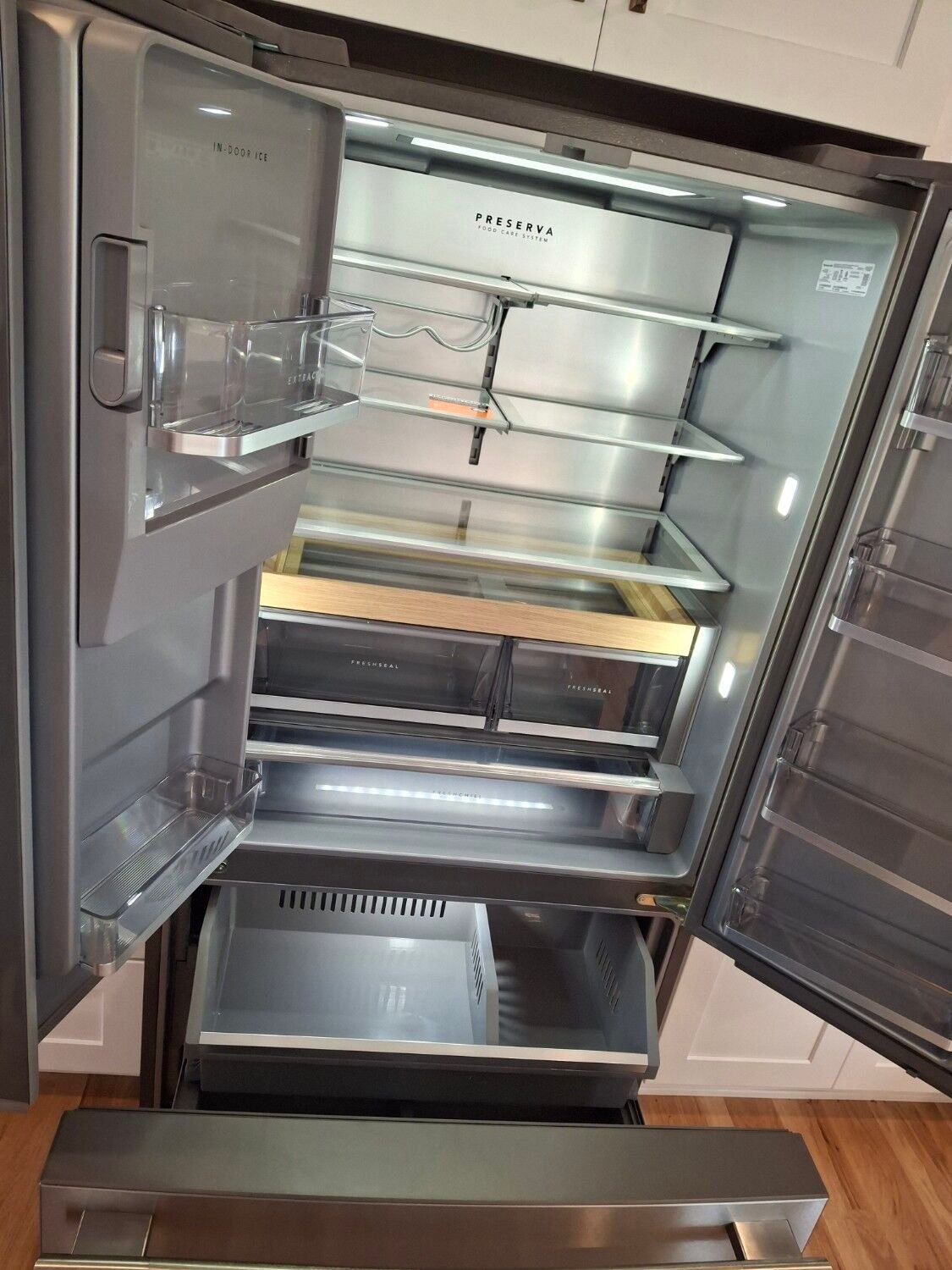
Photos from our service calls
When to call a technician
- A frost-free freezer has frost building on the back panel.
- Frost returns within weeks of defrosting.
- The freezer doesn’t get back to 0°F after defrosting.
FAQ
How often should I defrost a chest freezer?
When the frost reaches about 1/4 inch, and at least once a year.
Can I use a hair dryer to defrost?
Manufacturers advise against it. Heat can warp plastic liners and it’s an electrical risk near water.
Want a technician to do it? Call 720-230-1229. We serve Denver, Boulder County and 52 surrounding cities.