
Once or twice a year, check the drain pan under the refrigerator and keep the defrost drain inside the cabinet clear. A clogged drain backs meltwater up behind the panel, where it freezes. That leads to water under the crisper drawers, ice on the freezer floor, an iced-over evaporator, noisy fans and, eventually, a refrigerator that doesn’t cool.
How the defrost system works
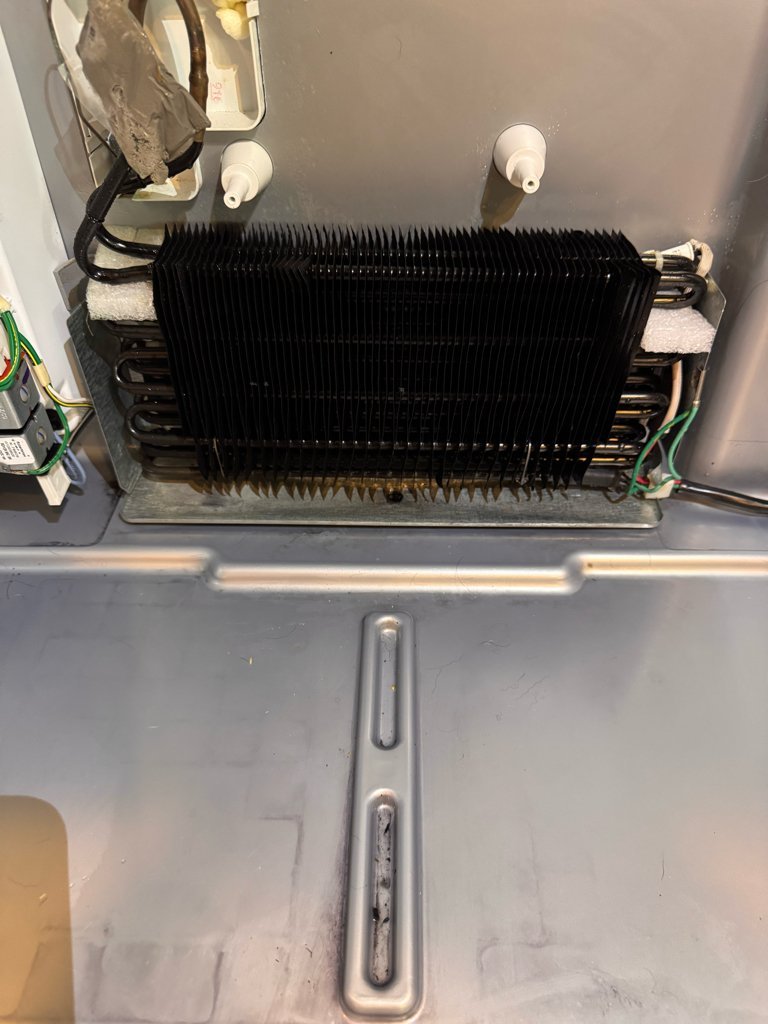
Every frost-free refrigerator builds frost on its evaporator coil. Several times a day a defrost heater warms the coil and melts it. The water runs into a trough, down a drain tube through the back of the cabinet and into a pan under the unit, where the warm air from the condenser evaporates it. If any part of that path is blocked, the water has nowhere to go.
This guide is part of our refrigerator maintenance checklist. On the same appliance, also check refrigerator condenser coil cleaning and refrigerator door gasket care. Related guides for other appliances: freezer defrosting and frost control and commercial evaporator, drain lines and drain pans.
What happens when the drain clogs
Your refrigerator melts its own frost several times a day. If that water can’t drain, every defrost cycle adds more ice in a place you can’t see, until it blocks the fan and the cooling.
The drain slows down Early
Inside: Food bits, mold or a little ice narrow the drain opening or the rubber valve at the end of the tube.
You notice: A small puddle under the crisper drawers, or an odor.
Water backs up and refreezes Growing
Inside: Meltwater pools in the trough behind the panel and freezes again after each defrost.
You notice: Ice on the freezer floor or back wall, drips inside.
An ice block grows Serious
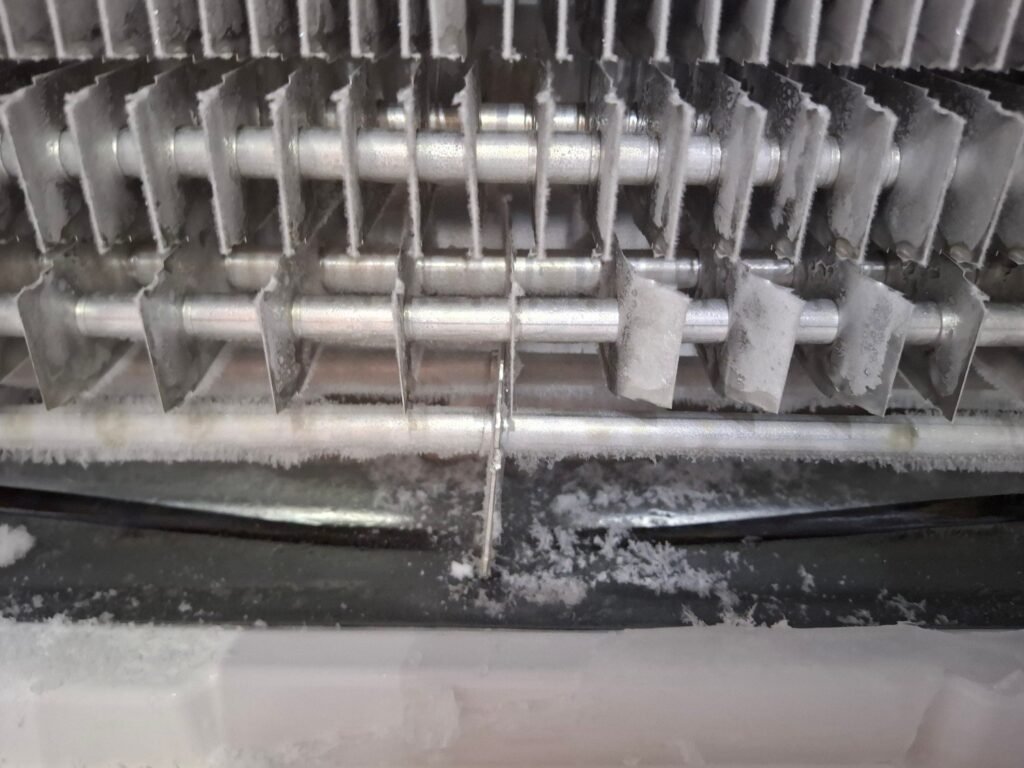
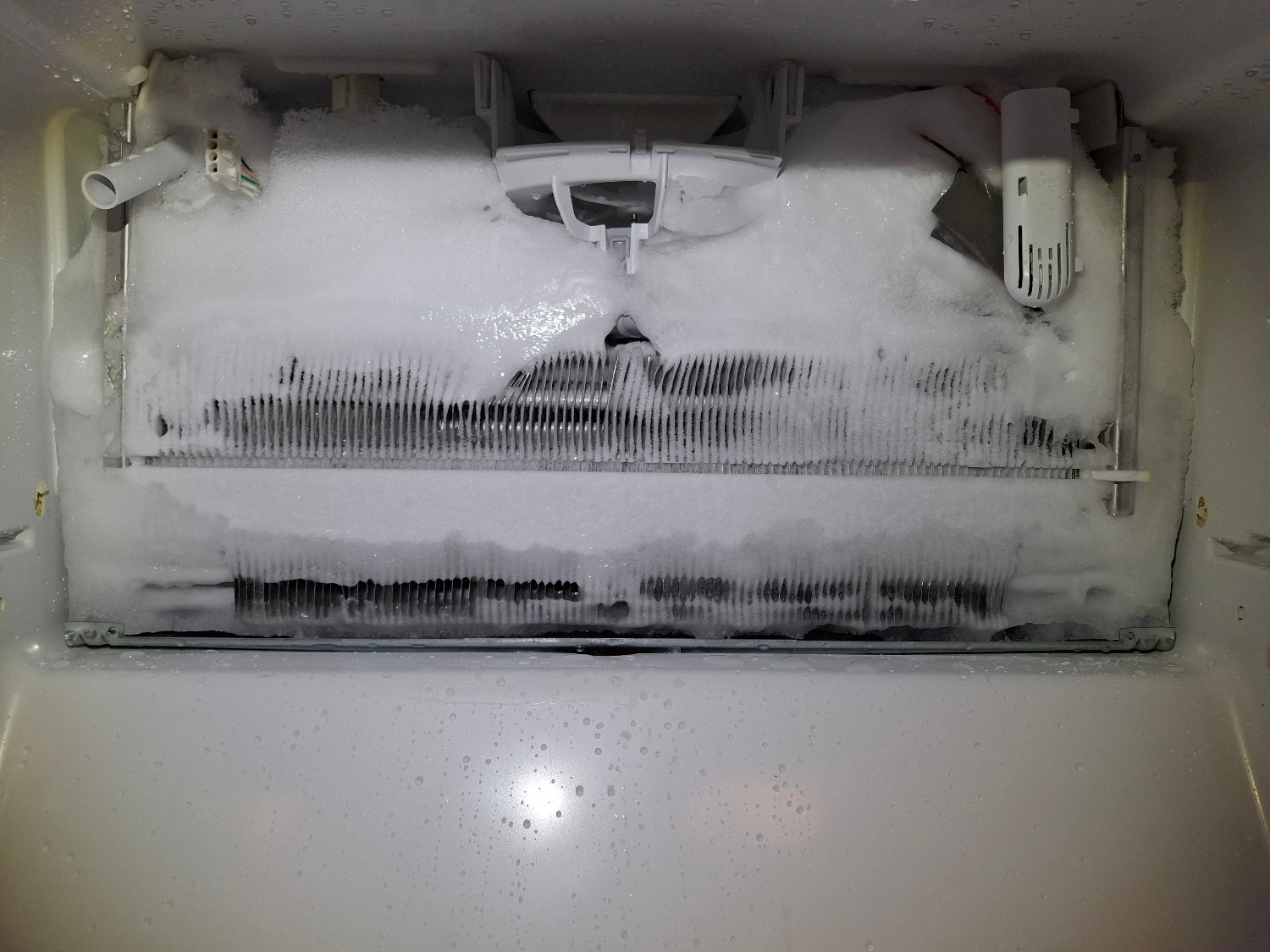
Inside: Each cycle adds water that can’t leave. Ice spreads up into the evaporator coil.
You notice: Frost on the back panel, water on the kitchen floor.
The fan hits ice Severe
Inside: Ice reaches the evaporator fan blade and motor.
You notice: Scraping, clicking or rattling, often right after closing the door.
Cooling stops Critical
Inside: Air can’t pass through the iced coil. Ice can damage the fan motor, defrost sensor or heater.
You notice: Freezer cold, fresh-food section warm. Spoiled food.
What it can cost you
Water leaksIce in the freezerSpoiled foodEvaporator fan replacementDefrost sensor or heater damageFloor damage
What a clear drain gets you
- No water under the drawers or on the floor.
- A defrost system that keeps the coil clear.
- Quiet fans and steady cooling.

This is common enough that Samsung issued a service bulletin for its dual-evaporator French-door refrigerators: a clogged rubber “duck bill” at the drain backs up meltwater that freezes in the drain pan, overflows during defrost and freezes onto the coil, sometimes jamming the fan. The fix included clearing the ice, cleaning and replacing the drain tube, and checking the defrost heater and sensor.
How to clean the defrost drain
- Unplug the refrigerator. Move food to a cooler.
- Find the drain hole. On many models it’s at the bottom of the back wall of the fresh-food or freezer section. On others it’s behind the evaporator panel, which is a job for a technician.
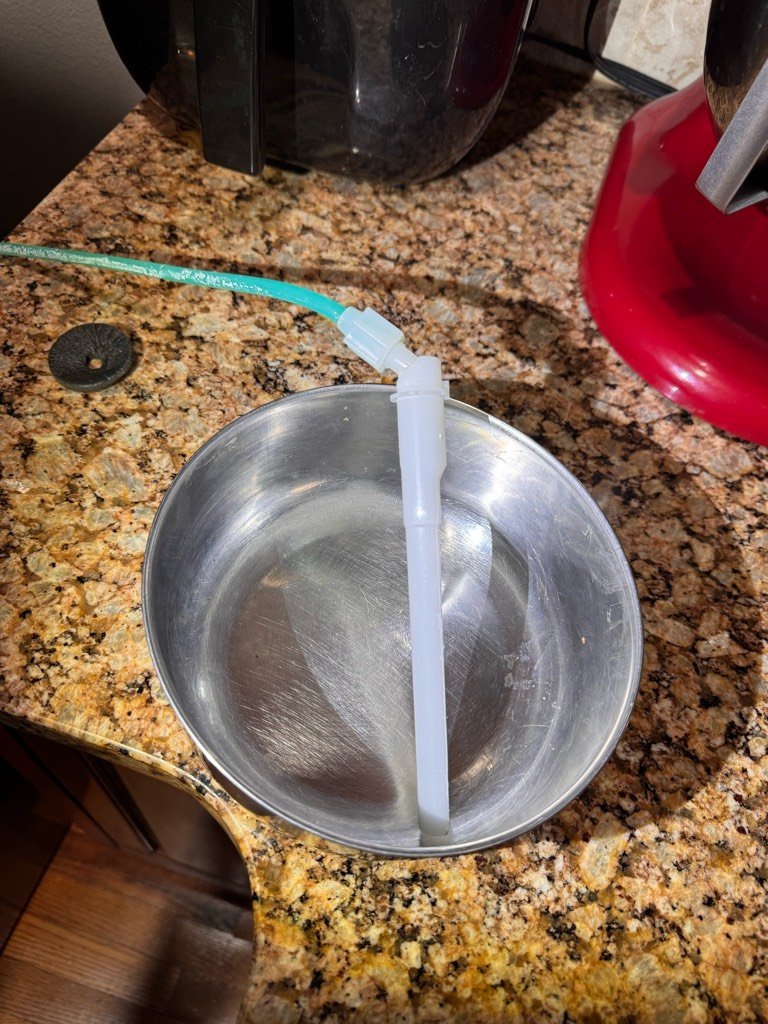
- Remove any visible debris. Flush the drain slowly with a turkey baster of warm water, or with a mix of water and a little baking soda.
- If the water won’t go down, the drain is frozen. Don’t chip at ice near the coils; you can puncture the tubing. Leave the doors open with a towel down and let it thaw, or use a hair dryer on low held well away from plastic.
- Pull the base grille and check the drain pan under the unit. Clean out mold or debris and make sure the pan sits in place.
- Check the rubber valve at the end of the drain tube at the back, if your model has one. Squeeze it open and rinse it.
Brand notes
| Brand | What we see |
|---|---|
| Samsung | Ice on the floor of the freezer drawer and frost on the fresh-food evaporator are a known pattern on French-door models. The drain is behind the panel, so a full defrost and drain service is usually needed. |
| GE | In our records a clogged defrost drain was the most common cause of GE refrigerator leaks, about 5 of 26 leak calls. |
| Whirlpool / KitchenAid / Maytag | Bottom-freezer models can freeze the drain where it exits the freezer. Food debris in the fresh-food trough is common. |
| LG | Ice buildup in the freezer and ice maker area can come from the drain or from air leaks. We check both. |
| Sub-Zero / built-ins | Drain pans are in the top or bottom grille compartment. Keep the condenser area clean so the pan water evaporates. |
Defrost drain vs. defrost failure
A clogged drain gives you water and ice in one spot, usually low in the cabinet. A failed defrost heater, thermostat, sensor or control gives you an even layer of frost over the whole evaporator, with no extra water. Both end in poor cooling, but the fix is different. If the drain is clear and frost keeps coming back, the defrost system needs testing.
What we find on calls
Defrost problems showed up in about 66 of roughly 1,685 refrigerator calls in our records, and many leak calls trace back to a blocked drain. A fully iced evaporator often takes a forced defrost and several hours, and sometimes a new fan motor or sensor damaged by the ice.
Photos from our service calls
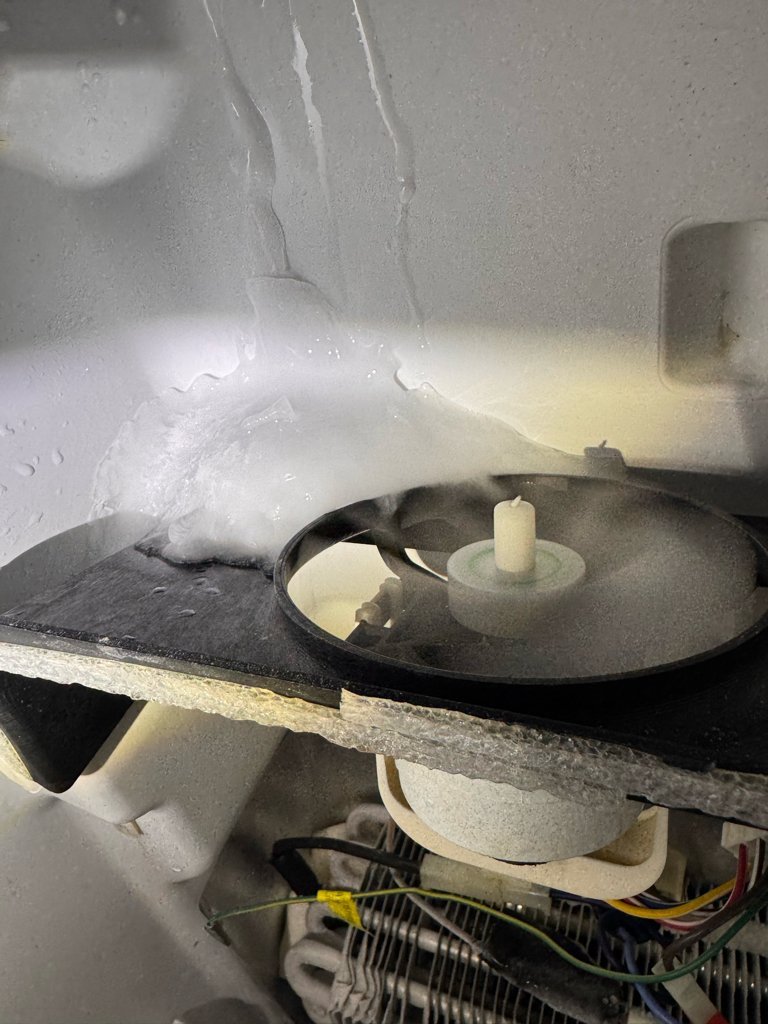
When to call a technician
- The drain hole is behind the evaporator panel.
- Ice keeps returning within a week or two of clearing it.
- You hear the fan scraping ice.
- The fresh-food section is warm and the back panel is frosted.
FAQ
Why is there water under my crisper drawers?
Almost always a clogged or frozen defrost drain. The meltwater can’t leave the cabinet and collects at the lowest spot.
Why is there ice on the bottom of my freezer?
The drain is frozen, the door or drawer isn’t sealing, or both.
How often should I clean the defrost drain?
A check once or twice a year is enough for most homes, plus any time you see water inside.
Can I just defrost it with the doors open?
That clears the ice for now, but if the drain or defrost part is the cause, the ice will come back.
Want a technician to do it? Call 720-230-1229. We serve Denver, Boulder County and 52 surrounding cities.