
Repair it if the appliance is in the first two-thirds of its normal life and the repair costs less than half the price of a comparable new one. Replace it if it is near the end of its lifespan, the repair is a major one, or the same appliance keeps breaking. That is the short answer. Below are the numbers we use with customers every day to make the call.
The quick rule
- Repair when the appliance is under roughly 8 to 10 years old and the repair is less than 50% of a new one.
- Replace when it is past its typical lifespan, the repair is a compressor, sealed-system or transmission job, or it is the second big failure in a short time.
- Exception: luxury built-ins like Sub-Zero are built to be repaired for decades, so the math favors repair much longer.
Step 1: Know how long your appliance should last
Lifespan estimates vary by source, so here are two respected ones side by side. The InterNACHI chart assumes regular maintenance; the AHAM (Association of Home Appliance Manufacturers) figures are average useful life.
| Appliance | InterNACHI estimate | AHAM average |
|---|---|---|
| Refrigerator | 9–13 years | 14 (top-freezer), 11.1 (side-by-side) |
| Freezer | 10–20 years | — |
| Dishwasher | 9 years | 12 years |
| Washer | 5–15 years | 11.2 (top-load), 9.1 (front-load) |
| Dryer | 13 years | 13.4 years |
| Gas range | 15–17 years | 14.2 years |
| Electric range | 13–15 years | 11.6 years |
| Microwave | 9 years | — |
The model number sticker usually tells you the age. If you can’t find it, our technician can read the manufacture date from the serial number.
Step 2: Apply the 50% rule
For years, Consumer Reports advised replacing a product when the repair costs more than half the price of a new one. It is still a useful starting point. To use it, compare the full repair quote (parts plus labor) with what a comparable new model costs, including delivery and installation.
Here is how that looks with our real starting labor prices for everyday brands (see the full list on our pricing page):
| Repair level | Typical examples | Labor from | Usually worth it? |
|---|---|---|---|
| Minor | Thermal fuse, igniter, drain pump, door latch, sensor | from $179 | Almost always, at any reasonable age |
| Standard | Control board, fan motor, ice maker, wash pump | from $259 | Yes, if the appliance is under about 8–10 years old |
| Major | Compressor, sealed system, transmission, bearings | from $479 | Only on newer or high-end appliances |
Step 3: Factor in energy use
Older refrigerators are the one appliance where energy cost can tip the decision. ENERGY STAR’s “Flip Your Fridge” campaign suggests that if your refrigerator is over 15 years old, it may be time to replace it. According to ENERGY STAR, an old refrigerator uses about 30% more energy than an ENERGY STAR certified model, and replacing it can save more than $230 over the new model’s 12-year life. For a 15-year-old refrigerator facing a compressor repair, replacement nearly always wins.
Washers, dryers and dishwashers have improved too, but the savings are smaller, so for those appliances the repair cost and age matter more than the electric bill.
Appliance-by-appliance guidance
Refrigerators
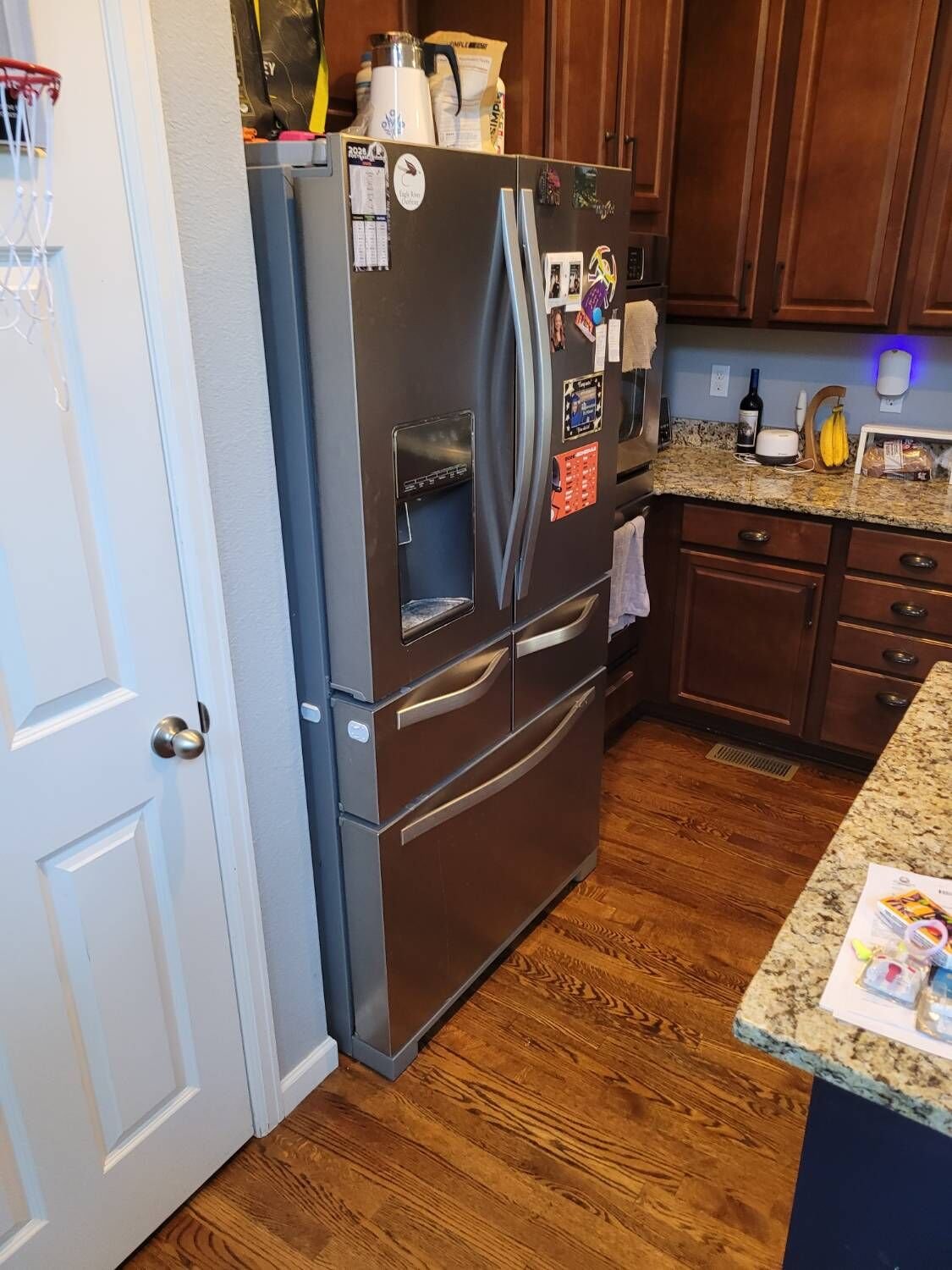
Fan motors, defrost parts, sensors and ice makers are almost always worth fixing. A failed compressor or refrigerant leak on a refrigerator older than about 10 years usually is not. Built-in models like Sub-Zero are the big exception: they are designed for long service lives and cost far more to replace, so repairs make sense well past the age where we would retire a standard fridge.
Washers
Drain pumps, lid locks, door boots and control boards are good repairs. Bearings and transmissions are the expensive ones; on a front-loader past 9 or 10 years old we often recommend replacing instead.
Dryers
Dryers are simple machines. Heating elements, thermal fuses, belts and rollers are inexpensive repairs, which is why a well-maintained dryer is often worth repairing even past its typical 13-year lifespan.
Dishwashers
Drain pumps and latches are easy wins. If a dishwasher over 9 years old needs a wash motor and a control board at the same time, replacement usually makes more sense.
Ranges and ovens
Igniters, elements, sensors and switches are inexpensive and gas ranges in particular last a long time. Control boards on older models can be hard to source, which can push the decision toward replacement.
When to replace no matter the price
- A gas smell that comes back after repair, or any sign of damaged gas components. Shut off the gas and call your utility first.
- Burned wiring, melted connectors or scorch marks.
- Rust-through on a washer tub or dishwasher base that is leaking.
- Parts that are discontinued and no longer available.
Frequently asked questions
Is it worth repairing a 10-year-old refrigerator?
For minor and standard repairs like fans, sensors, defrost parts and ice makers, usually yes. For a compressor or sealed-system repair on a standard refrigerator that old, replacement is usually the better value.
What is the 50% rule for appliances?
It is a guideline, long associated with Consumer Reports, that says to replace an appliance when the repair costs more than half the price of a comparable new one.
How do I find out how old my appliance is?
Look for the model and serial number sticker, usually inside the door, on the frame or on the back. The serial number encodes the manufacture date, and our technician can read it for you during the visit.
Will you tell me if a repair isn’t worth it?
Yes. If the repair doesn’t make sense for the appliance’s age and condition, our technician will tell you. You only pay the service call (from $59) if you decide not to repair.
Keep Exploring
Our repair services
Service areas
More from our blog
How to prevent this
Many of these breakdowns start with maintenance that was skipped. These guides show what to check, how often, and what happens if you don't: