
Vacuum the refrigerator condenser coils every 6 to 12 months, or every 3 to 6 months if you have pets or a dusty house. A dust-packed condenser can’t shed heat, so the compressor runs longer and hotter. That costs electricity first, then cooling, and over time it can cost the compressor itself.
What the condenser does
Your refrigerator doesn’t make cold. It moves heat out of the food compartments and dumps it into the kitchen. The condenser is where that heat leaves: hot refrigerant from the compressor flows through the coil, a fan pulls room air across it, and the refrigerant cools down and turns back into liquid. If air can’t get through the coil, the heat stays in the system.
On most built-in and many freestanding refrigerators the condenser sits at the bottom behind the front grille, with a small fan next to the compressor. Older and some top-freezer models have a black wire-grid coil on the back. Some models don’t need routine cleaning: GE says most of its refrigerators built since 2001 have a NeverClean condenser. Check your manual first.
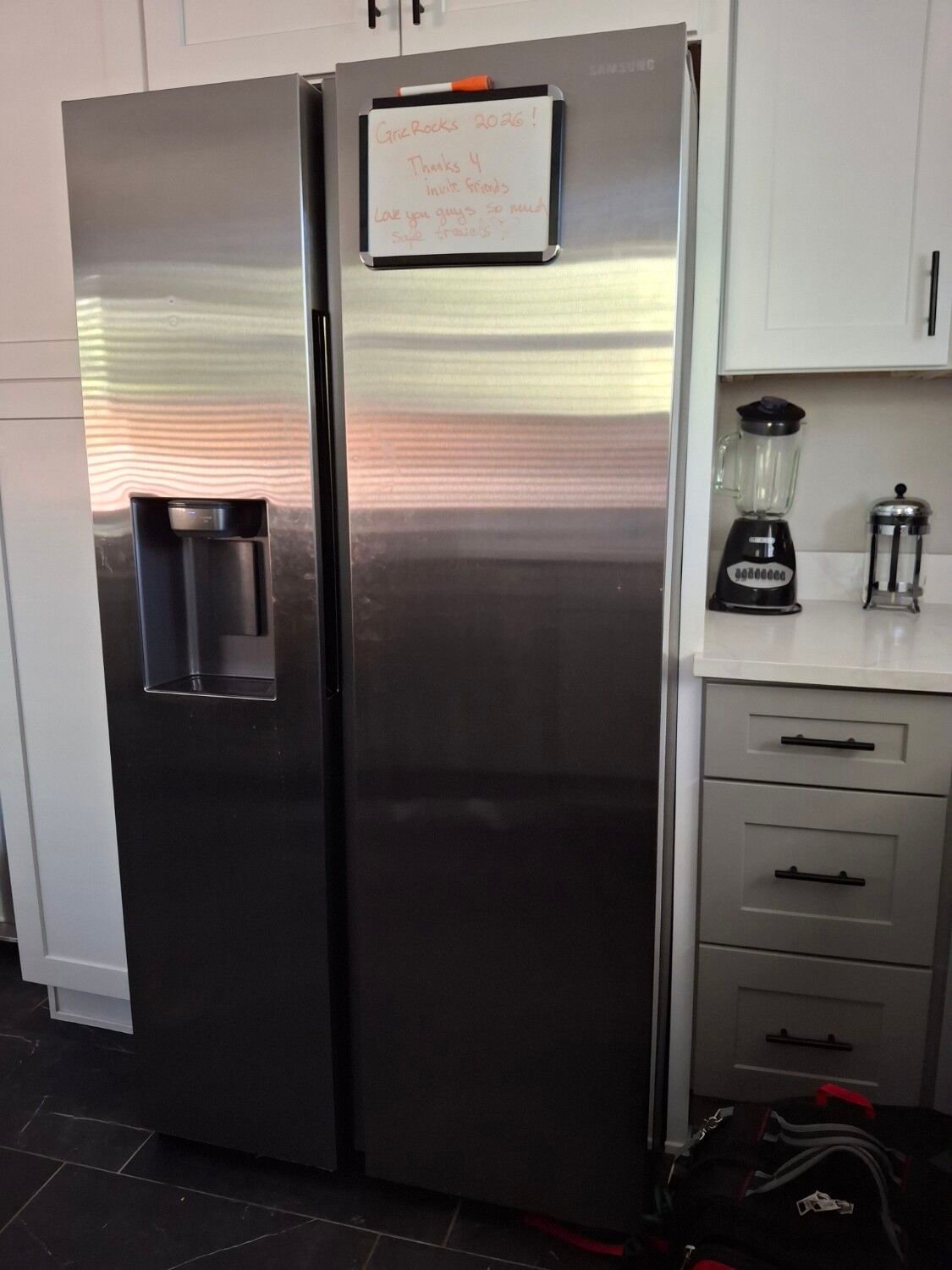
This guide is part of our refrigerator maintenance checklist. On the same appliance, also check refrigerator door gasket care and refrigerator water filter replacement. Related guides for other appliances: freezer condenser cleaning, commercial refrigeration condenser cleaning and garage freezer care in Colorado.
What happens if you skip this
A dirty condenser almost never fails on the spot. It quietly turns every cooling cycle into a harder, hotter, longer one, for months or years, until the weakest part gives out.
Dust builds up on the coil and fan Early
Inside: Less air passes through the coil, so the refrigerant leaves the condenser hotter than it should.
You notice: Usually nothing. Maybe gray fuzz on the bottom grille.
Pressure and run time go up Growing
Inside: Condensing pressure rises. The compressor pumps against higher pressure and has to run longer to move the same heat.
You notice: The fridge runs almost nonstop. The electric bill creeps up.
Cooling falls behind Serious
Inside: On warm days, after grocery runs or with frequent door opening, the system can no longer keep up.
You notice: Fresh-food section above 40°F, soft ice cream, milk spoiling early.
The compressor overheats Severe
Inside: Discharge temperature climbs. The overload protector trips to save the motor, then lets it restart once it cools, again and again.
You notice: Clicking from the back every few minutes, hot cabinet sides, a hot smell near the floor.
Parts start failing Critical
Inside: Heat breaks down compressor oil, wears the valves and windings, and burns out start relays and condenser fan motors.
You notice: A compressor that hums but won’t start, a dead fan, or no cooling at all.
What it can cost you
Higher electric billSpoiled foodCondenser fan failureStart relay failureCompressor failureShorter refrigerator life

Why heat kills compressors
Refrigeration technicians watch the compressor’s discharge temperature closely. Industry guidance published in ACHR News says to keep it under about 225°F at the discharge line, because the discharge valve inside runs roughly 75°F hotter. Above that, the system “may start to fail from worn rings, acid formations, and oil breakdown.”
Dirty condenser coils are one of the classic causes of high condensing pressure. In one example in the article, a system with a dirty coil ran at a 250°F discharge temperature. Your home refrigerator works on the same principle, just at a smaller scale: every degree the condenser can’t shed ends up as heat in the compressor.
What a clean condenser gets you
- Shorter run times and lower electricity use.
- Steady temperatures, even on hot summer days.
- Less heat stress on the compressor, start relay and condenser fan.
- Earlier warning: while cleaning, you see leaks, noisy fans or a hot compressor before they become a breakdown.
The energy cost is easiest to measure on commercial equipment. An EPA study cited by Permatron, a maker of condenser filters, found that a dirt layer of only about 0.042 inch on a condensing coil can cut efficiency by 21% and raise refrigeration energy use by up to 35%. In a test presented at the Restaurant Facility Management Association convention, a six-year-old two-door glass merchandiser used 47% less electricity after its condenser was cleaned. A home refrigerator uses far less power, but the physics are the same.
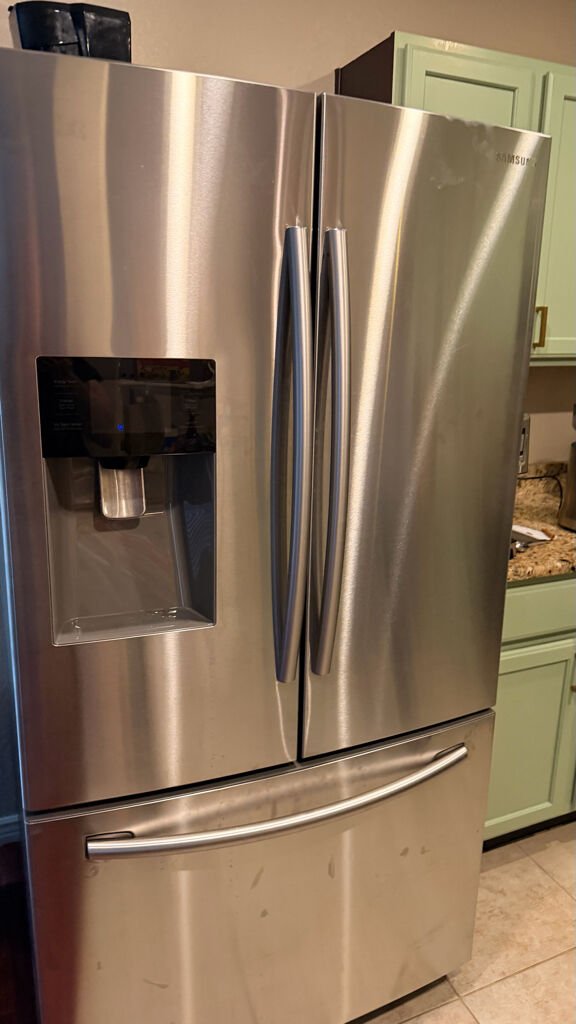
Warning signs your condenser needs cleaning
- The refrigerator runs much longer than it used to, or you rarely hear it shut off.
- The kickplate area blows very warm air, or the sides of the cabinet feel hot.
- The fresh-food section is warm while the freezer still seems fine.
- You hear clicking from the back every few minutes (the overload protector cycling).
- You see gray fuzz or pet hair on the grille.
- Sub-Zero owners: the “Vacuum Condenser” or service indicator is on.
How to clean refrigerator condenser coils
- Unplug the refrigerator or switch off its breaker. The condenser fan can start without warning.
- Remove the base grille (it usually snaps or unscrews off), or pull the unit out if the coil is on the back. Pull straight out so you don’t kink the water line.
- Vacuum loose dust with a brush attachment. Use a long, narrow coil brush to get between the tubes, working from the front toward the back.
- Brush the condenser fan blades and the area around the compressor. Check that the fan spins freely by hand.
- Vacuum the floor under the unit, since that dust gets pulled straight back in.
- Don’t bend the fins, push on the tubing or use water or spray cleaners on the coil.
- Reinstall the grille, push the fridge back with a gap behind it (most manuals ask for about 1 inch) and restore power.
- Give it 24 hours, then check temperatures with a thermometer: 37–40°F in the fresh-food section and 0°F in the freezer.
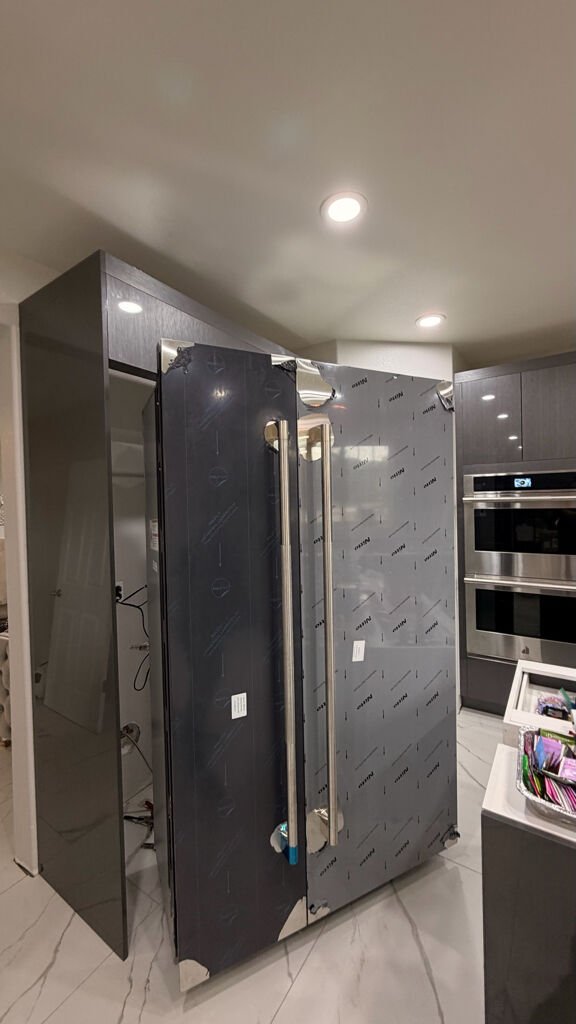
Brand notes
| Brand | What the manufacturer says | What we see on calls |
|---|---|---|
| Sub-Zero | Clean the condenser every 6 to 12 months, more often with pets. No chemical cleaners or degreasers. If the “Vacuum Condenser” message comes back or temperatures don’t recover within 24 hours, call for service. | Built-in units have tight airflow paths, so dust hits them harder. A clogged condenser is one of the first things we check on a warm Sub-Zero. |
| GE / GE Profile / Café / Monogram | Most models built since 2001 have a NeverClean condenser. Older models and units with reachable coils need brushing, more often with pets or in a garage. | Fan problems were the most common GE refrigerator issue in our records, and dirty fans and coils often show up together. |
| LG | Clean the coils once or twice a year. | Compressor and sealed-system problems were the largest share of our LG refrigerator calls. A clean condenser doesn’t prevent every failure, but it takes heat stress off the compressor. |
| Samsung | Keep the rear and bottom vents clear and vacuum the condenser area periodically. | We often find dust on both the condenser and the evaporator on the same unit. |
| Whirlpool / KitchenAid / Maytag | Clean the coils every 3 to 6 months in homes with pets or heavy dust. | Bottom-mount coils collect pet hair fast, especially in homes with carpet. |
Why it matters more in the Denver area
Colorado’s dry, dusty air, frequent wind and new construction in many suburbs put more fine dust into homes. Pet hair adds to it. A refrigerator in a kitchen with a pet bed nearby can need its coils cleaned every three months. Garage refrigerators and freezers are the worst case: dust, sawdust and summer heat combine, and the condenser is working against high room temperatures already.
What we find when this is skipped
Across about 1,685 refrigerator service calls in our records, compressor and sealed-system problems came up 167 times, fan problems 121 times and control boards 120 times. Not every one is caused by dust, but a clogged condenser makes all three work harder. On LG refrigerators, compressor and sealed-system issues accounted for 55 of 145 calls.
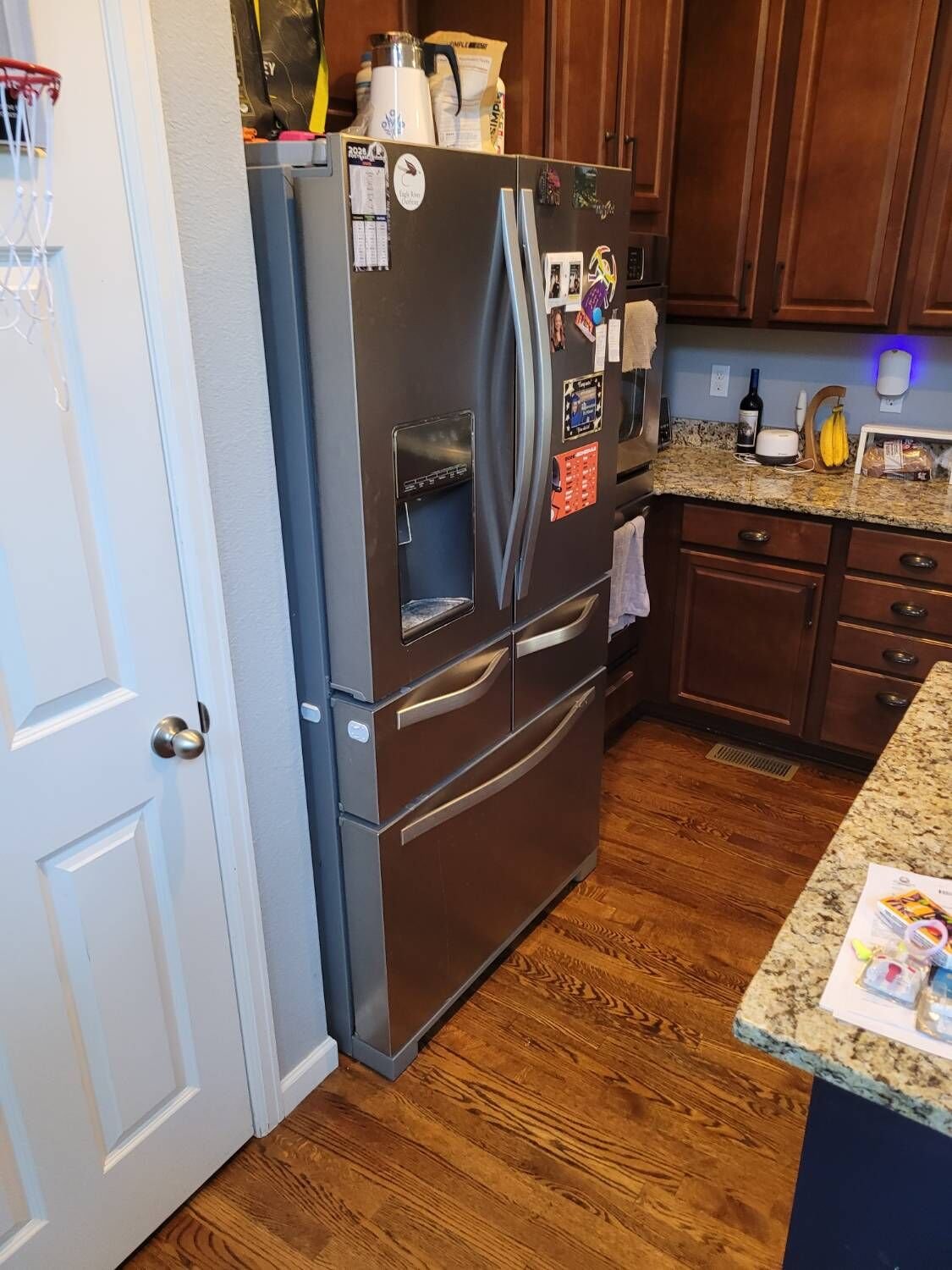
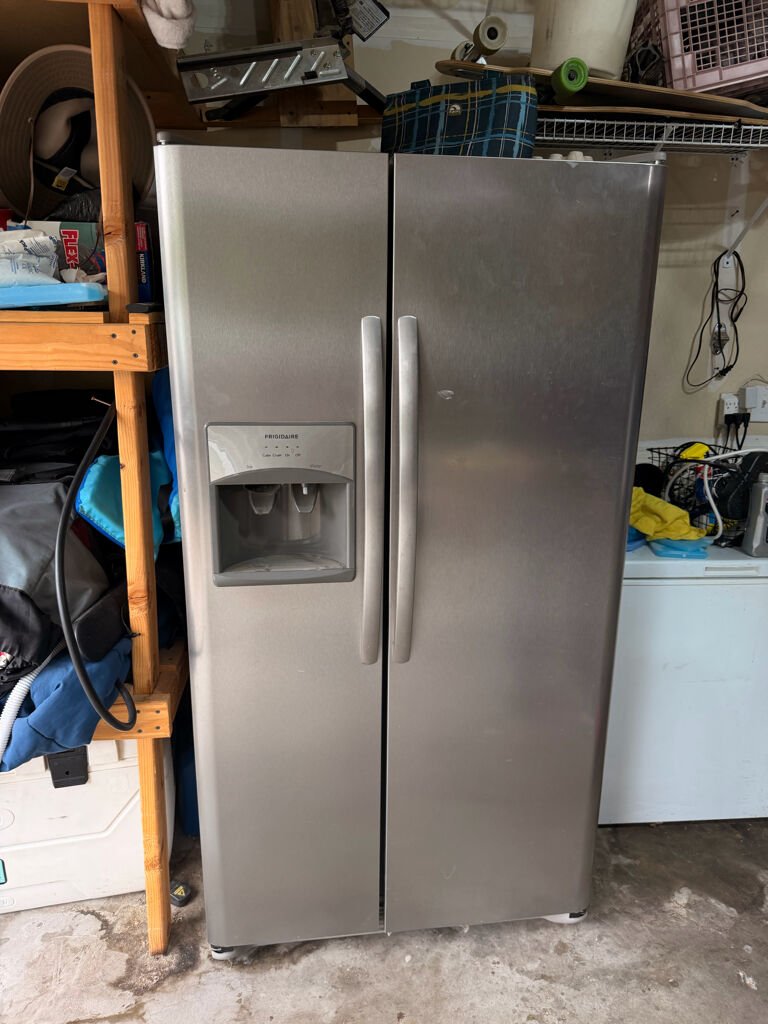
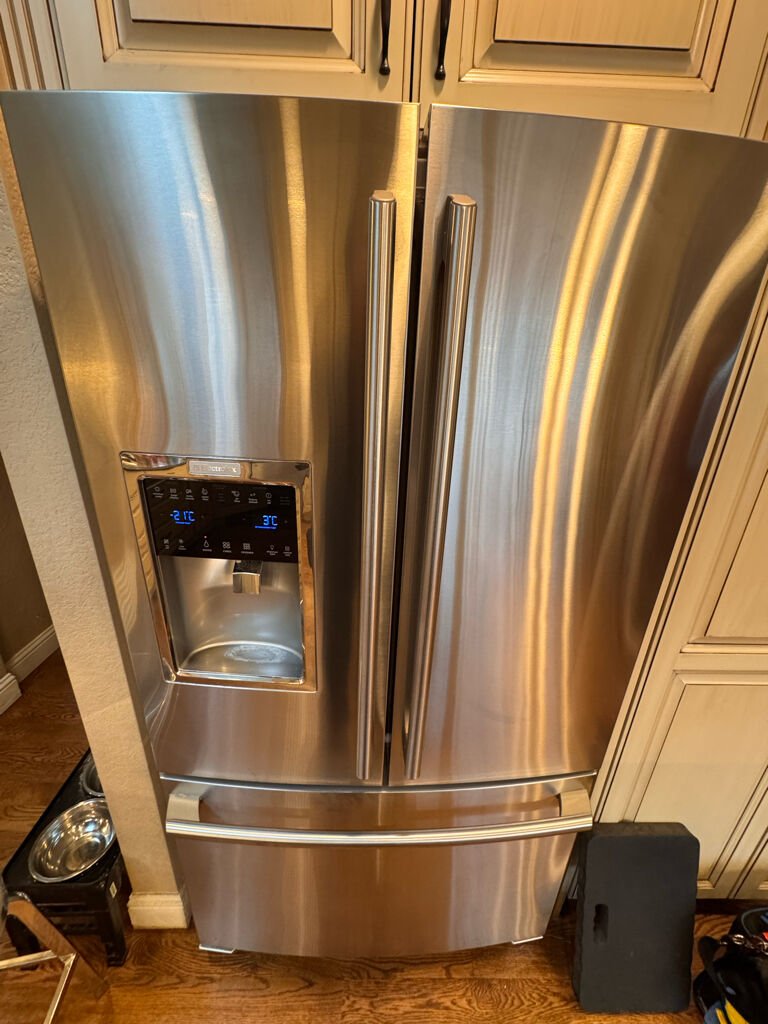
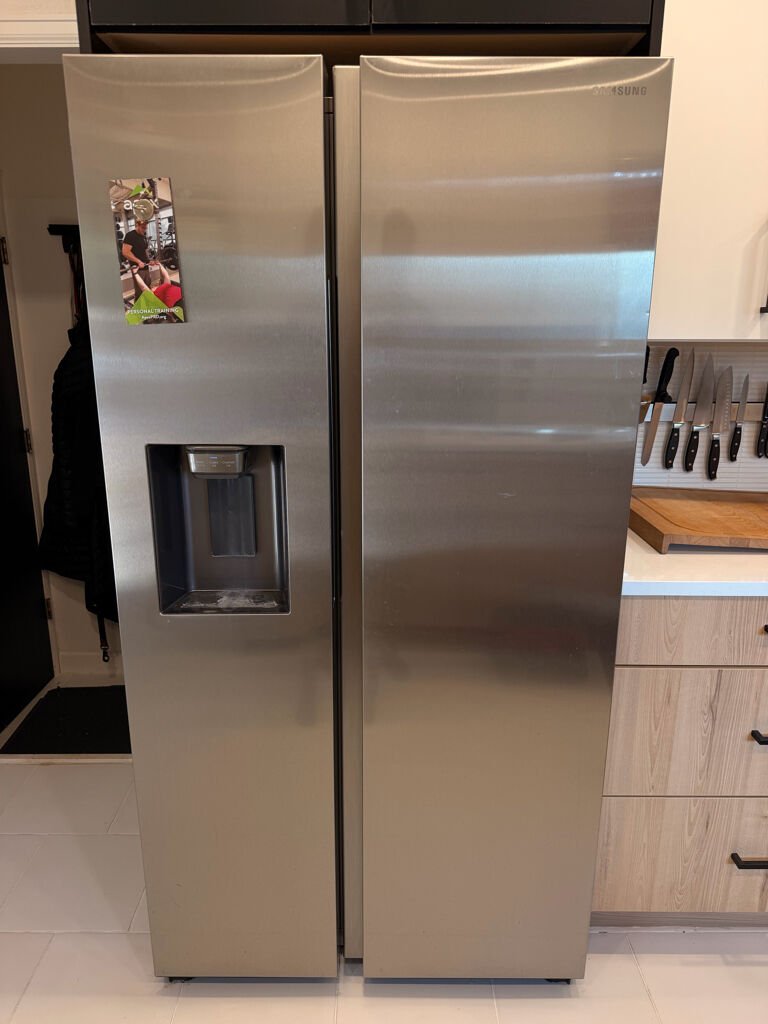
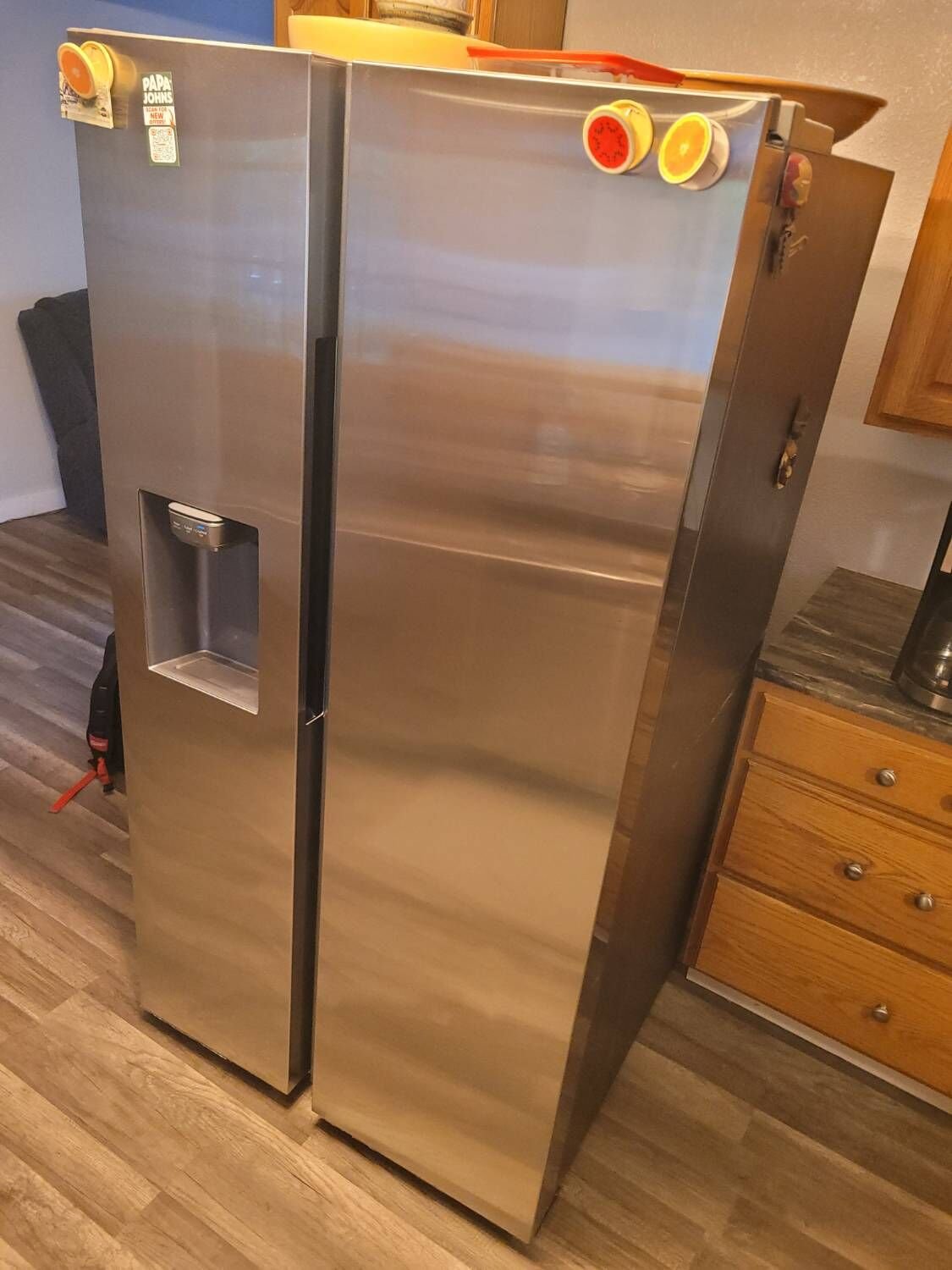
Photos from our service calls
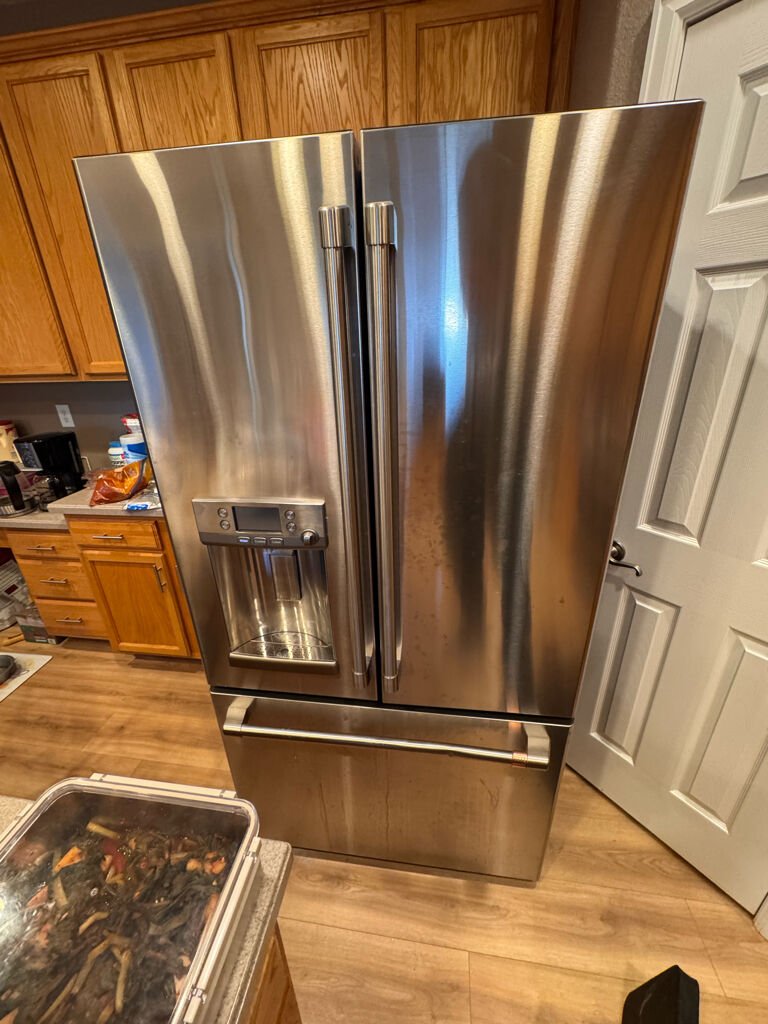
When to call a technician
- The fridge is still warm 24 hours after a cleaning.
- The condenser fan doesn’t spin or is noisy.
- The compressor clicks on and off every few minutes or hums without starting.
- The coil is behind panels you can’t reach, as on many built-in models.
FAQ
How often should I clean refrigerator coils?
Every 6 to 12 months in most homes, and every 3 to 6 months with pets, carpet or a lot of dust. Follow your manual if it gives a schedule.
Can dirty coils really break a compressor?
They don’t break it overnight, but they make it run hotter and longer for years. Heat is the main enemy of compressor oil and windings, and overheating trips the overload protector over and over.
Can I use compressed air?
It can work on a back-mounted coil, but on bottom-mounted condensers it often just blows dust deeper into the coil and the compressor area. A vacuum and coil brush are safer.
My refrigerator doesn’t seem to have coils. Why?
Some models hide the condenser in the cabinet walls, and some forced-air designs are built not to need cleaning. Check your manual or call us with your model.
Want a technician to do it? Call 720-230-1229. We serve Denver, Boulder County and 52 surrounding cities.