
Clean the glass with a cooktop cream once it cools, lift pans instead of sliding them, and remove sugary spills right away while the surface is still hot, using a razor scraper and an oven mitt. GE warns that sugar and melted plastic can pit the glass, and pitting is not covered by warranty.
What can damage a glass cooktop
Radiant and induction cooktops use a glass-ceramic top that handles heat well but not impact, sugar or abrasion. Melted sugar bonds to hot glass and pulls out tiny pieces as it cools. Rough pan bottoms and grit scratch it, and residue that’s left on gets burned in.
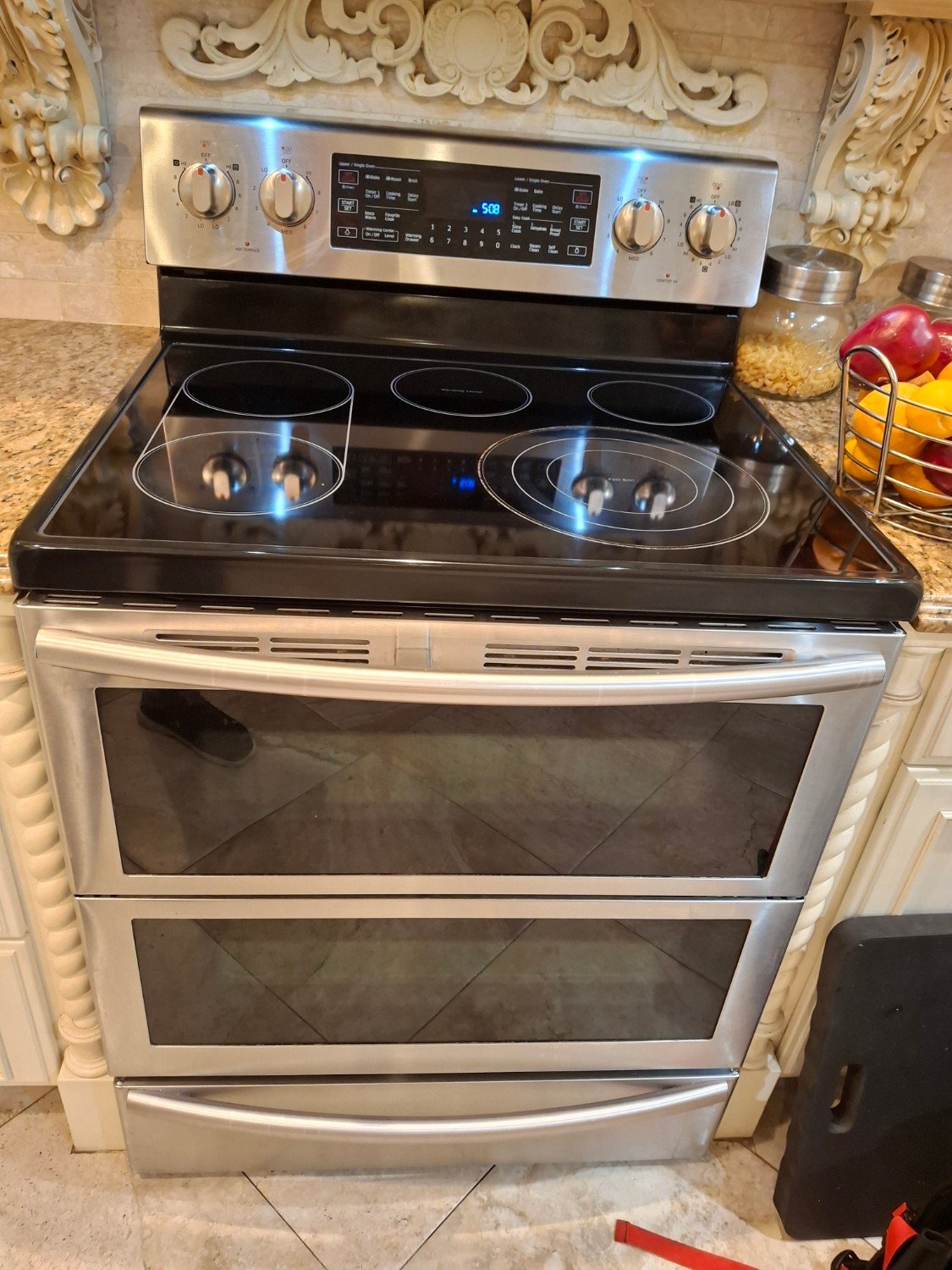
This guide is part of our cooktop maintenance checklist. On the same appliance, also check gas burner and igniter cleaning. Related guides for other appliances: oven self-clean cycle and over-the-range microwave grease filter cleaning.
What happens if you clean it wrong or not at all
Most cooktop glass is lost to small habits, not big accidents.
Residue burns on Early
Inside: Spills and cleaner left on the glass bake into a hard film.
You notice: Brown rings and haze around the burners.
Scratches Growing
Inside: Sliding pans and abrasive pads scratch the surface.
You notice: Fine lines and dull areas.
Pitting Serious
Inside: Sugar or melted plastic bond to the glass and pull pieces out as they cool.
You notice: Small craters that can’t be cleaned.
Hot spots and cracks Severe
Inside: Heavy buildup and thin pans boiling dry create hot spots. Impacts crack weakened glass.
You notice: A crack line, uneven heating.
Electrical risk Critical
Inside: Liquid can reach elements and wiring through a crack.
You notice: Element not heating, tripped breaker. Stop using it.
What it can cost you
Permanent stainsPittingCracked glassElement and switch damageGlass top replacement


What the right cleaning habits get you
- Glass that stays smooth and clear.
- Even heating.
- No surprise replacement.
Warning signs
- Rings or haze that won’t come off.
- Small pits or craters.
- Any crack.
- Burners running too hot or not at all.
How to clean a glass cooktop
- For sugary spills or melted plastic: turn off the burner, put on an oven mitt and push the spill to a cool area with a new single-edge razor scraper while it’s hot. Wipe up with paper towels.
- For daily cleaning: let it cool, then use a few drops of cooktop cleaning cream and a non-scratch pad.
- For burned-on residue: hold a razor scraper at about 45° with a little cleaner on the spot.
- Wipe off all cleaner before heating.
- Lift pans rather than sliding them. Use flat, smooth pans.
- Don’t use glass cleaner, abrasive powder or steel wool.
Brand notes
| Brand | What to know |
|---|---|
| GE / Café | Use a ceramic cooktop cleaner and a razor scraper; sugar spills must come off while hot. |
| Samsung | Cooktop control switches can overheat or fail; we’ve replaced several on glass cooktops running too hot. |
| Whirlpool / KitchenAid / Maytag | Use the cleaning cream the manual lists. |
| Induction (all brands) | Glass stays cooler, but sugar and rough pans still damage it. |
Photos from our service calls


When to call a technician
- The glass is cracked.
- A burner runs too hot or won’t turn off.
- A burner doesn’t heat.
FAQ
Can I use Windex on a glass cooktop?
Use a cooktop cleaning cream instead; glass cleaners can leave residue that burns on.
Can pitting be fixed?
No. GE says pitted glass has to be replaced.
Want a technician to do it? Call 720-230-1229. We serve Denver, Boulder County and 52 surrounding cities.