Once a year, pull the refrigerator out and check the water line, its connections and the shut-off valve. Thin plastic tubing gets brittle and cracks, kinks when the fridge is pushed back, and compression fittings loosen. A small drip behind the refrigerator can soak the subfloor for weeks before anyone sees it.
The water path to your ice maker and dispenser
Water comes from a shut-off valve (usually under the sink or in the wall behind the fridge), through a supply line to the water inlet valve at the bottom back of the refrigerator. From there tubing runs to the filter, the dispenser and the ice maker fill tube. Each connection is a place where a leak can start.

What goes wrong
| Problem | Cause | What it leads to |
|---|---|---|
| Cracked plastic tubing | Old, sun- or heat-aged tubing gets brittle. It cracks at bends and fittings. | Slow hidden leak or a sudden spray behind the fridge. |
| Kinked line | The fridge was pushed back over extra tubing. | Slow dispenser, small ice cubes, ice maker stops. A kink can later split. |
| Loose fitting | Vibration, moving the fridge or a fitting that was never fully tightened. | Drips at the inlet valve that pool under the unit. |
| Saddle valve | An older piercing valve clamped onto a copper pipe. These are known to clog and leak. | Low flow, drips, and a valve that won’t fully shut off in an emergency. |
| Worn inlet valve | Mineral scale and debris keep the valve from closing all the way. | Dripping dispenser, flooded ice bin, ice clumped in the bucket, water on the floor. |
| Frozen fill tube | Low flow or a valve that drips slowly into the cold ice maker area. | No ice, water spilling over the mold, ice on the freezer floor. |
This guide is part of our refrigerator maintenance checklist. On the same appliance, also check refrigerator condenser coil cleaning and refrigerator door gasket care. Related guides for other appliances: ice maker water supply, filter and valve, washer hoses and inlet screens and dishwasher door gasket and drain hose care.
What happens if a water line fails
Insurance industry data published by Safety Insurance found that 73% of water losses involving a refrigerator ice maker were caused by a failed supply line hose, and about 10% involved new refrigerators that were installed incorrectly. These leaks start small and hide under the refrigerator.
The line ages or gets kinked Early
Inside: Plastic tubing hardens over the years. Pushing the fridge back bends or pinches it.
You notice: Usually nothing. Maybe slower water or smaller ice.
A slow drip starts Growing
Inside: A crack, a loose compression fitting or a worn inlet valve starts to seep.
You notice: Nothing visible. The water runs under the refrigerator.
Water soaks into the floor Serious
Inside: Days or weeks of dripping soak the flooring and subfloor and wick into cabinets.
You notice: A musty smell, a raised or dark floorboard edge.
Mold and rot Severe
Inside: Wet wood and drywall start to grow mold and lose strength.
You notice: Stains, soft spots, a ceiling stain on the floor below.
Sudden failure Critical
Inside: A cracked line can split open completely, especially when the fridge is moved.
You notice: Water spraying behind the refrigerator.
What it can cost you
Warped flooringSubfloor and cabinet damageMoldCeiling damage belowInsurance claimIce maker and valve repairs
What a yearly check gets you
- A shut-off valve you know works.
- A supply line that won’t kink or crack.
- Early warning of a slow leak before it reaches the subfloor.
- Full water flow to the ice maker and dispenser.
How to inspect the water line
- Turn off the water at the shut-off valve, and make sure you know where that valve is.
- Unplug the refrigerator and pull it straight out slowly. Watch the tubing so you don’t stretch or kink it.
- Look at the floor behind and under the fridge for stains, soft spots or mold.
- Check the tubing along its length. Replace plastic tubing that is yellowed, stiff, cracked or has sharp kinks.
- Check every connection, including at the shut-off valve and the inlet valve. Look for green or white mineral crust, which shows an old slow leak.
- If you have a saddle valve, plan to replace it with a proper quarter-turn shut-off valve.
- Turn the water back on, check for drips for a few minutes, then plug in and push the fridge back with a loose, gentle loop in the line.
- Consider a small water leak sensor on the floor behind the refrigerator.
Which supply line to use
| Type | Pros | Cons |
|---|---|---|
| Braided stainless steel | Hard to kink, resists bursting, easy to install. | Needs the right fitting size for your valve. |
| Copper tubing | Long-lasting, recommended by many manufacturers. | Can kink or crack if bent too tightly when moving the fridge. Needs a coil loop. |
| Plastic (PE) tubing | Cheap and flexible. | Gets brittle with age and is the most common line we see cracked or kinked. |
Brand notes
| Brand | What to watch |
|---|---|
| Whirlpool / KitchenAid / Maytag | We regularly replace water inlet valves and find leaks at the ice maker fill tube behind the fridge. |
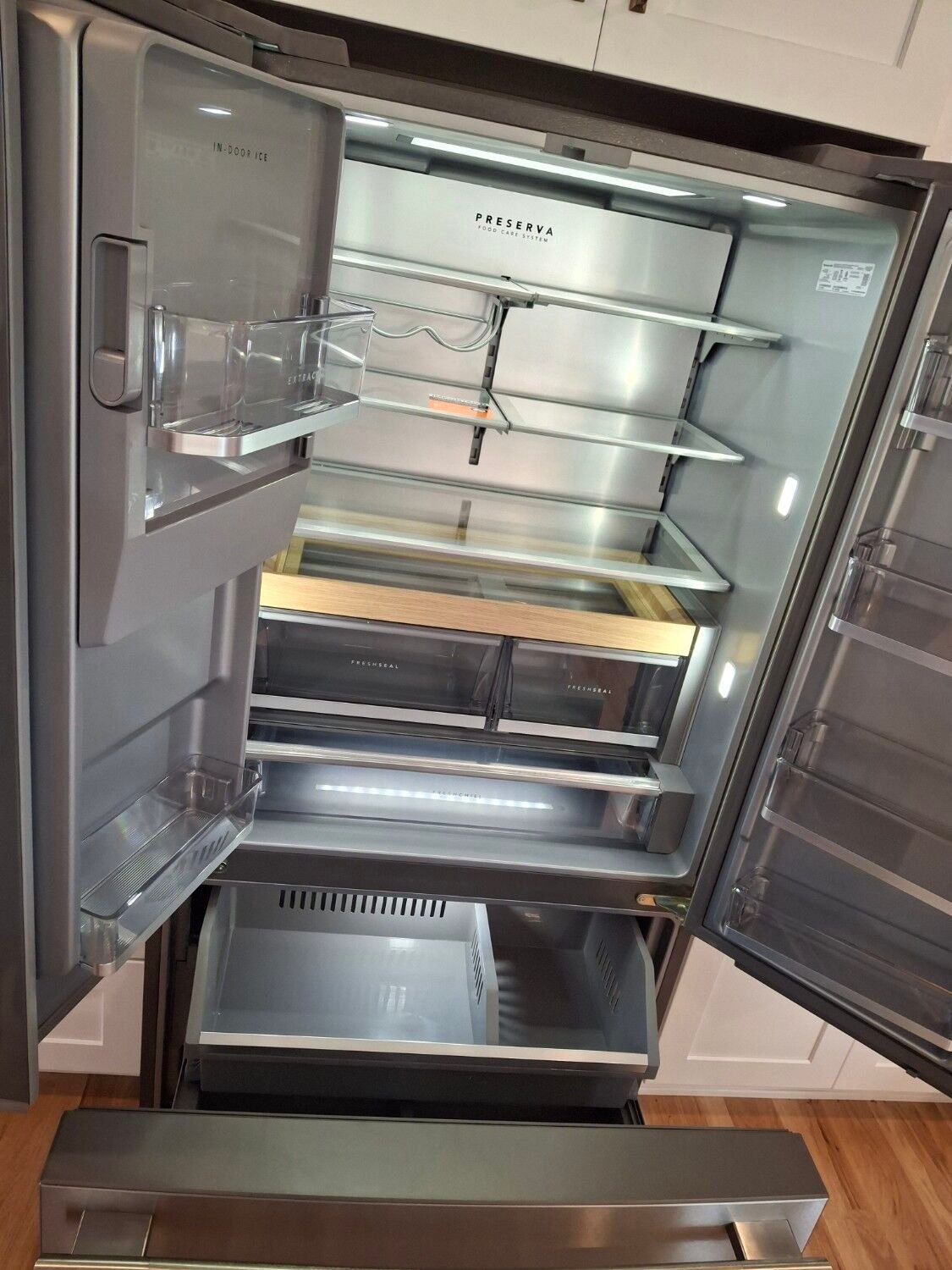
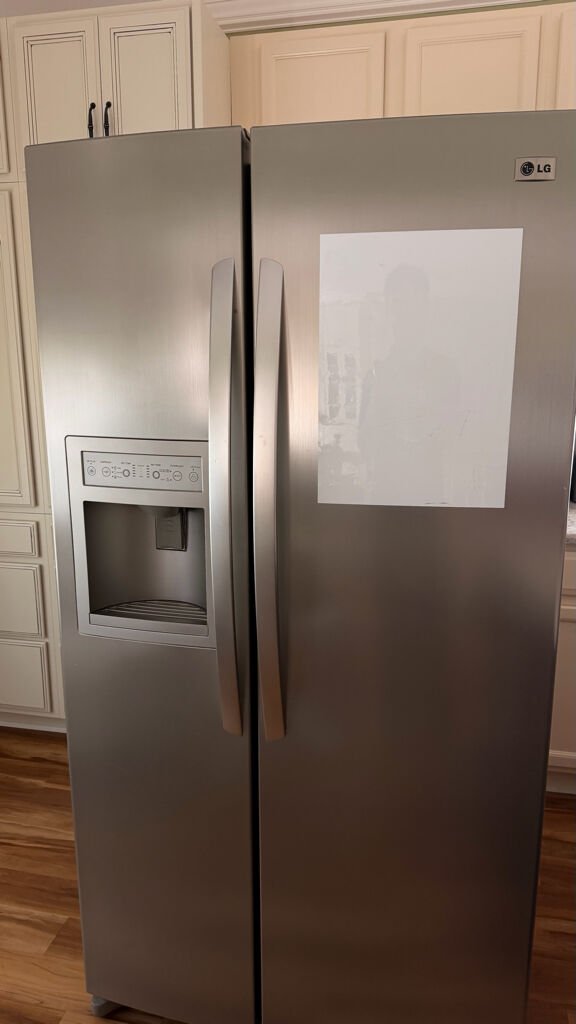
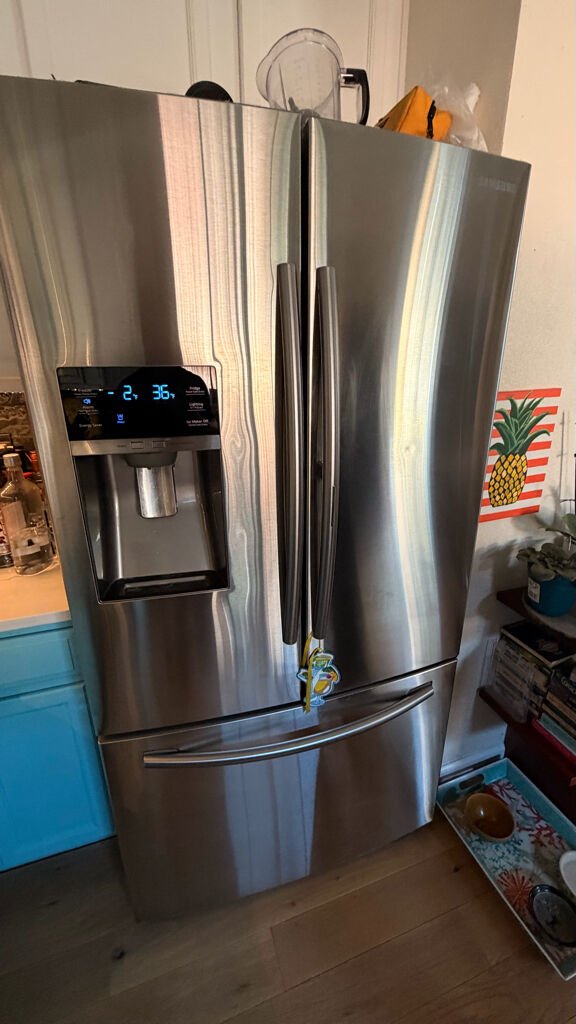
| Samsung / LG | Ice makers in the door or ceiling of the fresh-food section are sensitive to low flow. A kinked line or an old filter shows up as small ice or no ice. |
| Sub-Zero / Viking / Thermador | Built-in units connect in a recess at the bottom. Leaks often aren’t visible until the panel or floor is stained. |
Denver area notes
Denver water ranges from soft to moderately hard. Over years, mineral scale builds inside the inlet valve and fill tube, which slows the flow and can keep the valve from sealing. Homes on well water or on harder municipal supplies see it faster.
What we find on calls
Ice maker and water problems were among the most common refrigerator calls in our records, about 109 of roughly 1,685. Many of them turn out to be water supply issues: a kinked or cracked line, a worn inlet valve or a frozen fill tube.
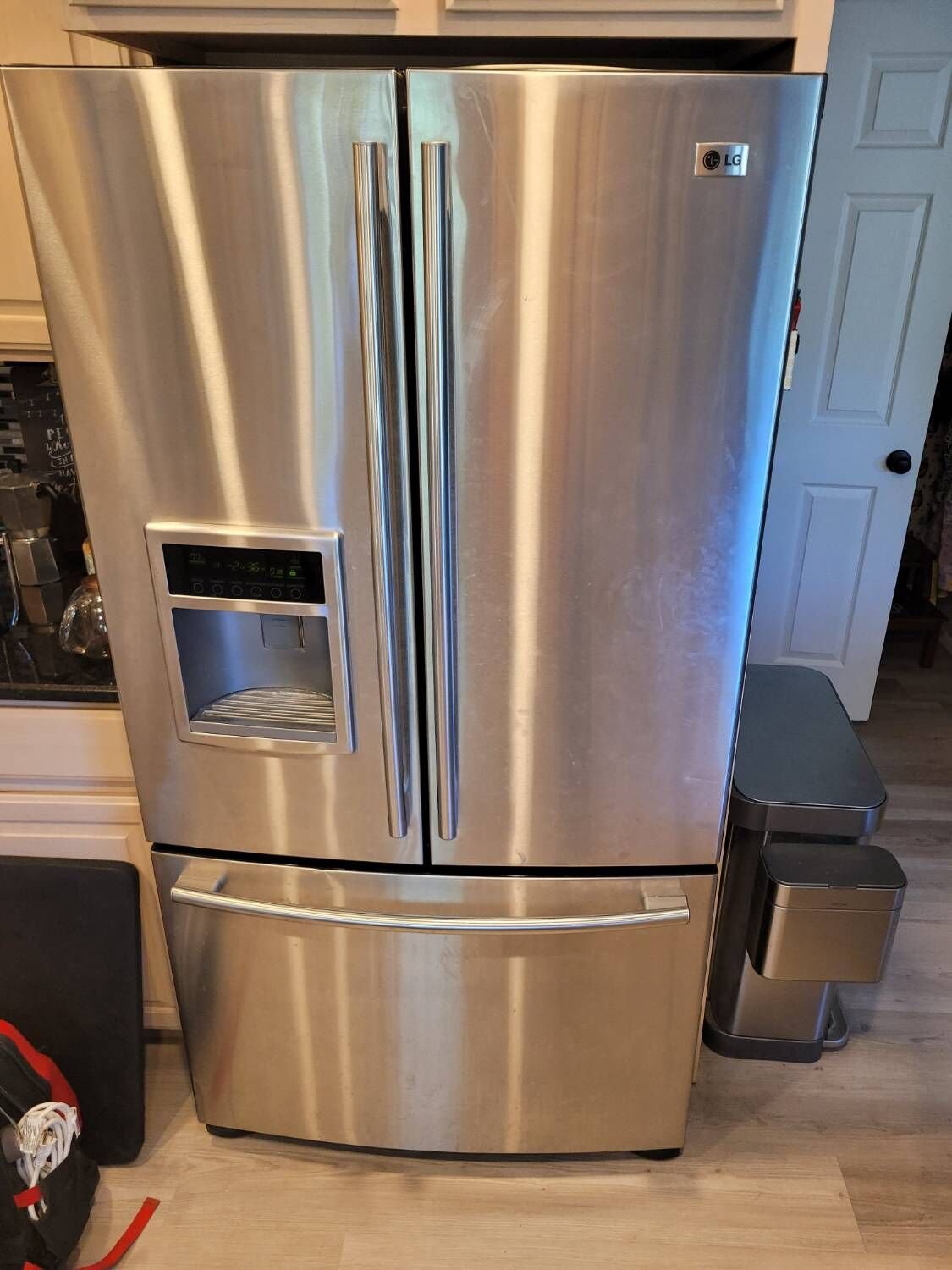
Photos from our service calls
When to call a technician
- Water on the floor that you can’t trace to a loose fitting.
- The dispenser drips after you release the paddle.
- The ice maker gets water but the fill tube keeps freezing.
- You find a damaged inlet valve or water inside the cabinet.
FAQ
How often should I check the refrigerator water line?
Once a year, and every time the refrigerator is moved.
Why is there water under my refrigerator?
Common causes are a leaking supply line or inlet valve, a clogged defrost drain, a cracked drain pan or a leaking filter housing.
Should I replace plastic tubing with braided steel?
In most cases yes, especially if the plastic line is old or has been moved and bent several times.
Want a technician to do it? Call 720-230-1229. We serve Denver, Boulder County and 52 surrounding cities.