Keep the fresh-food section at 37 to 40°F and the freezer at 0°F, checked with a real thermometer, not just the dial. Don’t block the air vents inside. Settings that are too warm spoil food. Settings that are too cold waste energy and can freeze lettuce, water lines and the ice maker. Blocked vents make one section freeze while the other gets warm.
The right temperatures
| Compartment | Target | Why |
|---|---|---|
| Fresh food | 37–40°F (3–4°C) | The FDA says to keep it at or below 40°F to slow bacteria growth. |
| Freezer | 0°F (-18°C) | Keeps food safe and preserves quality. |
| Garage refrigerator or freezer | Same targets | Check the manual for the room temperature range it’s rated for. |
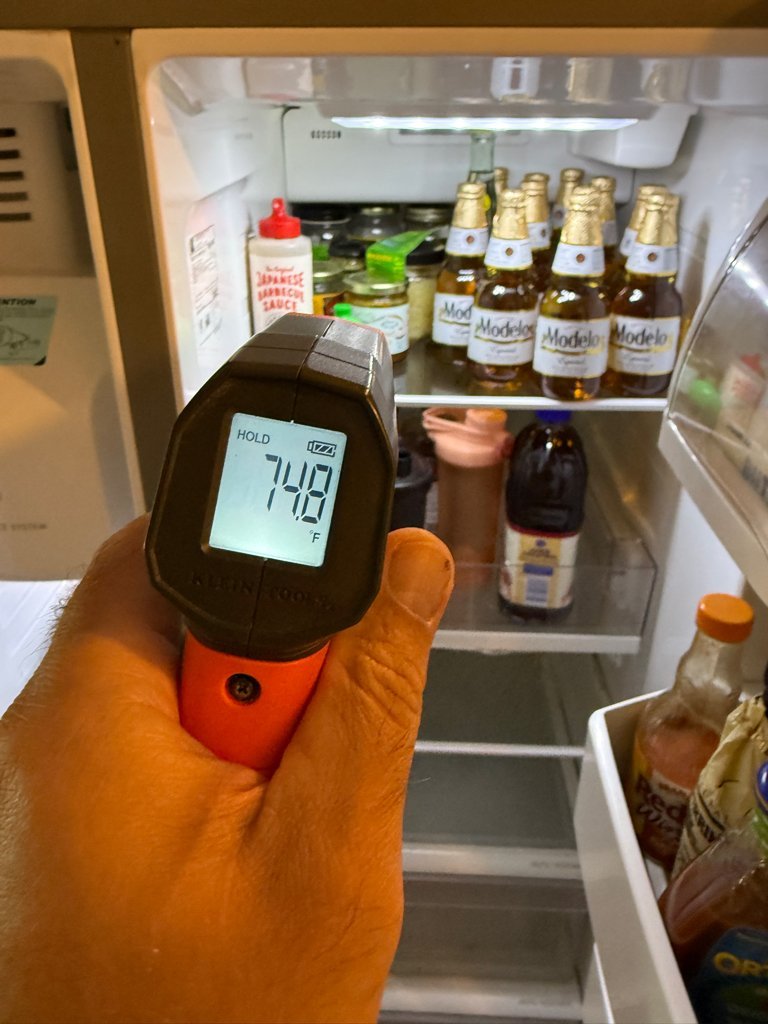
The number on the display or dial is a setting, not a measurement. The air near the door, the back wall and the crisper drawers can differ by several degrees.
How to check temperatures
- Buy an inexpensive appliance thermometer for each compartment.
- Put the fresh-food one in a glass of water on a middle shelf, and the freezer one between frozen packages.
- Leave them for 5 to 8 hours without opening the doors much.
- If a reading is off, adjust the control one step and check again after 12 to 24 hours.
How airflow works inside
Most modern refrigerators have one evaporator in the freezer area. A fan pushes cold air through the freezer, and a duct or damper sends some of it to the fresh-food section. Many French-door and premium models have two evaporators and two fans. Either way, cold air has to move freely. If the vents are blocked, the temperature sensor and the food see different conditions, and the control can’t keep things balanced.
This guide is part of our refrigerator maintenance checklist. On the same appliance, also check refrigerator condenser coil cleaning and refrigerator door gasket care. Related guides for other appliances: garage freezer care in Colorado, commercial door gaskets, hinges and temperature logs and oven temperature check and calibration.
What happens when settings or airflow are wrong
Temperature problems are easy to miss because the refrigerator still feels cold. But a few degrees too warm is a food-safety problem, a few too cold wastes energy and freezes water parts, and blocked vents make the whole system work against itself.
Settings drift or vents get blocked Early
Inside: The dial gets bumped, or groceries end up in front of the cold-air vent or the return opening.
You notice: Nothing obvious at first.
Temperatures split Growing
Inside: Cold air pools near the vent and doesn’t reach the rest of the cabinet. The sensor and the food see different temperatures.
You notice: Frozen lettuce near the vent, warm milk in the door.
Food leaves the safe zone Serious
Inside: Parts of the fresh-food section rise above 40°F, where bacteria grow faster.
You notice: Food spoiling before its date, sour milk, slimy produce.
The system overworks Severe
Inside: Too-cold settings or poor circulation keep the compressor running longer. Water tanks and lines can freeze.
You notice: Fridge runs constantly, frozen water dispenser, ice maker stops.
Frost and failures follow Critical
Inside: Long run times and frequent door openings build frost. Fans, dampers and the compressor wear faster.
You notice: Frost on the back wall, fan noise, a warm fridge with a cold freezer.
What it can cost you
Food safety riskSpoiled foodHigher electric billFrozen water line or tankIce maker problemsFan and damper wear

What correct temperatures get you
- Food that stays safe and lasts longer.
- Balanced cooling between the freezer and the fresh-food section.
- Less energy use and less frost.
- Early warning: a thermometer shows a problem before the food does.
Tips that make a real difference
- Leave a few inches around the air vents at the back and top of each compartment.
- Let hot food cool briefly before putting it in, and cover it to keep moisture down.
- Keep a gap behind the refrigerator and keep the condenser area clean so it can shed heat.
- Don’t put the refrigerator next to an oven, a dishwasher vent or in direct sun.
- After a power outage, give it 24 hours to recover before changing the settings.
- Use vacation mode, if you have it, only when you’re away; it raises the fresh-food temperature.
Brand notes
| Brand | Notes |
|---|---|
| Samsung | Dual-evaporator French-door models have separate fresh-food and freezer fans. Frost on the fresh-food evaporator causes a warm fridge while the freezer stays cold. |
| LG | Many models use a damper and a single evaporator. Ice in the air duct is a common cause of a warm fresh-food section. |
| GE | Fan motors were the top GE refrigerator issue in our records. A quiet freezer fan with the compressor running is a red flag. |
| Whirlpool / KitchenAid | Air passes through a damper between compartments. A stuck damper or iced duct gives you a freezing or warm fresh-food section. |
| Sub-Zero | Separate refrigeration systems for each compartment on many models. If one side is warm, the problem is in that side’s system. |
Garage refrigerators in Colorado
Colorado garages go from hot in summer to well below freezing in winter. Many standard refrigerators aren’t built for that. When the garage is very cold, the compressor barely runs, because the thermostat in the fresh-food section is already satisfied, so the freezer can warm up and food can thaw. In summer the compressor works overtime. If you keep a fridge or freezer in the garage, check that its manual allows it and check its temperatures with a thermometer every season.
What we find on calls
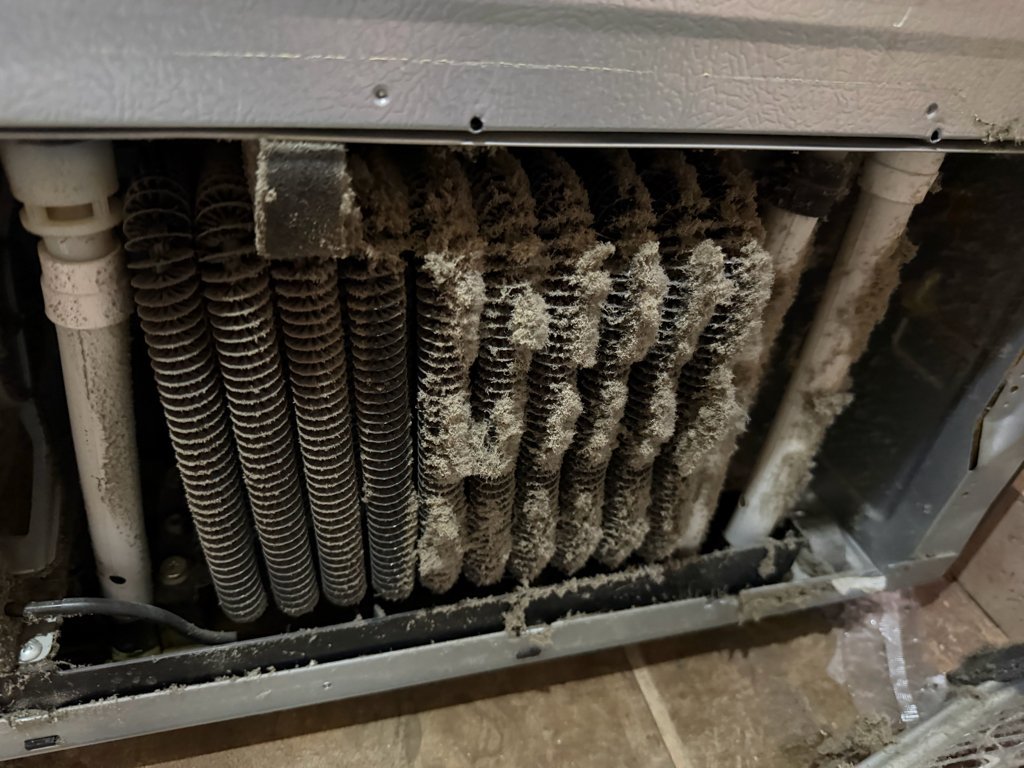
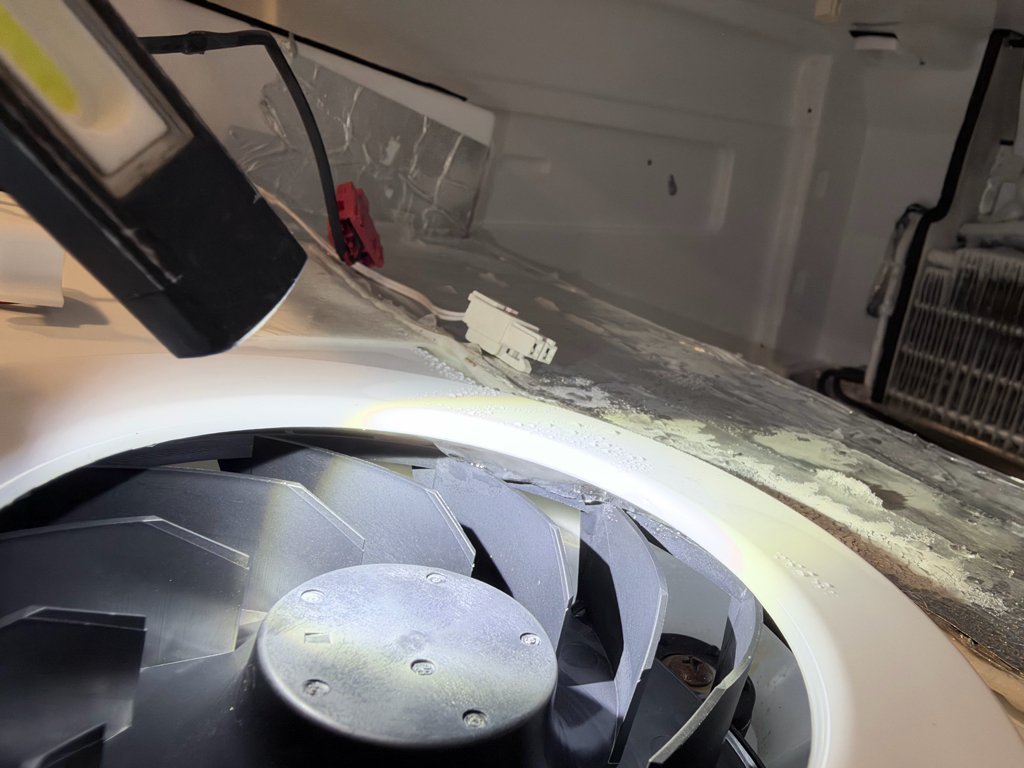
Fans (about 121 calls) and control boards (about 120 calls) were among the most common refrigerator repairs in our records out of roughly 1,685 calls. Many “warm fridge” calls turn out to be airflow problems: an iced duct, a dead fan or vents blocked from the inside.
Photos from our service calls
When to call a technician
- Temperatures don’t recover within 24 hours of fixing settings and clearing the vents.
- The freezer is cold but the fresh-food section is warm.
- You don’t hear the freezer fan while the compressor runs.
- Frost covers the back wall of the freezer.
FAQ
What number should my refrigerator be set to?
Dials vary by brand. Use a thermometer and adjust until the fresh-food section reads 37 to 40°F and the freezer 0°F.
Why is my freezer cold but my fridge warm?
Usually an airflow problem: frost on the evaporator, a failed fan, a stuck damper or blocked vents.
Why is food freezing in my refrigerator?
The setting is too cold, food is sitting in front of the cold-air vent, or the damper is stuck open.
Want a technician to do it? Call 720-230-1229. We serve Denver, Boulder County and 52 surrounding cities.