
An ice maker that still works but makes small cubes, hollow cubes or just a few cubes a day is telling you one of two things: not enough water is reaching it, or the freezer isn’t cold enough to freeze it fast. Since 2024 we have been called out for ice maker problems 372 times across the Denver metro and Boulder County. After the ice maker itself (64 calls), the water inlet valve was the most common repair (17), followed by cooling problems: fans (14), the compressor or sealed system (12) and the defrost system (10).
At a glance
- Small or hollow cubes almost always mean a short water fill: a clogged filter, low water pressure or a failing inlet valve.
- A slow trickle from the water dispenser is a strong clue that the ice maker is starved for water too.
- If cubes are normal size but few, check the freezer temperature: it should be 0°F.
- Replace the water filter first. It is the cheapest fix and often the right one.
Small or hollow cubes: not enough water
Each cycle, the ice maker opens the inlet valve for a set number of seconds. If water flows slowly, the mold only partly fills and you get thin, small or hollow cubes. The usual reasons:
- A clogged water filter. Most manufacturers recommend changing it about every six months. A filter that isn’t fully seated can also restrict flow.
- Low water pressure. A supply valve that is only partly open, a kinked line behind the refrigerator or an old saddle valve can all cut flow.
- A failing water inlet valve. Scale and wear make the valve open weakly. Hard water speeds this up; see hard water in the Denver metro.
On a call in Denver, a Viking refrigerator’s water dispenser only trickled and the ice maker had stopped. The water valve and the ice maker assembly were both replaced.

Few cubes: the freezer isn’t cold enough
Ice makers wait for the mold to reach a set temperature before they harvest. A freezer running at 10 or 15°F makes ice much more slowly. Dirty condenser coils, a failing evaporator or condenser fan, a defrost problem or a weak compressor all show up first as slow ice. On a KitchenAid in Erie that was “not making much ice,” the cause turned out to be the compressor.
Check the freezer with a thermometer. If it is warmer than about 5°F, see our guide to a freezer not freezing.
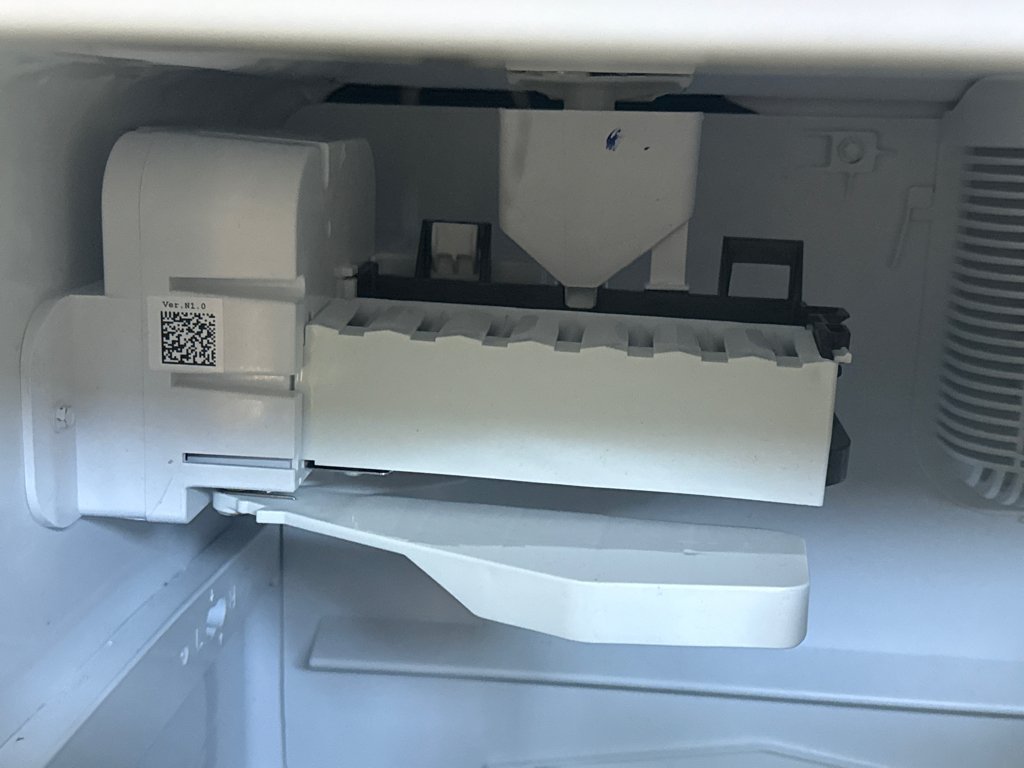
Ice that clumps, or a fill tube that freezes
A valve that seeps water between cycles can freeze the fill tube shut, so ice production slows and then stops. Clumped cubes in the bin can mean the same slow seep, or a freezer that warms and refreezes. In winter, water lines along exterior walls can freeze too; see Colorado winter and your appliances.
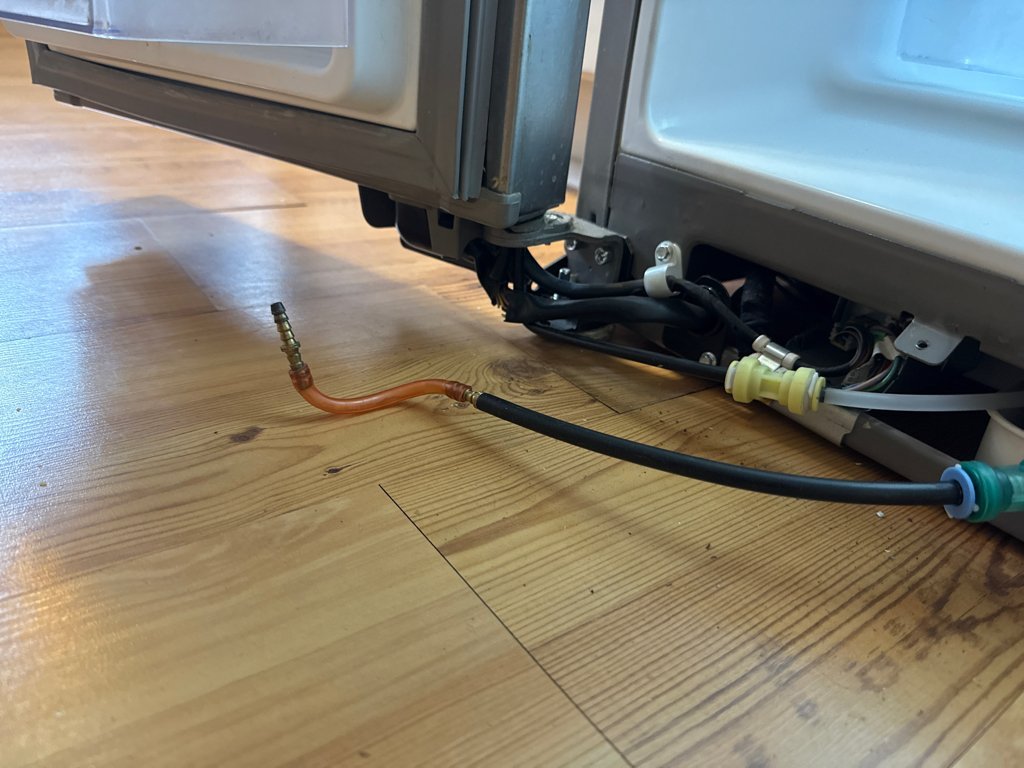
What you can check yourself
- Replace the water filter and make sure it clicks fully into place.
- Run the water dispenser into a measuring cup for 30 seconds. A thin or sputtering stream points to a supply or valve problem.
- Open the supply valve behind the refrigerator fully and look for kinks in the line.
- Check the freezer temperature: 0°F is the target.
- Give it a day after any change. Ice makers need several cycles to catch up.
If the ice maker has stopped completely, our main guide covers that: ice maker not making ice.
Frequently asked questions
Why is my ice maker making small cubes?
Usually because not enough water reaches the mold each cycle: a clogged filter, low water pressure or a weak water inlet valve.
Why are my ice cubes hollow?
Hollow cubes form when the mold is only partly filled, or when the ice maker harvests before the cube freezes all the way through. A short water fill is the most common reason.
How much ice should an ice maker make?
It varies by model; your owner’s manual lists the expected amount per day. If production drops well below that, check the filter, the water flow and the freezer temperature.
Ice maker still slow after a new filter? Call 720-230-1229.
Keep Exploring
Get it fixed
Troubleshooting guides
Maintenance guides
How to prevent this
Many of these breakdowns start with maintenance that was skipped. These guides show what to check, how often, and what happens if you don't: