Inspect the washer supply hoses every 6 months and replace them about every 5 years, ideally with braided stainless hoses. Clean the inlet screens if the washer fills slowly. According to insurance industry data, a burst supply line caused half of all washing machine water damage incidents, averaging more than $6,000 in damage each.
How water gets into the washer
Two hoses run from the hot and cold shut-off valves to the water inlet valve on the back of the washer. Those hoses are under full house water pressure 24 hours a day, even when the washer is off. Small mesh screens at the valve inlet catch sediment.
This guide is part of our washer maintenance checklist. On the same appliance, also check washer door gasket mold and washer tub cleaning and odor prevention. Related guides for other appliances: refrigerator water line inspection, dishwasher door gasket and drain hose care and ice maker water supply, filter and valve.
What happens if the hoses are ignored
Rubber hoses age from the inside out. You often can’t see the damage until they bulge or burst.
Rubber ages Early
Inside: Pressure, heat and time harden the rubber and weaken the reinforcement.
You notice: Hoses look stiff or discolored.
Screens clog Growing
Inside: Sediment and scale block the inlet screens.
You notice: Slow fill, fill errors, weak water flow.
Bulges and weeps Serious
Inside: A weak spot near the fitting balloons. Fittings start to seep.
You notice: A bulge near the end of the hose, drips or rust at the fittings.
Inlet valve wears Severe
Inside: Grit and scale keep the valve from sealing.
You notice: Water trickling into the drum when the washer is off.
Hose bursts Critical
Inside: The hose splits under full pressure.
You notice: Water pouring onto the floor until someone shuts it off.
What it can cost you
Flooded laundry roomFloor and drywall damageDamage to the level belowInlet valve replacementInsurance claim
What a 10-minute check gets you
- Hoses replaced on your schedule, not after a flood.
- Full water flow and normal fill times.
- A shut-off valve you know works.
Warning signs
- Hoses older than 5 years or stiff to the touch.
- A bulge near either end.
- Rust or mineral crust at the fittings.
- Slow filling or fill error codes.
- Water in the drum while the washer is off.
How to inspect and replace washer hoses
- Turn off both water valves behind the washer.
- Pull the washer out a few inches and look at both hoses along their length and at both ends.
- Unscrew the hoses at the washer with a towel ready. Check the small screens in the valve inlets and rinse out debris.
- Install new braided stainless hoses with new washers. Hand-tighten, then snug a quarter turn; don’t overtighten.
- Turn the water on slowly and check for drips.
- Leave about 4 inches behind the washer so the hoses don’t kink.
- Consider turning the valves off when you go on vacation, or install a leak detector.
Brand notes
| Brand | What to know |
|---|---|
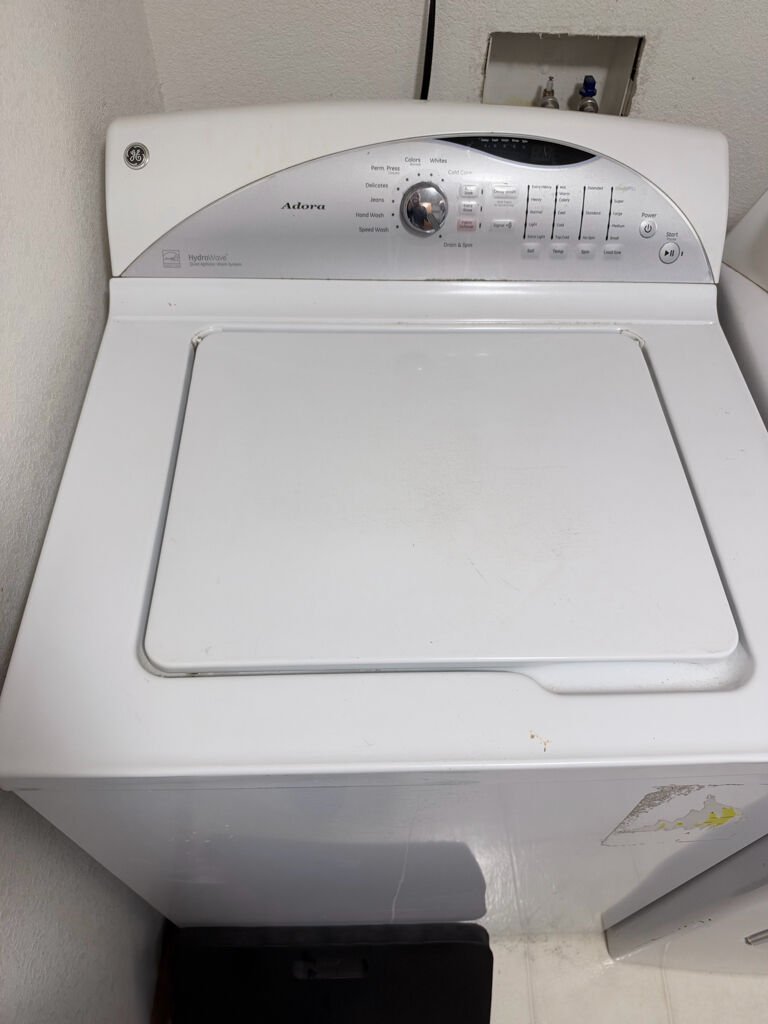
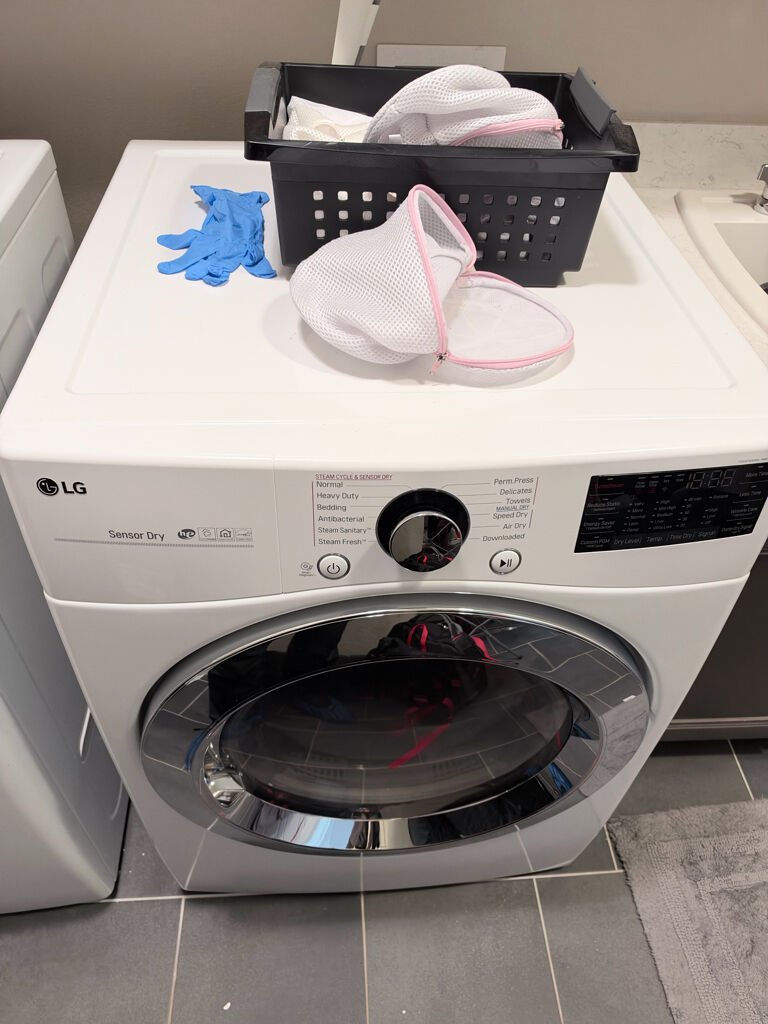
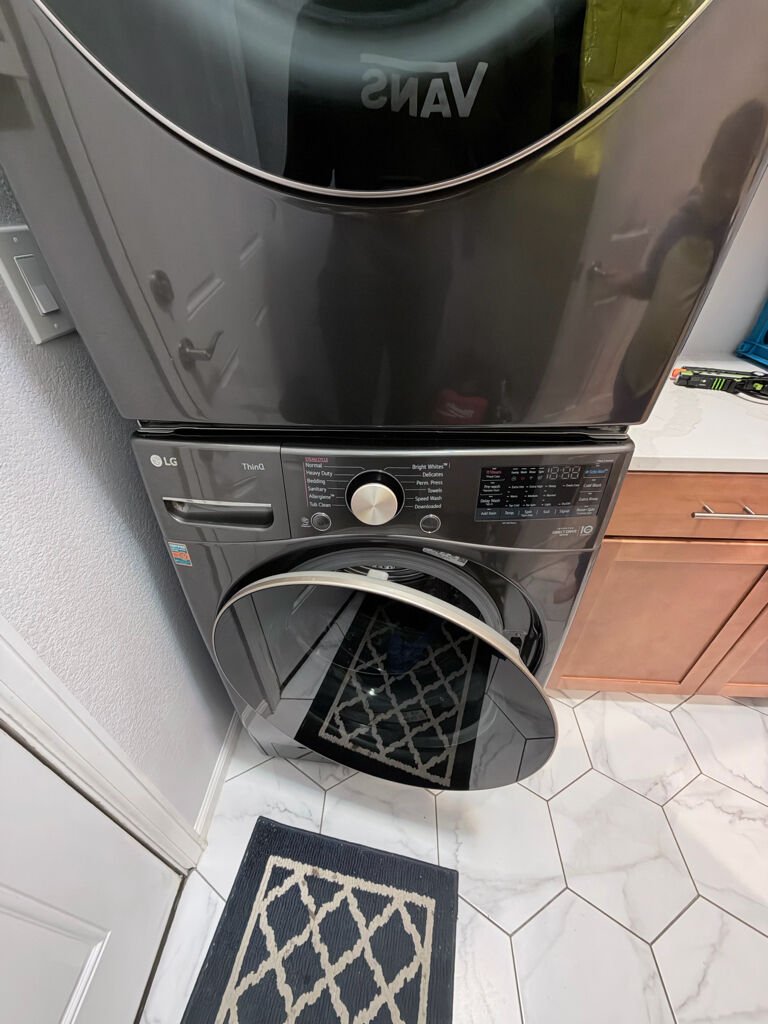
| LG | On our calls the water inlet valve is a common LG washer leak source. |
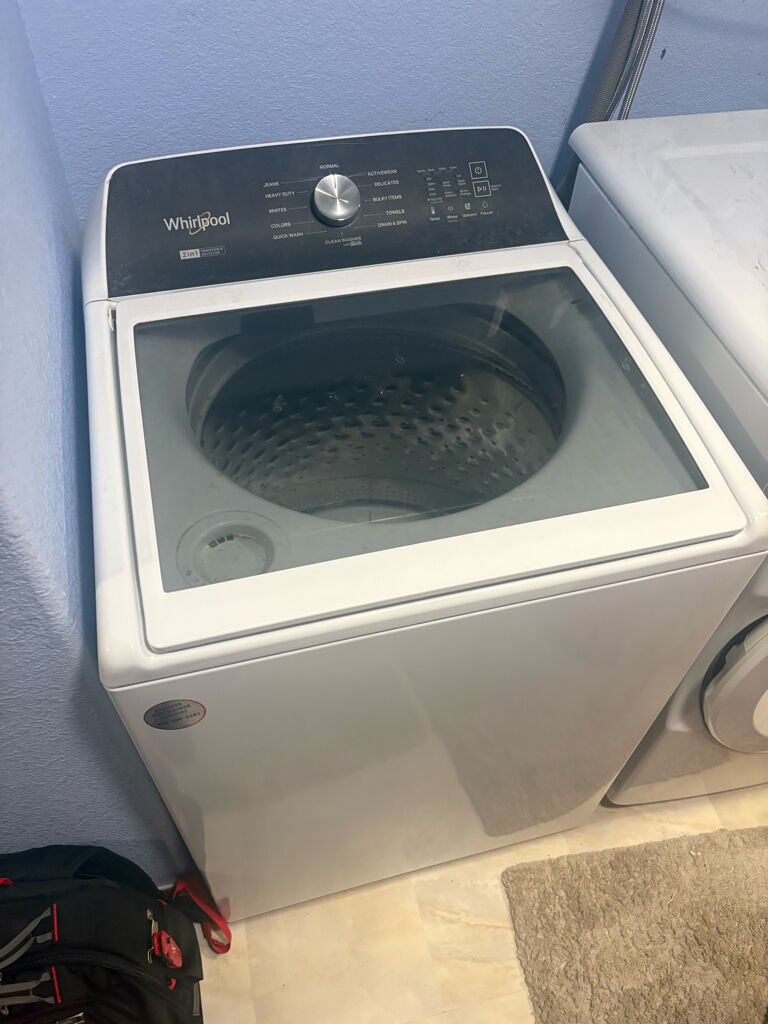
| GE / Maytag / Whirlpool | Inlet valves with clogged screens cause slow fill and fill errors. |
| All brands | Replace rubber hoses about every 5 years. |
Denver area notes
Hard water deposits build up in inlet screens and valves faster in harder-water areas. If your fill is slow and the screens are crusty, the valve may be scaling too.
When to call a technician
- Water trickles into the washer when it’s off.
- Slow fill continues after cleaning the screens.
- The shut-off valves won’t turn or leak.
FAQ
How often should I replace washer hoses?
About every 5 years, and immediately if they bulge, crack or leak.
Are braided hoses worth it?
Yes. They resist kinks and bursts better than plain rubber.
Want a technician to do it? Call 720-230-1229. We serve Denver, Boulder County and 52 surrounding cities.