Every fall the same thing happens in our schedule: oven, range and cooktop calls climb in October and peak in November. We pulled our own service records for fall 2024, fall 2025 and this October: about 270 oven, range and cooktop calls from October and November, and looked at what actually broke. Below are the numbers, five real repairs with photos from those calls, and a checklist you can run this weekend, while there is still time to get a part.
The short version
- In November, about 1 in 5 of our calls is an oven, range or cooktop. In summer it is closer to 1 in 11.
- The most common fall problems: gas burners and igniters, ovens that do not heat or hold temperature, and control boards.
- Test your oven at least two weeks before Thanksgiving. Parts for many models take a few days to arrive.
- If you run self-clean, do it now, not the week of the holiday.
- Smell gas? Turn the oven off, leave the house and call your gas utility first.
November is oven season, in numbers
We compared oven, range and cooktop calls with all of our calls for each month, from September 2024 through October 2026. The share of cooking-appliance calls almost doubles from summer to November.
| Month | Oven, range and cooktop share of all our calls |
|---|---|
| June to August | 9.4% |
| September | 9.5% |
| October | 13.2% |
| November | 18.1% |
| December | 12.9% |
In absolute numbers the jump is bigger, because November is also a busy month overall. In November 2025 we took 79 oven, range and cooktop calls. In August 2025 we took 38. The reason is simple: ovens that get light use all summer suddenly run for hours, at high temperature, often with every burner on at once. A weak igniter or a tired relay that limped along in July gives up on the first long roast.
What actually fails in the fall
We sorted about 225 completed fall calls by what the customer reported and what the technician noted. One call can land in more than one row.
| Problem | Share of fall calls | What it usually turns out to be |
|---|---|---|
| Gas burners or oven not lighting, clicking | about 29% | Worn oven igniter, dirty or wet burner caps, spark switch or spark module |
| Oven not heating or not holding temperature | about 25% | Igniter (gas), bake or broil element (electric), temperature sensor, relay on the control board |
| Control board, display or error code | about 23% | Failed relay or board, sensor fault, wiring or a burnt connector |
| Cooktop burner or zone not working | about 12% | Radiant element, infinite switch, induction power board |
| Door, hinge or lock | about 8% | Broken hinge, door lock stuck after self-clean, inner glass |
Five fall repairs, with photos
1. GE gas oven that smelled of gas: a melted connector (Thornton)
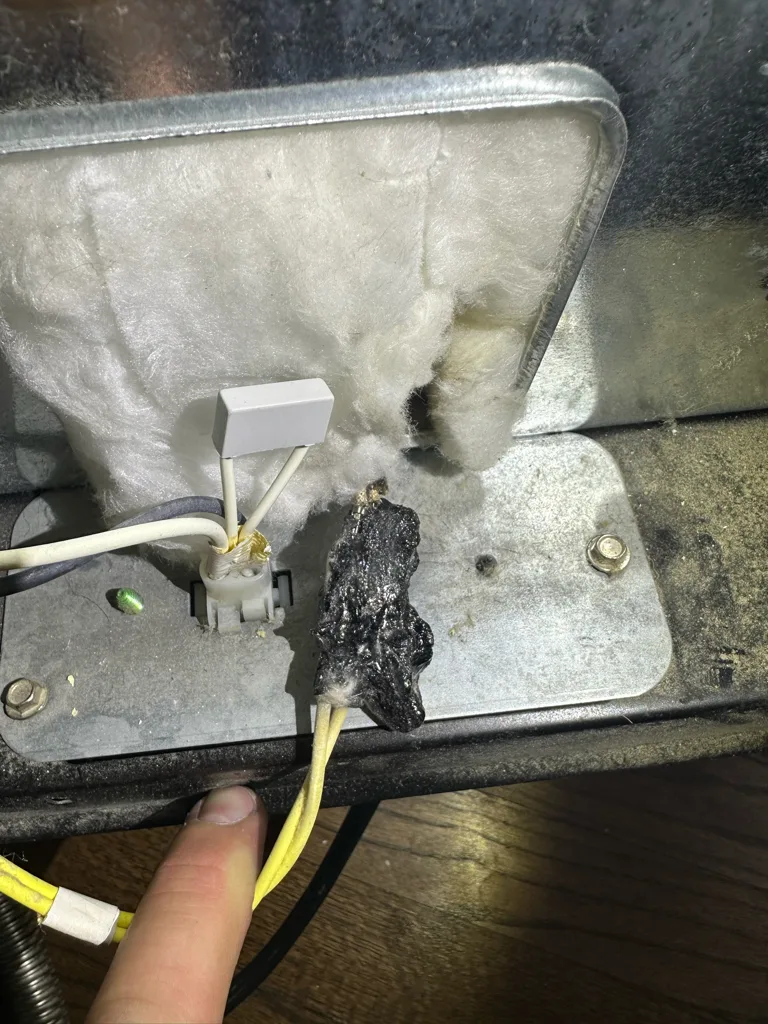
A gas oven igniter has to get hot enough to open the gas valve. As it ages it heats more slowly, so gas can flow for longer before it lights. On this GE in Thornton the customer smelled gas, and the igniter connector had overheated and melted. We replaced the igniter. If your oven takes more than a minute or two to light, or you smell gas before the flame appears, stop using it and call for service. If the smell is strong or does not go away, leave the house and call your gas utility first.
2. Viking range: spark igniters and two oven igniters (Boulder)
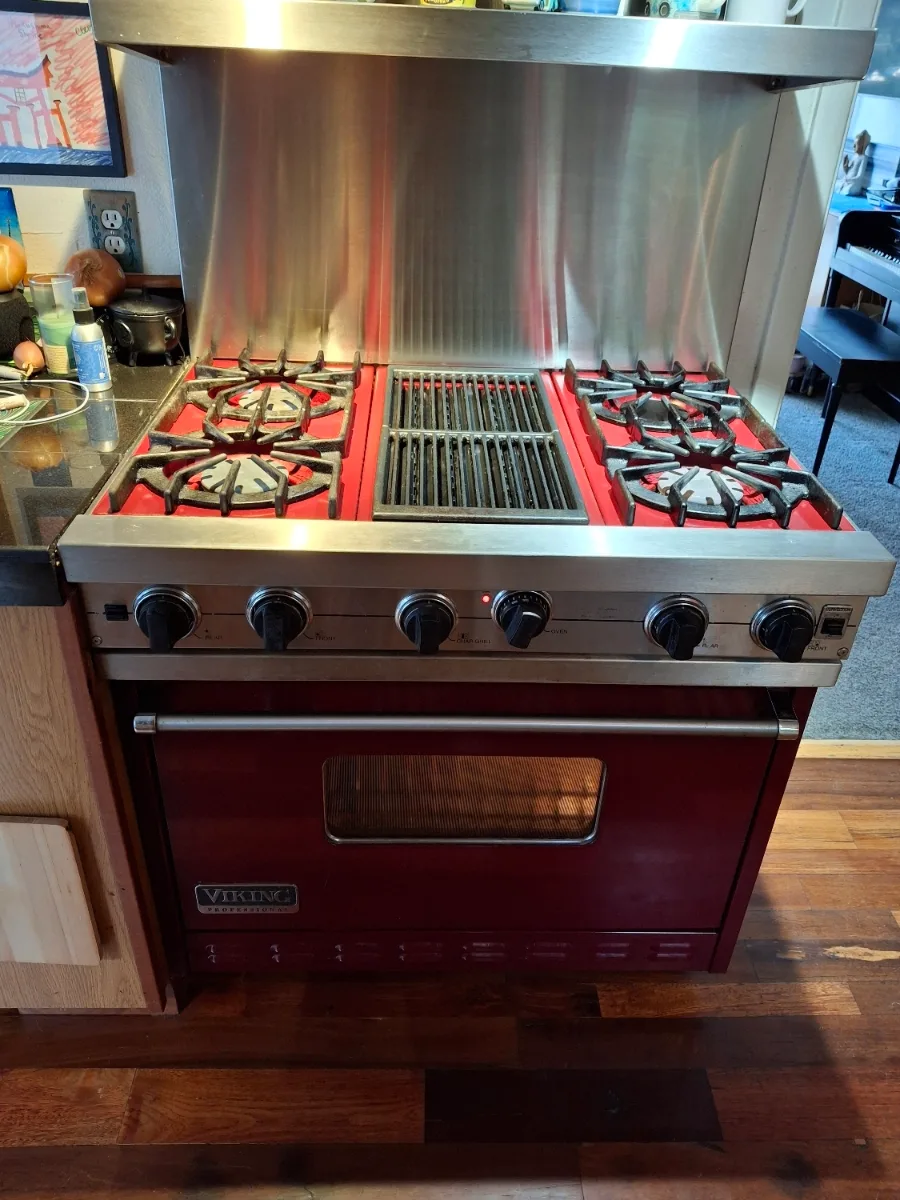
Pro-style ranges like this Viking have more burners and two oven igniters, so there is more to wear out. The customer called about the ignition, and the technician found worn spark igniters on the burners and worn igniters in the oven. We replaced the spark igniters and both oven igniters. On these ranges, a burner that clicks without lighting is often just a cap that is out of position or still wet after cleaning, so check that first.
3. Built-in GE double oven that would not heat: a relay on the board (Englewood)

This built-in GE oven had stopped working. The fault was the relay board, the part that switches power to the bake and broil elements. It is a common pattern on wall ovens: the display looks normal, but nothing heats, because a relay has stopped switching.

4. Bosch double oven: the top oven could not hold its temperature (Denver)
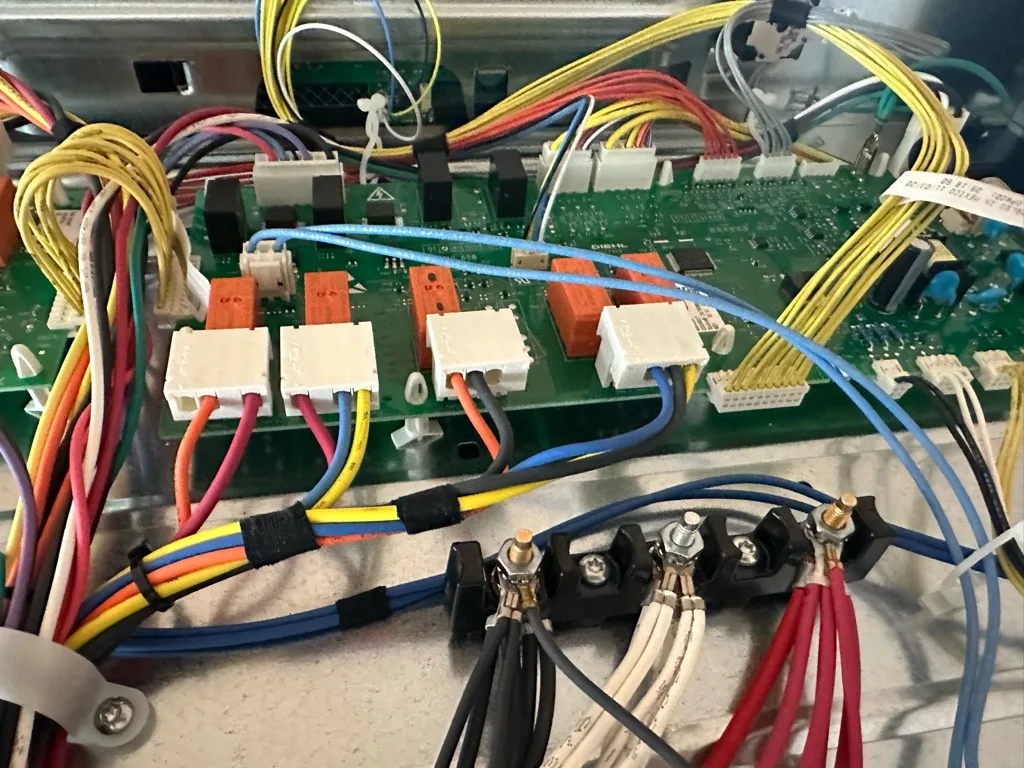
The bottom oven worked fine, the top one overshot and undershot. That points away from the elements and toward the sensor or the control that reads it. On this Bosch in Denver the control board was replaced. If your oven runs hot or cold, put an oven thermometer on the middle rack before you call. Tell us what it read and after how long. It saves a lot of guessing.
5. Cooktops: an induction zone and a radiant element (Brighton, Aurora)

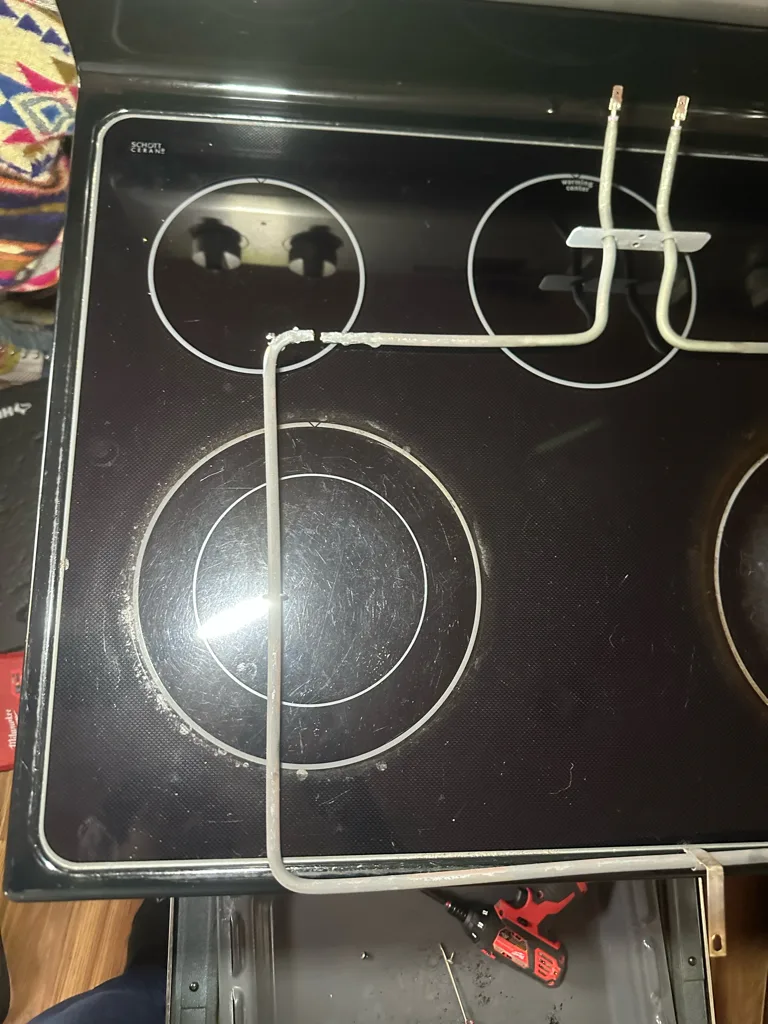
On a KitchenAid induction cooktop in Brighton, one zone stopped working. Under the glass, an induction cooktop has electronic boards and copper coils instead of heating elements. The control board was the part that needed replacing. On a radiant glass cooktop in Aurora, one element had burned out and was replaced.

Your two-week check before Thanksgiving
- Run a full bake test. Set 350°F with an oven thermometer on the middle rack. After 20 minutes it should read within about 15 to 20 degrees. Check again at 45 minutes.
- Time the preheat. If it takes much longer than it used to, note how long. On gas ovens that is often the igniter.
- Light every burner, one at a time and then all together. Watch for clicking that does not stop, yellow or lifting flames, or a burner that lights late.
- Turn on the broiler for a few minutes. Many people use it for the first time all year on Thanksgiving.
- Check the door. It should close flat and stay closed. A sagging door or a torn gasket lets heat out on a long roast.
- Self-clean early or not at all. A self-clean cycle runs the oven much hotter than any recipe. If you want a clean oven for the holiday, run it now, so if anything fails there is time for the part.
- Write down the model number. It is usually on a label inside the door frame or under the cooktop. With the model number, we can often bring the right part on the first visit.
A Denver note on thermometers: if you check a thermometer in boiling water, remember that at about 5,000 feet water boils at around 202°F, not 212°F (NMSU Extension). A thermometer that reads 202°F in boiling water here is accurate. More on how elevation affects appliances is in our post on appliances at Denver’s altitude.
When to call, and when not to wait
Call if the oven does not heat, does not hold temperature, takes far longer to preheat than it used to, shows an error code, or if a gas burner or oven lights late. Most of these are igniters, elements, sensors or relays, and they are usually fixed in one or two visits. What turns a small repair into a ruined holiday is the wait for a part, so the earlier in November you call, the better.
We repair gas and electric ovens, ranges, wall ovens and cooktops across 52 Denver-area cities. See oven repair, range repair, wall oven repair and cooktop repair, or what to check when an oven is not heating. Service calls start from $59 and are credited toward the repair. See our prices.
FAQ
How early before Thanksgiving should I get my oven repaired?
Two weeks or more is safest. Many oven parts ship in a few days, but some models need parts that take longer, and November schedules fill up.
Is it safe to run self-clean before the holiday?
It is fine on a healthy oven, but the cycle runs much hotter than normal cooking. Run it at least two weeks ahead, so you have time to fix anything that fails.
My gas oven takes a long time to light. Is that a problem?
Yes. A slow or weak igniter lets gas flow for longer before it lights. Stop using it and have it checked. If you smell gas, leave the house and call your gas utility.
My oven shows the right temperature but food cooks slowly. Why?
The display shows what the oven is set to reach, not always what it reaches. Check with a thermometer. A sensor, element, igniter or relay is usually behind it.
Keep Exploring
Get it fixed
Oven repair by city
Troubleshooting guides
Maintenance guides
Error codes by brand
How to prevent this
Many of these breakdowns start with maintenance that was skipped. These guides show what to check, how often, and what happens if you don't: